Germany’s Init Buys Norwegian Start-Up Applied Autonomy to Run Driverless Buses


Set Trending Topics as a preferred source on Google.
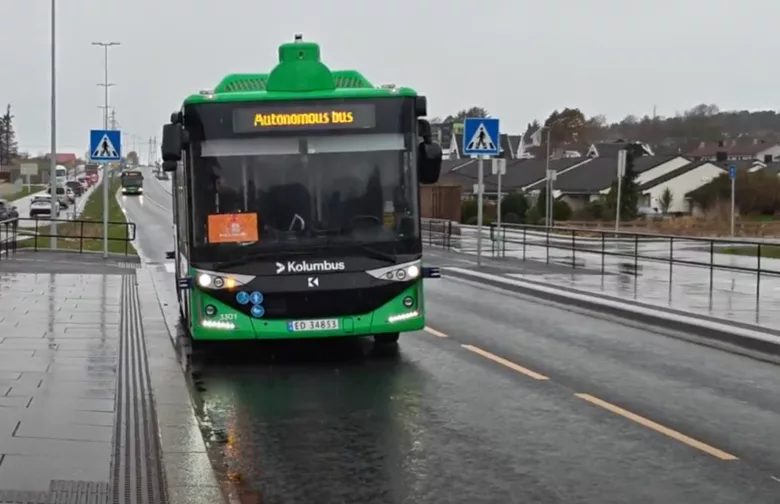
For a start-up in a challenging financial position, help has arrived from Karlsruhe: Init, a publicly listed German specialist in public transportation technology, has acquired a majority stake in the Norwegian start-up Applied Autonomy, whose software runs Europe’s first driverless scheduled bus in Stavanger. With the xFlow platform, Init now plans to run autonomous and conventional bus fleets in a single system, including in the German market.
67.74 Percent for Init, Price Undisclosed
Init recently acquired 67.74 percent of the Kongsberg-based company, which was founded in 2017, according to a company announcement. Applied Autonomy will become part of Init’s Integrated Systems business unit. Neither company disclosed the purchase price.
The numbers offer a sense of scale: Applied Autonomy is a small company with eight employees. According to the Norwegian business register, its revenue in 2025 was around 6.2 million kroner (about 530,000 euros), half of what it was in 2022, and it posted a small loss. Over the summer, the Norwegian business newspaper E24 reported that the company’s auditor had flagged “substantial uncertainty” about its ability to continue as a going concern. The founder and chief executive, Olav Madland, had put one million kroner (about 85,000 euros) of his own money into the company to keep it running. A capital increase of 1.5 million euros was planned for September, and the annual report already signaled openness to a sale.
Little Venture Capital, Plenty of Grants
How much money Applied Autonomy has raised from investors in total is not publicly known, and it appears never to have closed a classic venture capital round. Its largest shareholder is Kongsberg Innovasjon, a nonprofit innovation company whose chief executive, Svein-Olav Torø, also chairs Applied Autonomy’s board. Shortly after the company was founded, the Norwegian state rail group Vy took a minority stake, according to CB Insights, and programs such as EIT Urban Mobility also supported it. Public grants added up to around 3.7 million kroner (about 315,000 euros). Mr. Madland told E24 how hard it is to raise capital in Norway.
“We have supported the company’s development from the very beginning, and with Init as a strategic investor, the company gains a strong partner for the next important step: expanding its international presence,” Mr. Torø said.
What xFlow Does
Applied Autonomy does not build vehicles; it builds the software behind them. Its manufacturer-independent xFlow platform connects autonomous vehicles to a control center, monitors them in real time, provides remote assistance when there is no driver on board, coordinates trips and feeds operating data to other systems. In Germany, this role is known as “technical supervision.” Combined with Init’s MOBILE-ITCS control system, autonomous and conventional buses are set to run in one shared operating environment.
Stavanger is the flagship. This year, the city became home to Europe’s first autonomous bus in regular scheduled service without a safety driver on board, operating in mixed city traffic. A control center monitors the ride and steps in when needed. “Stavanger shows that autonomous buses work in everyday life,” Mr. Madland said. “Remote operation makes deployment scalable. Transit operators can secure their service even when drivers are in short supply.” xFlow is also used at Rotterdam Airport, in Eindhoven, in the Swiss town of Arbon and in the Swedish ski resort of Sälen.
A Business Built on the Bus Driver Shortage
For Init, the main target is Germany. According to the company, the country is already short more than 20,000 bus drivers, with a fleet of around 87,500 buses, and about 40 percent of staff are expected to retire over the next decade. Init also leads BRAVE10k, a project funded by the German Economy Ministry that aims to lay the groundwork for bringing more than 10,000 autonomous vehicles into German public transportation by 2030, from standardized approval procedures to a digital twin that simulates operations.
Competition in Remote Operations
Init is not alone. Volkswagen’s subsidiary MOIA is preparing an autonomous ride service with the ID. Buzz in Hamburg, and Deutsche Bahn’s subsidiary ioki offers on-demand software for transit operators. The Munich start-up Fernride, which specializes in remote operation of autonomous vehicles, was acquired by the drone maker Quantum Systems last year. And when it comes to robotaxis, companies from the United States and China such as Waymo, Baidu and Pony.ai are far ahead.