Isar Aerospace Just Made History. Now Comes the Hard Part.

Set Trending Topics as a preferred source on Google.
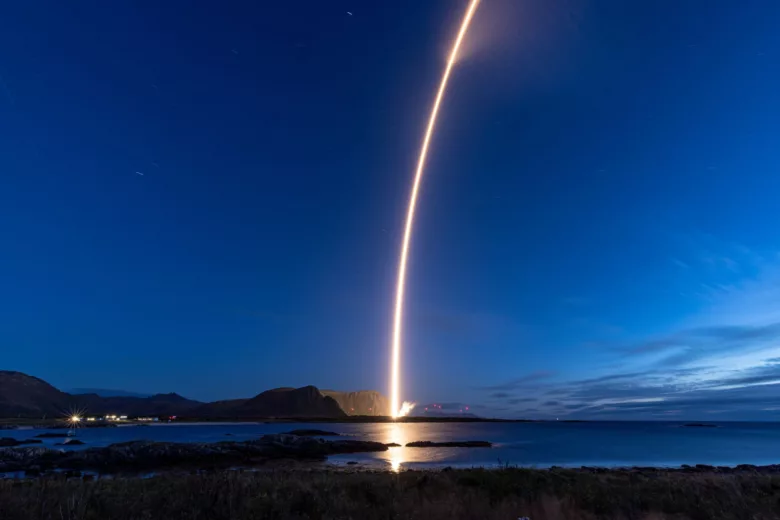
The applause is deserved. A Spectrum rocket built by Munich-based Isar Aerospace has become the first vehicle from a commercial European provider to deliver satellites into orbit, on its second attempt, eight years after the company was founded, launched from the European mainland. Anyone familiar with the history of European spaceflight knows how long this took.
Since then, a label has been circulating in commentary and investor circles that deserves a closer look: Isar Aerospace as Europe’s SpaceX. The comparison is flattering and audacious at the same time, because it puts a company with two flights and one rocket next to a company with almost 700 Falcon 9 launches, its own satellite constellation and billions in revenue from that constellation. From here on, a different metric matters for Isar Aerospace than the number of firsts, namely the number of flights per year. And that is where things get uncomfortable.
The Math Nobody Likes to Do
Spectrum lifts up to 1,000 kilograms to low Earth orbit. A Falcon 9 manages roughly 17,500 kilograms when the first stage comes back, and 22,800 kilograms when it is expended. A Starlink satellite of the V2 Mini generation weighs about 800 kilograms. One Falcon 9 takes between 24 and 29 of them at once. Spectrum takes one.
That produces a number worth remembering: Europe needs about 25 Spectrum launches to put the cargo of a single Falcon 9 flight into orbit. SpaceX completed 104 Falcon family launches in the first eight months of this year alone.
For the wider perspective: SpaceX has now launched roughly 12,900 Starlink satellites, more than 11,000 of which are currently circling the planet. That single constellation accounts for about two thirds of all active satellites in Earth orbit. Building that fleet with Spectrum would have taken nearly 13,000 launches. Even if the new factory in Parsdorf reaches its target capacity of 40 rockets a year, that amounts to more than three centuries of production.
The comparison is deliberately unfair, because Spectrum was never built for constellations of that size. That is exactly the point. Europe’s entire current microlauncher generation, Spectrum at 1,000 kilograms, Spain’s Miura 5 at around 1,080, the RFA One at around 1,600, operates in a class that serves educational satellites, Earth observation and government missions, well short of satellite swarms with real impact on the ground. The class above it, Rocket Lab’s Neutron at roughly 13 tonnes or a reusable successor to Spectrum, exists in Europe only on slides.
The field at a glance:
| Rocket | Provider | Payload to LEO | Payload to SSO | Status |
|---|---|---|---|---|
| Electron | Rocket Lab (US/NZ) | approx. 320 kg | 200 to 300 kg (500 km) | operational, 91 flights, 87 successful |
| Miura 5 | PLD Space (Spain) | approx. 1,080 kg | approx. 540 kg | maiden flight pending, flight hardware built |
| Spectrum | Isar Aerospace (Germany) | up to 1,000 kg | approx. 700 kg | 2 flights, first orbit just reached |
| RFA One | Rocket Factory Augsburg (Germany) | approx. 1,600 kg | approx. 1,300 kg (500 km) | maiden flight pending after a ground test explosion |
| Neutron | Rocket Lab (US) | approx. 13,000 kg | not stated | in development |
| Falcon 9 | SpaceX | 22,800 kg expended, approx. 17,500 kg with recovery | approx. 15,600 kg | 695 flights, 99.6 percent success rate |
| Falcon Heavy | SpaceX | 63,800 kg | approx. 26,700 kg | 13 flights since 2018, all successful |
| Starship | SpaceX | approx. 100 t targeted | open | in flight testing |
Whoever Controls Launch Controls the Business
After the flight, Daniel Metzler said something that matters more than the celebratory language around it: access to space remains the industry’s biggest bottleneck. He is right. And in a market where one resource is scarce, control over that resource decides which businesses get to exist at all.
Book a rideshare with SpaceX and you accept the orbit SpaceX chooses, the date SpaceX sets and the price SpaceX charges, currently 350,000 dollars for the first 50 kilograms and 7,000 dollars for every kilogram after that. Amazon had to buy launch slots for its Kuiper network from the operator of its most direct competitor, first three Falcon 9 flights, then more. A European Earth observation startup aiming for a sun-synchronous orbit is effectively negotiating with a single serious supplier. That is market power, built on 695 Falcon 9 flights with a success rate of 99.6 percent.
The Starlink Factor
Starlink long ago stopped being a side product. Since the IPO, SpaceX has to disclose its numbers, and the first quarterly report makes the balance of power clear: of 7.8 billion dollars in group revenue, 4.3 billion came from the connectivity business, up 66 percent year over year, with around twelve million customers. Starlink is also the only profitable segment in the company.
The revealing figure sits right next to it. The space segment, meaning the launch business itself, brought in 962 million dollars in the same quarter and posted an operating loss. Launching rockets is not a business at SpaceX, it is the infrastructure for a business. The network pays for the flights, the flights expand the network, and that loop is where the lead comes from. A European provider that only sells launches is competing against a company that can cross-subsidise its own.
In security terms the picture gets more delicate still. Ukraine’s armed forces run a substantial share of their communications and drone operations over Starlink terminals. Reuters reported that US officials had threatened to cut off access during negotiations over a minerals agreement, which Elon Musk denied. Germany is now financing Ukrainian capacity with European provider Eutelsat, partly as a hedge. You do not need a position on Musk’s politics to see what has happened here: an infrastructure decision by a private company has become a factor in a European war. That dependency cannot be negotiated away, it can only be built away.
SpaceX Capacity Is Drying Up
The flip side of the Starlink success is uncomfortable for everyone hoping to hitch a ride. Well over half of all Falcon 9 launches carry SpaceX’s own satellites. Every flight the company needs for its own constellation is a flight unavailable to the rest of the world. The number of rideshare missions per year is modest, the price per kilogram has climbed from 5,000 to 7,000 dollars since the programme started, and demand keeps growing with Kuiper, Chinese constellations and military contracts. European customers can expect worse slots at higher prices in the years ahead.
Serial Production Beats Symbolism
What is needed now is unglamorous and expensive: repetition. Flights three through twenty have to work, at short intervals, at predictable prices. Reliability is a product of statistics, and statistics are a product of volume. The factory in Parsdorf is therefore the bigger story than the orbit itself.
Someone has to pay for it. ESA and its member states have now committed more than 900 million euros to the European Launcher Challenge, spread across five companies, with Germany as the largest contributor. Isar Aerospace itself raised 270 million euros in a Series D. That is respectable, and it is nothing against the 100 billion dollars SpaceX recently announced for a single new spaceport in Louisiana.
The second lever sits on the demand side, and therefore with policymakers. IRIS², the European satellite network planned with a budget in the tens of billions, is the only anchor that can guarantee European providers an order book over several years. If European institutions keep flying most of their payloads on American rockets, every funding commitment turns into a subsidy without a market.
Then there is the question Europe likes to postpone. Spectrum is an expendable rocket. Individual Falcon 9 first stages have now flown 32 times. As long as Europe pays for every launch with fresh hardware, its price per kilogram stays structurally higher, however well the factory runs. MaiaSpace and Rocket Lab are working on reusability, and Isar Aerospace has signalled it for later versions. That is on of the points on which a milestone either turns into a business model or does not.