Isar Aerospace Reaches Orbit With Spectrum in “Historic Launch” for Europe

Set Trending Topics as a preferred source on Google.
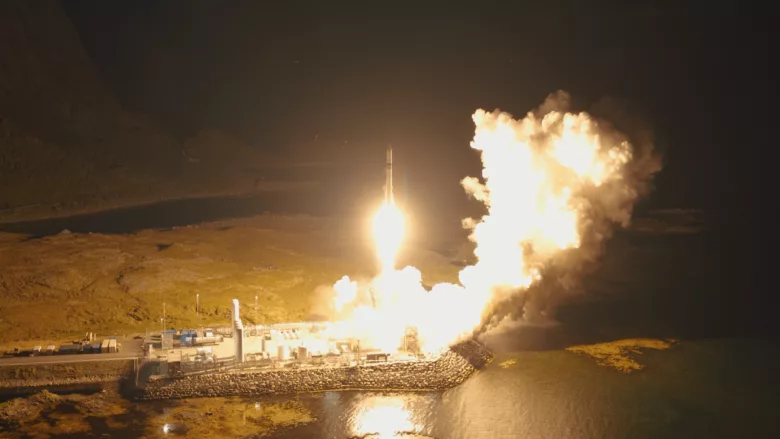
Isar Aerospace has become the first commercial European launch company to place satellites in orbit. Its Spectrum rocket lifted off from the company’s dedicated launch complex at Andøya Space in Norway on Saturday evening at 10:12 pm CEST, reached low Earth orbit and deployed its payloads. It was the vehicle’s second flight and the first orbital launch by a commercial provider from continental Europe.
“Today, Isar Aerospace opened space from Continental Europe,” said Daniel Metzler, CEO and co-founder of the Munich-based company. Launch capacity remains the biggest bottleneck in the global space industry, he said, and commercial and institutional customers now have a genuine alternative. The company says it is working with its customers to confirm the status of the satellites.
How the Flight Went
According to Isar Aerospace, the two-stage vehicle passed through maximum dynamic pressure, shut down its first stage on schedule, separated the stages and ignited the second stage. It crossed the Kármán line at an altitude of 100 kilometres, jettisoned the payload fairing and reached orbital velocity. Spacecraft separation followed the circularization burn.
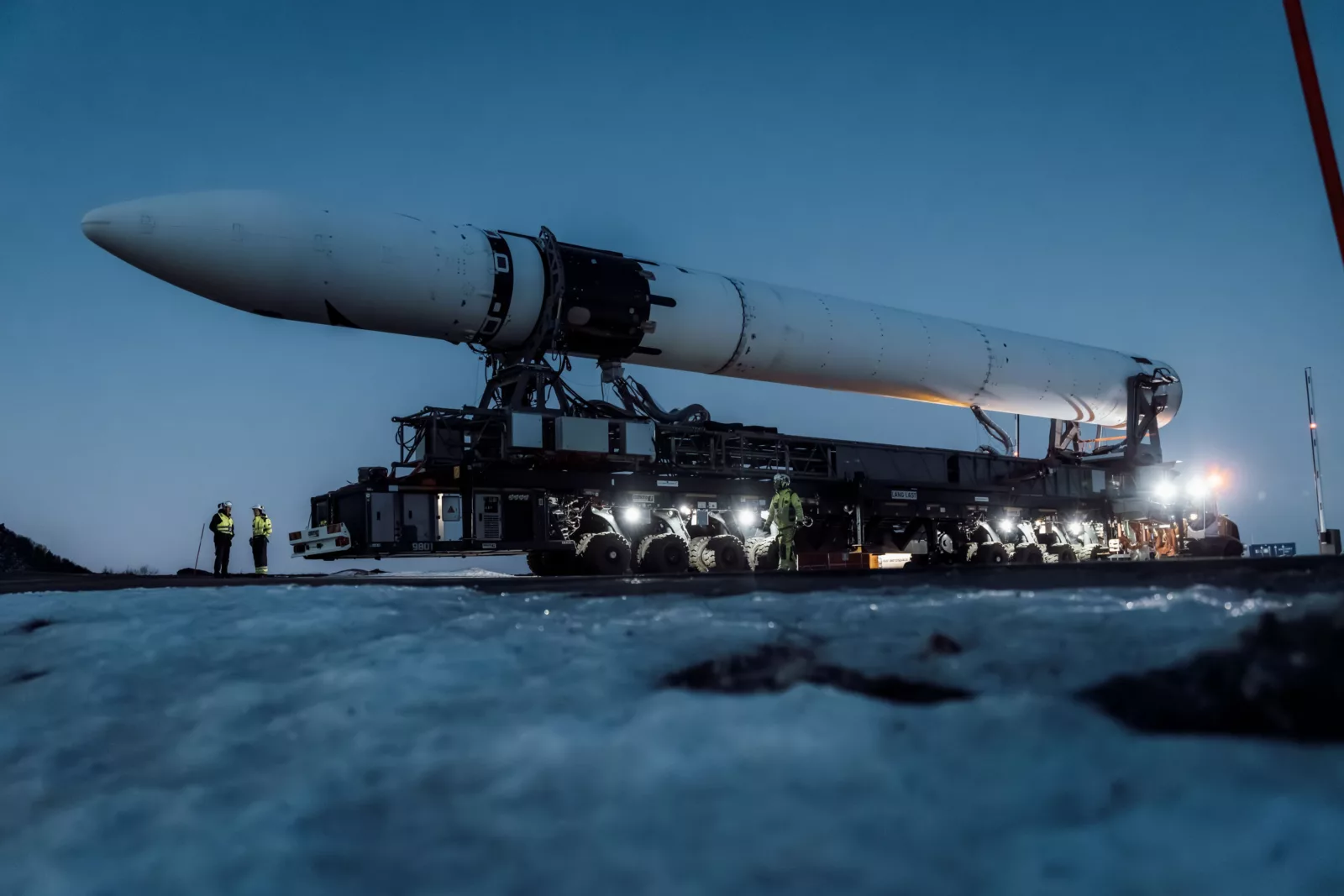
Spectrum stands 28 metres tall, measures 2 metres in diameter and is designed to carry payloads of up to 1,000 kilograms to low Earth orbit using ten engines. Its first test flight ended last year after roughly 30 seconds, which cleared the pad and validated the flight termination system.
Six Payloads From the Microlauncher Competition
The satellites on board were selected through the Microlauncher Competition run by the German Space Agency at DLR, a programme that gives universities and startups low-cost access to space and is funded through ESA’s Boost! initiative. The flight carried CyBEEsat from TU Berlin, TriSat-S from the University of Maribor, Platform 6 from Bulgarian manufacturer EnduroSat, FramSat-1 from Norway’s NTNU, SpaceTeamSat1 from the student-run TU Wien Space Team and a non-separable technology experiment called “Let It Go” from Munich company Dcubed.
Several of the payloads combine flight heritage with classroom outreach. SpaceTeamSat1, a 1U CubeSat weighing about one kilogram, carries an education module built around a Raspberry Pi with temperature, acceleration, magnetic field and UV sensors, a dosimeter and two cameras. School students write experiments in Python that run on the satellite, with results returned through a SatNOGS ground station.
A Milestone for the European Launcher Challenge
The launch also cleared the first hurdle of ESA’s European Launcher Challenge, which requires the selected providers to complete an orbital flight by 2027. Isar Aerospace signed its contract under the programme recently and is the first of the group to hit the milestone.
“A historic launch from Andøya Spaceport in Norway today, the first European Launcher Challenger to reach orbit,” said ESA Director General Josef Aschbacher, who called the result an astounding achievement for a company founded only eight years ago. Géraldine Naja, ESA’s Director of Space Transportation, described it as the first European company to reach orbit with its own launch vehicle. Isar Aerospace was initially supported by ESA’s Business Incubation Centre and has since received several rounds of co-funding through the Boost! programme.
Scaling Production Comes Next
Founded in 2018 and headquartered near Munich, Isar Aerospace has grown to more than 400 employees across five locations and develops, manufactures and tests its launch vehicles almost entirely in-house. The company raised 270 million euros in a Series D in June from Island Green Capital, Molten Ventures, HV Capital, Lakestar, UVC Partners and KfW Capital, following an earlier investment by the NATO Innovation Fund.
Spectrum vehicles three through seven are already in production. A new 40,000 square metre facility in Parsdorf near Munich is intended to give the company capacity for up to 40 launch vehicles a year. A second launch complex is under construction at Spaceport Nova Scotia in Canada, covering the mid- to high-inclination orbits used for Earth observation and communications. Recent customer wins include contracts with Astroscale Japan and ESA.