Nothing Phone Envisions a Future Where we Build Personalised Apps Using Voice

Set Trending Topics as a preferred source on Google.
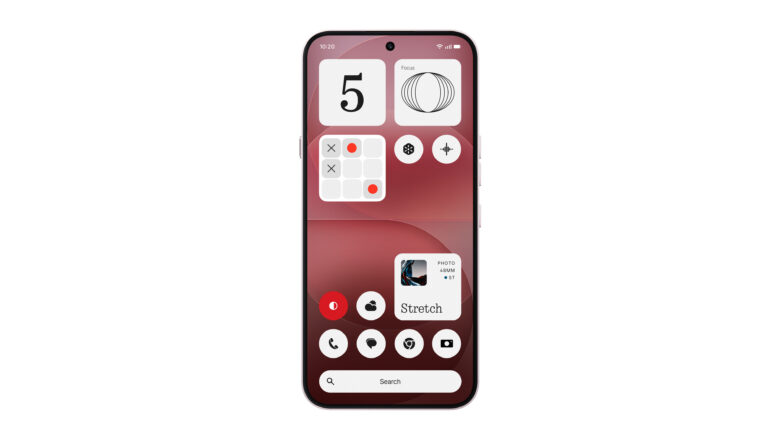
Nothing, a smartphone manufacturer founded in 2020 and headquartered in London, has unveiled “Playground,” a platform that enables users to create custom widgets for the home screen through simple text descriptions. The feature is part of the so-called Essential Apps and could fundamentally change how personalized software functions on mobile devices.
Playground is also available on the recently presented new phones Phone (4a) and Phone (4a) Pro. “Personalization now also includes hiding apps and creating widgets via Playground, so users remain productive, creative, and always in control,” the company states regarding the feature.
Generating widgets through natural language
The core of the platform is the Essential Apps Builder, which is integrated into the web-based Playground environment. Users enter a description in natural language, and the system creates a functional application or widget within a short time, which then appears directly on the home screen. Following an internal alpha phase in September 2025, the public beta has now launched, with access granted gradually via a waitlist.
According to Nothing, when making later adjustments, only the modified elements are updated, while already functioning areas remain unchanged. Earlier versions can be restored with a single click if needed.
Feature scope and permissions
At launch, Essential Apps support three system permissions: location, calendar (read access), and contacts. This allows for implementations such as location-based reminders, countdown widgets for meetings, or quick access to specific contacts.
Additional features are already in the pipeline:
- Camera and microphone access
- Network queries
- Notifications
- Vibration control
- Phone functions
- Bluetooth
An announced Nothing OS update will additionally provide activity recognition, sensor data, usage statistics, and a first system-wide weather API.
Design and technical capabilities
Currently, widgets are available in 2 × 2 and 4 × 2 sizes, with additional formats such as 1 × 2 and 4 × 4 planned. Image formats JPEG, PNG, GIF, and WebP are initially supported. Icons, custom fonts, and audio functions are to follow in later beta versions.
In parallel, Nothing is introducing a redesigned design foundation intended to standardize typography, spacing, control surfaces, accessibility, and dark mode display.
Part of a broader AI strategy
Essential Apps are part of the Essential Suite, which includes additional features:
- Essential Space: quick capture of content
- Essential Search: direct search results without app switching
- Essential Memory: context-based reminders
According to Nothing, the goal is a more personalized use of Nothing OS in the long term, without replacing the operating system itself. The platform enables users to create their own tools without programming knowledge and share them on the home screen.
Outlook: A paradigm shift in mobile software?
The ability to generate software through natural language could initiate a fundamental transformation. Instead of downloading pre-made apps from a store, users could in the future create individual applications that precisely match their needs. This would not replace the role of traditional app developers, but could establish a new category of personalized software.
Whether this approach gains traction depends on several factors: the stability and performance of AI-driven generation, security and control over permissions, and users’ willingness to design their own applications. With Playground, Nothing positions itself as a pioneer in this field and is testing how far personalized software on mobile devices can go.