The Richest 8 Million People Emit More CO2 Than 3.5 Billion Others


Set Trending Topics as a preferred source on Google.
The rich heat up the planet and then profit from the rebuilding. That is the core message of a new Oxfam report, which the aid organization recently published ahead of the U.N. climate conference COP31 in Turkey. According to the report, “Disaster Divide,” the richest 0.1 percent of the world’s population, or roughly eight million people, produce more carbon emissions than the poorest 3.5 billion people combined.
One Ultra-Rich Person, 400 Times More Heat Waves
According to Oxfam’s press release, the richest 0.1 percent emit more than three times as much CO2 as all of sub-Saharan Africa and its 1.3 billion people. Using climate models, Oxfam calculated how much individual groups contribute to extreme weather. The findings:
- Heat waves: A person in the richest 0.1 percent has contributed nearly 400 times more to extreme heat waves than a person in the poorer half of humanity.
- Global warming: The richest 1 percent are responsible for 20 percent of warming since 1990, about 100 times more per person than the poorer half.
- Deaths: According to Oxfam, a single year of emissions from the richest 1 percent will cause 1.9 million excess heat-related deaths. Seventy-eight percent of them will occur in low- and lower-middle-income countries, which together account for only 8 percent of global emissions.
- Damage: By 2050, emissions from the richest 1 percent are expected to cause nearly $53 trillion in economic damage.
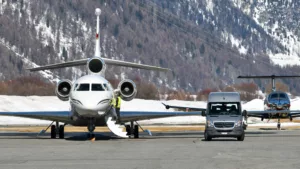
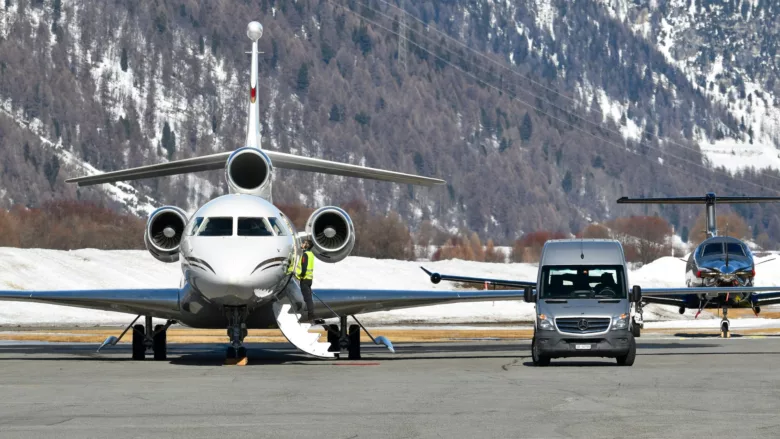
- Private jets: All private jets worldwide emit more CO2 in two seconds than a person in the poorer half of humanity does in an entire year.
Oxfam also cites a figure for Germany: More than 55,000 private flights took off from German airports in 2025. Manuel Schmitt, an inequality expert at Oxfam Germany, said the ultra-rich are driving the world toward climate collapse.
Profiting From Destruction and Reconstruction
The second part of the report looks at who profits from the climate crisis. According to Oxfam, 71 percent of the investments of 1,000 billionaires it examined went into particularly climate-damaging industries such as oil, gas and chemicals. At the same time, the global market for disaster relief and reconstruction is projected to grow from $70 billion to $92 billion a year by 2029, the report says.
Oxfam created a “Destroy & Rebuild Index” for the report. It lists 217 corporations that operate in climate-damaging industries and also profit from disaster preparedness and reconstruction. According to Oxfam, the asset managers BlackRock and Vanguard hold stakes in 92 percent of these companies, with combined investments of more than $1 trillion. Oxfam’s executive director, Amitabh Behar, accuses the ultra-rich of cashing in three times: on the pollution, on the disaster and on the cleanup.
What Oxfam Is Demanding
Oxfam is calling on governments at COP31 to make the rich pay more:
- Taxes: permanent wealth and income taxes on the ultra-rich, a permanent tax on fossil fuel companies and steep levies on high-emission luxury goods such as private jets.
- Climate finance: significantly more money for the Global South, mainly as grants rather than loans. Funding for adaptation to climate change should triple by 2035.
- Corporate power: stricter rules for companies in disaster response, reconstruction and food systems.
Those who fuel the climate crisis so heavily must also pay to deal with it, Mr. Schmitt said.
The Broader Population Emits, Too
As striking as the figures are, they are based on estimates. Oxfam does not measure how much CO2 individuals actually emit. Instead, it allocates countries’ emissions to different groups based on income data. The data come from sources including the Stockholm Environment Institute and the World Inequality Database. In its methodology note, Oxfam itself acknowledges that the results depend heavily on assumptions about the relationship between income and emissions. For billionaires, Oxfam also attributes companies’ emissions to their owners. In other calculations, however, the same emissions are counted for the customers who buy the products.
In addition, a large share of emissions comes from the broad middle class. According to the World Inequality Lab, the world’s richest 1 percent emitted about 17 percent of global CO2 emissions in 2019. The remaining 80-plus percent came from everyone else. The researchers led by the economist Lucas Chancel therefore recommend that climate policy focus on the entire upper half of the world’s population. That includes most people in Europe.