Pi 1.0: A.I. Agent From Austria’s Developer Scene Tops Hacker News


Set Trending Topics as a preferred source on Google.
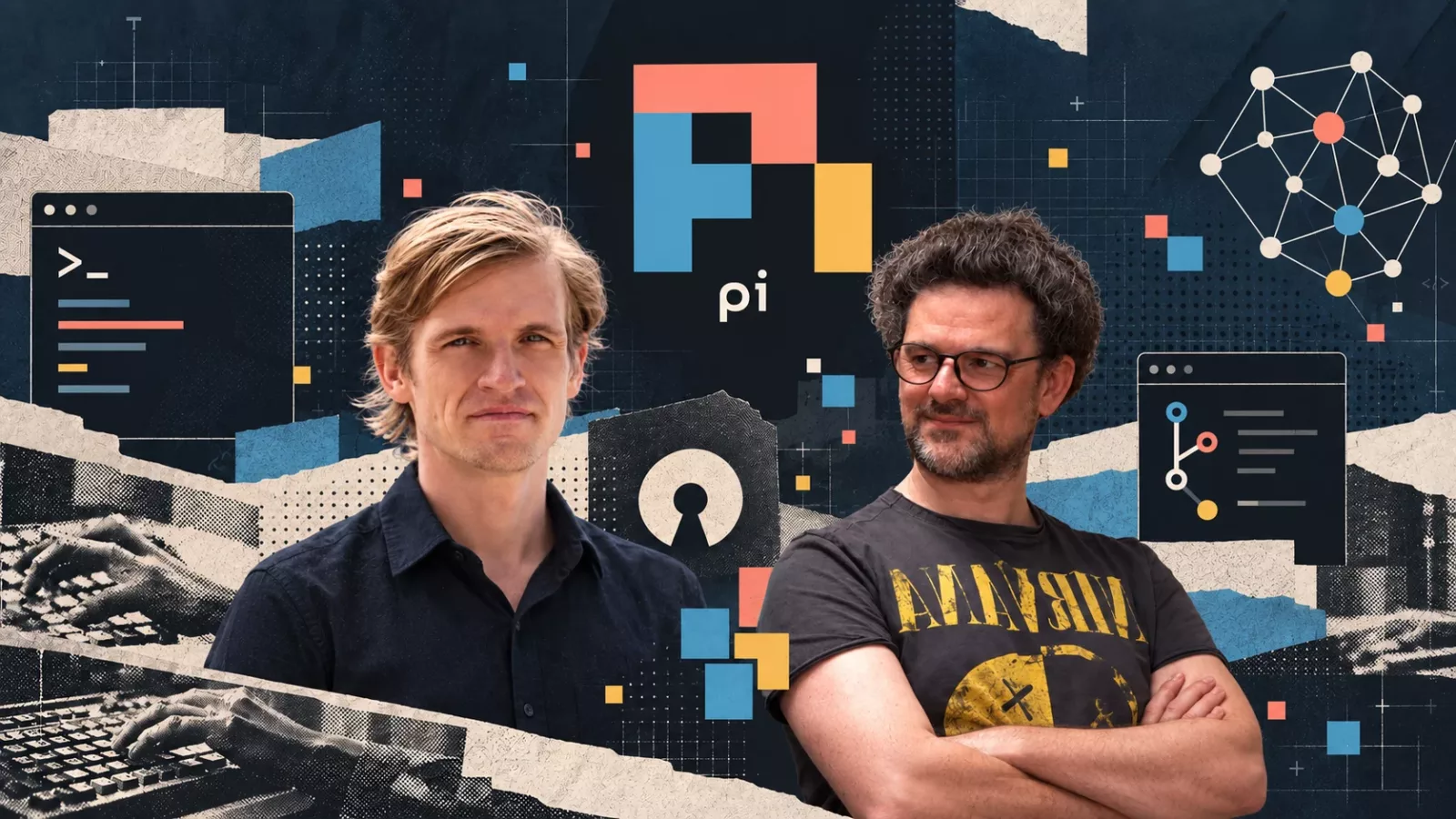
Earendil, the A.I. company of Austrian developer Armin Ronacher, has just released Pi 1.0. The minimalist agent harness promptly climbed to the top spot on Hacker News, where it passed 1,000 points. At the same time, Earendil launched Pi Durable, an experimental framework for long-running A.I. agents.
Pi belongs to the class of software that turns an A.I. model into an agent that can actually get work done. Trending Topics has already explained these so-called A.I. harnesses in detail: They manage context, provide tools and execute commands. Well-known examples include Anthropic’s Claude Code and OpenAI’s Codex. Pi takes a deliberately lean approach and works with models from all major providers.
From Side Project to Top Investors
Pi was originally created by Austrian developer Mario Zechner, who is best known in the community as the creator of the game framework libGDX and for his work on OpenClaw. Earendil acquired the project in the spring. Zechner has since become a shareholder and continues to lead its technical direction. Earendil was founded by Ronacher, the creator of the Python framework Flask and longtime engineering head of Sentry in Vienna (as Trending Topics reported), together with Colin Daymond Hanna (formerly of Balderton). Its backers include the venture capital firms Accel and Balderton as well as founders of n8n, OpenClaw, Revolut, Sentry and Slack.
According to Earendil, “hundreds of thousands of people around the world” now use Pi every week, and many of them also submit bug reports and code contributions. The user figure cannot be independently verified. On GitHub, the project had already collected more than 45,000 stars and over 2,000 third-party extensions by May, according to an analysis by Implicator. With version 1.0, the team now wants to signal that Pi is stable enough for businesses to rely on.
What’s New in Pi 1.0
Pi is known for its restraint. While agent tools change every week, the team waits until an idea has proven itself and then weighs its real benefits against the added complexity. Many of the new features were debated for months, Earendil writes, and the list of discarded ideas is “much longer.”
That makes one change particularly notable: Through a feature called Codemode, Pi now natively supports the Model Context Protocol (MCP), the standard that lets A.I. agents connect to external tools and data sources. For a long time, Pi deliberately rejected MCP, mainly over concerns about composability and token consumption. In a separate blog post, Earendil explains the change of heart: The protocol has evolved significantly, and Pi needed a similar execution environment anyway for features such as its Jev integration. Codemode is a JavaScript environment in which the agent can bundle and combine tool calls in a script. “The best way to positively influence something is to embrace it,” the team writes about the reversal.
The key new features at a glance, according to the official announcement:
- Codemode with native MCP support, plus connections to non-language models such as image models or the much-discussed model Jev from the startup TypeSafe AI
- Virtual models via extensions, for example a setup that plans with Claude Opus, implements with GPT and lets Jev decide when to switch
- Tools are loaded only when needed, which saves context
- Cache warming for Anthropic models to cut costs and wait times
- Mid-conversation system messages that let users change prompts and tools during a running session
- A new design for the terminal interface, which now starts in full-screen mode by default
Earendil shows what this looks like in practice in short demos: Using Codemode, Pi writes a script that condenses a full week of commits into a short summary. In another example, Pi programs an extension for itself, namely the virtual model that hands planning to Claude Opus and implementation to GPT 6 Luna. The /session command then breaks down the costs incurred per model and how heavily the cache was used.
Pi 1.0 is available under the open-source MIT license and can be installed on macOS, Linux and Windows with a single command. Documentation is available at pi.dev, and the code is on GitHub. Under Earendil’s licensing model, the core will remain permanently open, while paid add-ons and cloud services can be offered alongside it.
Pi Durable: Agents That Survive Crashes
Alongside Pi 1.0, Earendil released a second package, Pi Durable, which is still clearly labeled as experimental. It grew out of a lesson from everyday Pi use: Many people want to use Pi beyond coding and outside the terminal, across different interfaces and for much longer tasks. To preserve Pi’s minimalist roots, the team moved this work into a separate package. Pi is designed as a coding agent for one person in a terminal, while Pi Durable is meant to serve as the foundation for any A.I. application that runs for a long time and is steered by several people at once. Zechner describes the concept in a detailed blog post.
The core idea: Every step an agent takes is saved as a checkpoint. If the process crashes, the laptop goes to sleep or a container is restarted, the agent picks up exactly where it left off. A single harness can also run many conversations in parallel and branch them off at any point. Earendil gives the example of a Slack channel in which an agent answers, while a thread continues in parallel as its own branch. Multiple users can join a running conversation at any time and steer the agent.
Pi Durable runs anywhere there is a JavaScript runtime, including Bun and Cloudflare Durable Objects. The entire source code comes to about 15,000 lines. It is deliberately kept that compact so that an A.I. agent can read the full code itself and build on it.
Austria’s Weight in the World of A.I. Agents
Pi 1.0 reinforces a pattern that has been emerging for months: Some of the most closely watched open-source projects around A.I. agents have Austrian roots. Earlier this year, Peter Steinberger drew hundreds of developers to a meetup in Vienna for OpenClaw, and Zechner was there too. Earendil, for its part, is building its own ecosystem around Pi and the email-based agent platform Lefos, with a focus on openness and minimalism.
Competing with Claude Code and Codex, which are backed by billions in capital, Earendil is making a clear promise: Users should always be able to see and control what their agent is doing. The company describes its own mission as building software and open protocols that strengthen human agency. How well this approach resonates with businesses will become clear in the coming months. In the developer community, at least, the launch of Pi 1.0 has drawn strong interest.