Rocket Startup HyImpulse Raises More Than €50 Million for European Launch Capacity


Set Trending Topics as a preferred source on Google.
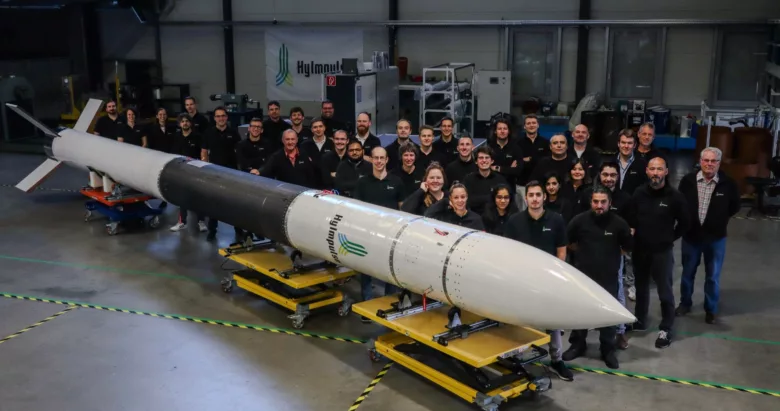
German rocket manufacturer HyImpulse has raised more than €50 million in equity in an extension of its Series A financing round. The Heilbronn-based company plans to use the funds to accelerate the commercialisation of its suborbital SR75 rocket and its orbital SL1 launch vehicle. HyImpulse is positioning itself to address a bottleneck increasingly affecting Europe’s space industry: reliable, short-notice access to space.
The financing round was led by JOIN Capital and Ace Capital Partners. New investors include North Ventures, BW-Capital, Bayern Kapital and the German Aerospace Center (DLR). According to the company, its total equity financing and public funding now exceed €125 million. HyImpulse also reports an order book worth more than €350 million.
Upcoming Launches
The company plans a further launch of its suborbital SR75 rocket from SaxaVord Spaceport in Scotland by the end of 2026. This is expected to be followed by the maiden flight of the SL1. HyImpulse intends to use the SL1 to place small satellites into orbit, while the SR75 is aimed at research, hypersonic testing and defence applications, among other uses.
Europe’s Dependence on Rideshare Missions
The launch bottleneck is not solely the result of too few rockets. Many small-satellite operators currently rely on rideshare missions for access to space. With its frequent Falcon 9 launches and rideshare model, SpaceX has driven down prices and created significant launch capacity. While this is attractive for many customers, it also creates a new dependency: launch dates, orbits and mission profiles are often determined by the primary payload and the schedule of the US provider.
For operators needing a specific launch date, a particular orbit or short-notice availability, such shared missions are not always suitable. European institutions, security agencies and companies are therefore seeking domestic and more flexible alternatives. Geopolitical tensions and rising defence requirements are adding urgency to that demand.
Aiming for Lower-Cost Launches
HyImpulse argues that its hybrid propulsion technology could provide a cost advantage. The combination of paraffin and liquid oxygen is intended to be less complex than conventional systems and to require fewer components. Whether this will translate into lower costs and competitively priced routine operations still has to be demonstrated in commercial service.
With the financing, HyImpulse is seeking to establish itself early in the European market for dedicated and responsive launches. In doing so, it also competes indirectly with other European rocket companies, including Isar Aerospace. The decisive question will be which company can move beyond a successful first flight and deliver regular, reliable launches at competitive prices. In a market shaped by SpaceX’s pricing and operational scale, that combination is Europe’s real bottleneck.