Sona8: Former Consultants Get Into Y Combinator With A.I. Interviews



Set Trending Topics as a preferred source on Google.
Instead of a few dozen interviews, a team of interpreters and a slide deck at the end, A.I. now talks to the entire work force: Sona8, a start-up founded by former consultants from BCG and McKinsey, has been accepted into Y Combinator’s current batch. Using A.I. voice agents, the team wants to find out how work actually gets done inside companies, and turn that into the knowledge base for the next generation of A.I. automation.
Interviews With the Entire Work Force
The idea came out of BCG projects that the chief executive, Anton Hantel, and the chief product officer, Thilo Tamme, worked on together. “Why only ever interview a few dozen employees when an A.I. could talk to all of them,” Mr. Hantel told Trending Topics, describing the starting point.
Here is how Sona8 works:
- Choose a question: Companies decide what they want to improve or automate, such as sales quoting or the processes in place before an A.I. rollout, and select the employees to involve.
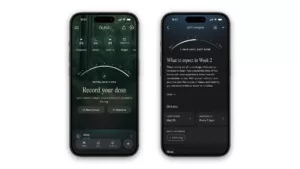
- Talk to the voice agent: Each employee gets a link and spends about 20 minutes talking to an A.I. voice agent about their work, in their own language. The agent asks follow-up questions, such as why a step is still done by hand or who else is involved.
- Use the findings: The conversations produce process maps and a list of the problems employees described, broken down by site and team, along with concrete recommendations for optimization and automation.
- Track the implementation: After each initiative, the agent goes back to the employees involved and asks whether it was implemented and what changed. The result, according to Sona8, is a kind of project management office that has talked to every employee.
Today, consulting firms mainly buy Sona8 for the stakeholder interviews at the start of an engagement, which otherwise eat up a large part of a project and still reach only a fraction of the people affected. Transformation and corporate development teams use it to run the implementation of change programs.
Sona8 says it has already supported more than 10,000 employee interviews. Its customers include one of the three largest management consulting firms.
Privacy as a Sensitive Issue
When employees tell an A.I. about internal processes, trade secrets and sensitive information can quickly end up in the system. “Employees talk to us about internal processes, so we handle the data with corresponding care,” Mr. Hantel said. Participation is voluntary, he said, and results are anonymized and aggregated by team or site. Before every deployment, the company clarifies with the client what information will be collected, who may access it and how it will be used. “Data protection, security and co-determination have shaped our product from the very beginning.”
The Road Into Corporations Runs Through Consulting Firms
For sales, Sona8 is relying on the world its founders come from. “We are starting with consulting firms and their clients, as well as strategy and transformation teams at large companies, whose needs we know from our own experience,” Mr. Hantel said. The entry point is a concrete project, such as a process diagnosis or an A.I. rollout, which is meant to grow into ongoing use. Consulting firms also act as multipliers, he said, because they can deploy Sona8 across different client projects. The first customers came through the founders’ network; now the team is building out the U.S. market from San Francisco.
On pricing, Sona8 combines a platform fee with usage-based components, for example for interviews and for queries from other A.I. tools. “We believe pricing will depend more on usage and on the value of the work done,” Mr. Hantel said. “Compute is a cost factor, but what matters most to customers is which task gets solved and what benefit it brings.”
The Vision: Context for A.I. Agents
In the long run, Sona8 wants to be more than a survey tool. The founders expect companies to try out many A.I. agents and automation tools over the next few years. Each of them needs to know how the work is actually done before it changes anything, and most of that is not written down anywhere. Combined with data from Slack, email and existing business systems, Sona8 aims to become a “context layer” that other A.I. tools can access through interfaces. When a company switches tools, the context stays.
To get there, Sona8 plans to read the systems a company already uses, connect them to what employees said and keep the picture current by asking again. Before a decision, management could then ask what it would do across sites and teams and get an answer from the whole company. A small team could steer a company-wide program that used to require a large one. And A.I. agents inside the company would check Sona8 first to learn how the work is done before they change anything.
The Team Behind Sona8
Sona8 was founded in San Francisco this year. Alongside Y Combinator, angel investors joined a small round, bringing total funding to more than $500,000 (about 427,000 euros). The team:
- Anton Hantel (CEO): Previously at Boston Consulting Group in Vienna, he dropped out of his M.B.A. at M.I.T. to build Sona8. He is responsible for sales, fund-raising and company building.
- Thilo Tamme (CPO): Previously a project lead at BCG X and a researcher in conversational A.I. at the Technical University of Munich, he left his Ph.D. for Sona8.
- Madeleine Malmsten (CTO): Taught herself to code and, without a high school diploma, rose to principal engineer at McKinsey’s QuantumBlack.
- Jakob Schepers (Founding Engineer): A computer science master’s student at the Technical University of Munich who previously worked in IT at Volkswagen.
Competition From Interview A.I. to Process Mining
Sona8 is not alone with the idea. The U.S. start-up Listen Labs also runs A.I.-powered interviews but focuses on customers rather than employees, and raised $69 million in a Series B round earlier this year. When it comes to understanding business processes, the Munich process-mining company Celonis, valued at more than $10 billion, has been established for years, though it relies on data from IT systems rather than conversations with the work force.