Uber and Delivery Hero: EU Commission Will Take a Closer Look at SSW Deal


Set Trending Topics as a preferred source on Google.
Uber’s planned takeover of Delivery Hero is becoming a case for Brussels’ competition watchdogs. According to Politico’s “Fair Play” newsletter, the European Commission’s Directorate-General for Competition (DG COMP) is already looking into the roughly €13 billion deal, even though the formal merger review has yet to begin. At the heart of the debate is whether Brussels should assess Uber’s acquisition and the parallel sale of 14 Delivery Hero country markets to financial investor SSW Partners separately or as a single package. A notable detail: SSW is set to finance most of its purchase of those markets with money from Uber.
As reported in the Politico Europe newsletter, industry players are currently lobbying DG COMP officials to take a closer look at the transaction. Andreas Schwab, a CDU member of the European Parliament for the European People’s Party (EPP) and one of the leading voices on competition policy in Parliament, has also called for a careful assessment of the deal.
Two Deals, One Question
The deal has been structured to keep antitrust concerns in Europe from arising. Had Uber acquired Delivery Hero outright, the two companies’ platforms would have overlapped significantly in several countries. That is why Delivery Hero is selling its business in 14 mostly European countries to SSW Partners. This second deal is conditional on the first.
A large share of the money for that purchase, however, comes from Uber itself. As Trending Topics reported, Uber has made the following commitment to the investor:
“Uber has agreed to lend SSW funds to finance the majority of the SSW transaction.”
In other words, Uber is lending the financial investor most of the roughly €1.4 billion that SSW is paying for the 14 Delivery Hero markets. SSW Partners itself is a small investment firm with around five employees and approximately $646 million in assets under management. It sees itself as an interim owner and intends to find long-term owners for the markets.
In the best-case scenario for Uber, the Commission would review both transactions separately and find little cause for concern, since the overlaps have already been resolved. Not every market participant is on board with that approach. According to Politico, at least one player is pushing Brussels to examine both deals together in order to assess their impact on the market as a whole.
Uber is currently in pre-notification talks with the Commission; it typically takes a few months before a formal filing is made. SSW, for its part, has asked Brussels to review its share of the deal, as Politico reports. That part falls below the EU’s merger control thresholds, and the investor wants to avoid parallel proceedings in several member states. The EU is one of several jurisdictions that need to sign off: A review has just begun in South Korea, with further proceedings to follow in the Middle East and Latin America.
What the Deal Is About
Uber announced over the summer that it intends to acquire Delivery Hero in full. According to Trending Topics, the U.S. company is offering €41.50 per share, which corresponds to an equity value of around $14.8 billion. Uber already holds roughly 37 percent of the Berlin-based delivery company, and the minimum acceptance threshold is 50 percent plus one share. The deal is expected to close in the second half of 2027. If regulators block it, Uber will owe a €700 million break fee.
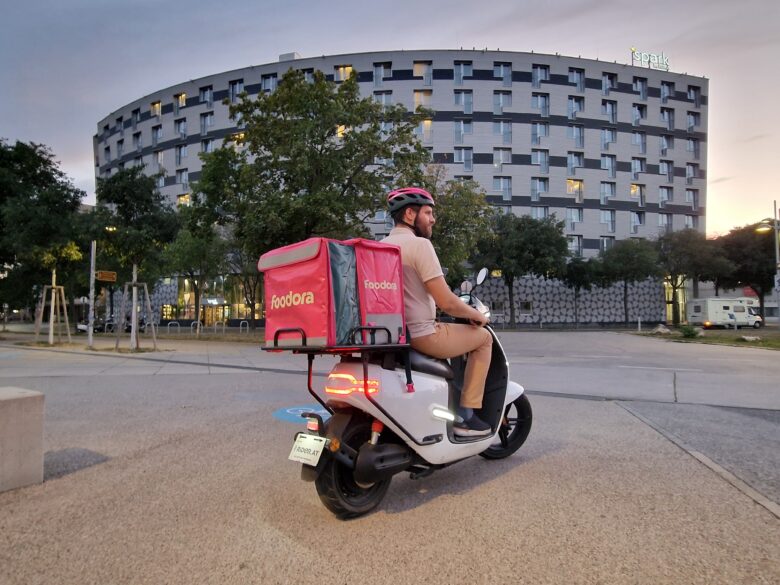
At the same time, Delivery Hero is selling its business in 14 countries to SSW Partners for around €1.4 billion. The markets include Austria with foodora and Spain with Glovo, as well as Sweden, Norway, Poland, the Czech Republic, Greece, Portugal, Romania, Turkey, Cyprus, Moldova, Chile and Ecuador. Together, they account for a gross merchandise volume of around $11 billion.
Spain is considered especially sensitive: Uber holds a market share of 20 to 30 percent there, while Glovo, and thus Delivery Hero, holds 50 to 60 percent. In addition to the European Commission, authorities in Austria, Spain, Poland and Ecuador must also approve the deal. Now that SSW has itself requested a review in Brussels, however, it looks increasingly likely that the European Commission will handle both parts of the deal, sparing the companies separate national reviews. Whether it will assess the two transactions jointly or separately remains open.