At Volkswagen, 40 Percent of Orders in Europe Are Now Electric


Set Trending Topics as a preferred source on Google.
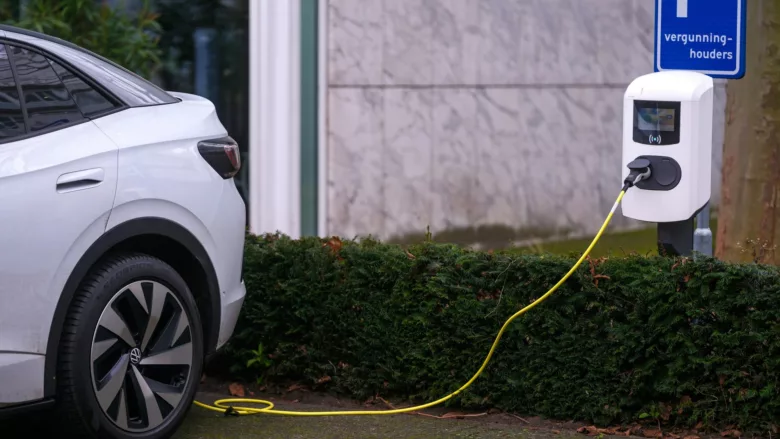
Crisis-hit Volkswagen finally has some good news, and it runs on batteries: About 40 percent of the carmaker’s order book in Europe is now made up of fully electric models. That is one of the takeaways from the delivery figures for the first three quarters that the Volkswagen Group has just released. When it comes to cars actually handed over to customers, the group is not there yet: In Europe, about one in five of its vehicles delivered is fully electric.
Electric Orders Have Doubled
Here are the European figures at a glance:
- Deliveries: From January through September, the group delivered 586,100 electric vehicles in Europe, up 12.1 percent. In the third quarter alone, it delivered 209,100, almost 20 percent more than a year earlier.
- E.V. share: The share of fully electric models in European deliveries rose from 18 to 20 percent after nine months.
- Orders: The order book for electric vehicles has doubled since the end of 2025. Incoming orders for E.V.s rose by more than 60 percent in the third quarter, compared with just 4 percent across all powertrains in the first three quarters.
- Small cars: The new Electric Urban Car Family, made up of the VW ID. Polo, the VW ID. Cross, the Škoda Epiq and the Cupra Raval, drew nearly 150,000 orders shortly after launch.
“In our home market, we are seeing a significantly accelerated trend toward all-electric vehicles,” said Martin Sander, the group executive responsible for sales. “The main reasons for this are the currently high fuel prices and the wider range of entry-level models.” Higher fuel prices driven by the war with Iran had already handed Tesla a comeback in Europe.
The group’s best-selling electric car now comes from the Czech Republic: The Škoda Elroq, with 92,200 deliveries, is ahead of the VW ID.4/ID.5 (81,900) and the Škoda Enyaq (72,700). While Škoda increased its E.V. deliveries by about 41 percent after nine months, the core VW passenger car brand saw its electric deliveries fall by about 26 percent.
Going Downhill Worldwide
Outside Europe, the picture is much bleaker. In total, the group delivered 6.01 million vehicles after nine months, 9 percent fewer than a year earlier. In the third quarter, deliveries fell 14.3 percent. Slight gains in South America and in Western, Central and Eastern Europe could not offset the slumps in China (down 30 percent) and North America (down 4 percent).
The trend is similar for electric vehicles. Worldwide deliveries fell 5.4 percent to 678,700 units, which means only slightly more than one in nine of the group’s vehicles globally is fully electric. In the United States, E.V. deliveries plunged 78 percent after government incentive programs expired and import tariffs took effect, and in China they fell 42.5 percent. Plug-in hybrids and range extenders, by contrast, gained ground, with deliveries up about 23 percent to 368,000 vehicles. Among the brands, Porsche (down 16 percent), VW passenger cars (down 13.7 percent) and Audi (down 11.4 percent) shrank, while only Škoda, VW Commercial Vehicles and Traton grew.
Austerity With 50,000 Job Cuts
The new figures come at a time when Volkswagen is deep in crisis. The supervisory board recently approved the “Future Plan 2030,” under which 50,000 jobs will be cut and the model lineup will shrink by about half by 2035. Chief Executive Oliver Blume described the group’s situation as “more than critical.” VW is examining “alternative uses” for its plants in Hanover, Emden, Neckarsulm and Zwickau, and its Osnabrück plant is set to produce defense equipment for Israel’s Rafael. The goal is to stabilize global sales at about nine million vehicles a year.
Chinese Rivals Are Catching Up
Volkswagen’s competitors are also profiting from Europe’s E.V. boom. From January through July, Chinese brands already accounted for 12.6 percent of the European electric car market, according to an analysis by Dataforce, and BYD is now ahead of Tesla, Volvo and Nissan in new registrations. Volkswagen held almost 14 percent of what was then a smaller E.V. segment in 2021 and is now below 8 percent. On top of that, Chinese hybrids are flooding the market through a loophole in the E.U.’s punitive tariffs.
How meaningful the high electric share in the order book will prove remains to be seen. Orders are not yet deliveries, and among the vehicles actually delivered in Europe, the E.V. share is only half as high, at 20 percent. Mr. Sander, for his part, sees the new small cars as proof that Volkswagen has “hit the zeitgeist exactly” with the four models.