A Friend: Tyrolean Start-up Builds an A.I. Plush Robot on OpenClaw, Shipping Not Before 2027


Set Trending Topics as a preferred source on Google.
A soft thing with a glowing face that listens, talks back and remembers what you tell it: That is how a team from Tyrol imagines the A.I. assistant of the future, and it is asking the crowd to pay for it up front.
On Thursday at 6 p.m. CET, Beans & Bits GmbH from Kematen in Tyrol launches its Indiegogo campaign for A Friend. Behind the company is Marco Riedesser, who previously brought Controllino, an Arduino-compatible industrial controller from Innsbruck, to market, also starting with crowdfunding. A Friend is something else entirely: a physical A.I. companion that, according to the company, has been in development for two years. Working development units exist; a finished production product does not. Shipping is planned for the second quarter of 2027.
What the Little Plush Robot Is Supposed to Do
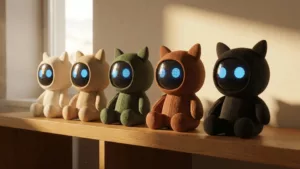
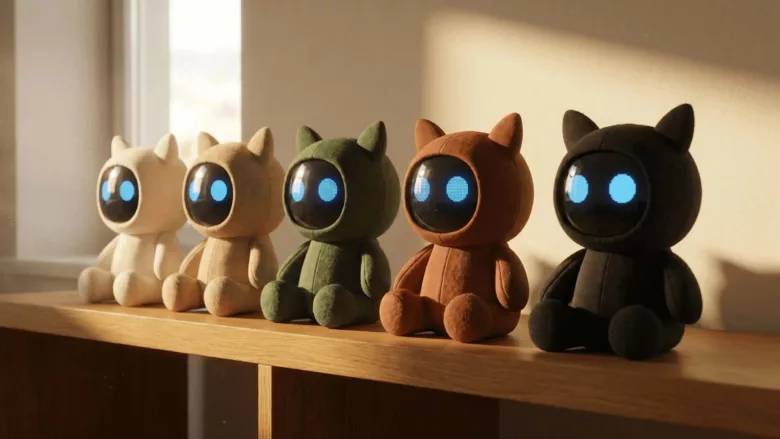
A Friend combines a soft body with cat ears, an illuminated face with pixel eyes and voice interaction. You address the device by a name of your choosing, it answers with a voice, and the face displays its reactions. At the core is the memory function: A Friend is meant to retain what you tell it and pick up on it in later conversations, as “a familiar, tangible place for thoughts and things you want to remember,” instead of opening yet another app. In everyday life, the device is supposed to wake you up, go through your to-dos and help prioritize them, assist with cooking, recommend films, serve as a radio and speaker for playlists or audiobooks, create calendar appointments and draft messages. It is meant to handle more than 20 languages and, as Mr. Riedesser said on a podcast, to be able to push back rather than agree with everything like many A.I. companions do. The shells can be swapped to change color and design.
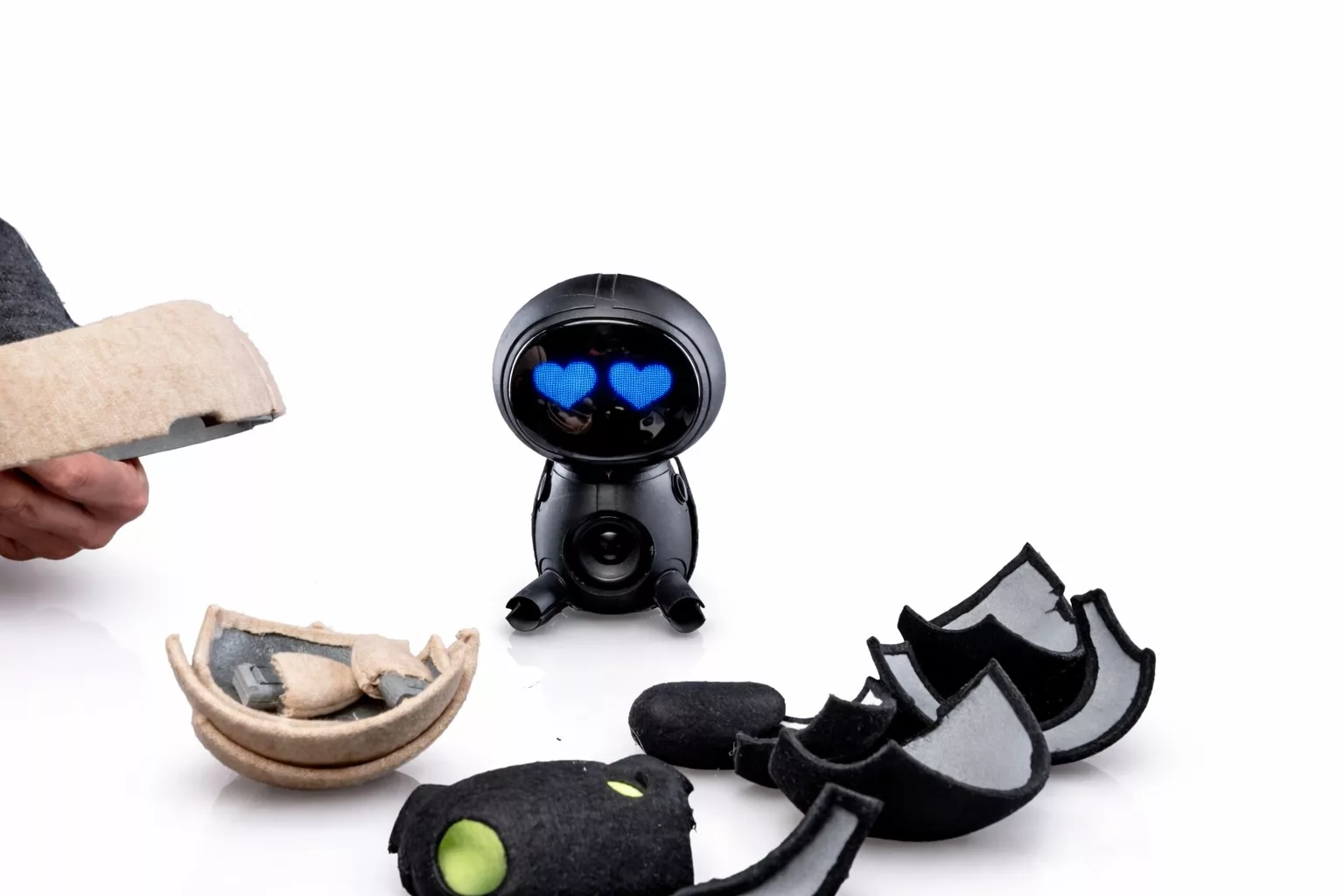
For the A.I. itself, the start-up relies on an open model. A Friend can be connected via API key to a supported external A.I. provider, with no subscription from the manufacturer required. The provider then bills API usage separately; an existing ChatGPT or Claude chat subscription does not automatically cover that. Those who want it simpler can use the optional A Friend Cloud service: Three months are included in the campaign packages, after which it costs €19 per month and device, cancellable at any time. In both cases, the device needs an internet connection. Technically, A Friend is built on OpenClaw, the open-source framework for personal A.I. agents, according to the manufacturer.
What It Costs
The first 250 units are available as a Super Early Bird for €249, after which a single device costs €299 during the campaign, with a regular price of €349 planned afterward. All prices are net; VAT and shipping come on top, so in Austria the early-bird device ends up at just under €300. For comparison: The Friend pendant by U.S. founder Avi Schiffmann, an always-listening companion without a voice, costs $129 (about €111) and was received so poorly by reviewers and in a million-dollar New York subway ad campaign that it is now on display at the Museum of Failure. The A.I. gadgets Humane AI Pin and Rabbit R1 likewise failed in 2024 on big promises and small performance, and Humane was later sold to HP.
Crowdfunding Is Not a Pre-Order
The most important point for anyone planning to jump in on Thursday: Paying on Indiegogo does not buy a product; it finances a product in development. The start-up says so itself in its press release: The delivery date is “an estimate and not a guaranteed delivery date,” the look, technical specifications and performance may still change, and manufacturing, testing and regulatory compliance are still ahead. The campaign, it says, comes with “development and delivery risks.”
That is not fine print; it is the reality of the business. Indiegogo and Kickstarter stress in their terms that they are not stores, and refunds are generally only available if the start-up grants them voluntarily, and even then only as long as there is money left. According to research by Wharton professor Ethan Mollick, about 9 percent of successfully funded Kickstarter projects never deliver their rewards, and roughly three quarters are late. Hardware is especially prone: The Zano drone raised more than £2.3 million and never shipped, and the Indiegogo SSD GigaDrive raised almost $1.7 million and, according to TechRadar, still had backers waiting ten months after the delivery date. The more successful a campaign, the greater the risk: Projects that raise ten times their goal deliver on time only half as often, because producing at volume brings entirely different problems than a few dozen development units. For a device that combines a microphone, speaker, lighting, wireless and a soft body, CE and radio certifications add time and cost. And there is a risk that sets hardware crowdfunding apart from a shop purchase: If the company goes bankrupt before shipping, backers end up at the back of the queue in insolvency proceedings. The 14-day right of withdrawal that applies to online purchases does not automatically apply to crowdfunding either.
What speaks for A Friend: Mr. Riedesser is not a first-time founder; with Controllino, he has already taken a hardware product from a campaign into series production and industrial distribution. The team communicates the risks unusually openly and avoids the crowdfunding cliché of claiming the device is “almost finished.” And the open model with your own API key makes A Friend less dependent on the survival of a single cloud service than many competing products. Whether that is enough will become clear in the spring of 2027 at the earliest. Until then, the rule for every campaign applies: Only put in as much as you could write off in the worst case.