Apple Intelligence Launches in China With Alibaba’s A.I.


Set Trending Topics as a preferred source on Google.
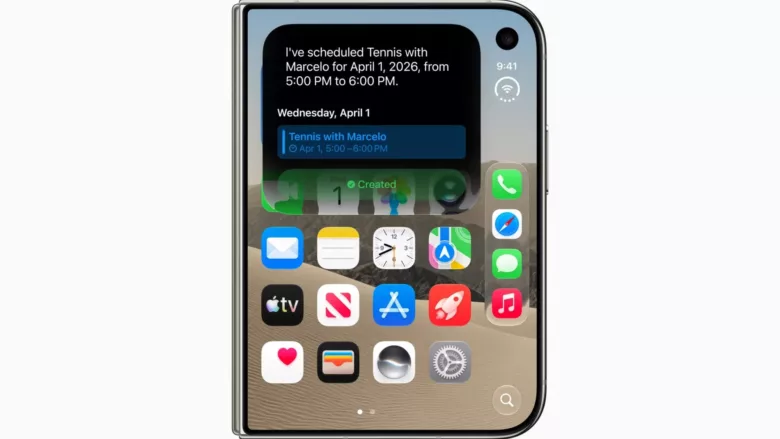
In the United States, Siri talks to Google and OpenAI. In China, it will soon talk to Alibaba. Apple has received the final regulatory approval to offer Apple Intelligence in mainland China, according to a report by The South China Morning Post, Engadget reported. The green light reportedly came from China’s Ministry of Industry and Information Technology, just in time for the Chinese launch of the foldable iPhone Duo, which is expected next week. The A.I. features and the new Siri are considered key selling points there.
Alibaba Supplies the A.I.
At the heart of Apple Intelligence in China are Alibaba’s models: the Tongyi Qianwen family of language models, better known as Qwen, and the image and video tool Tongyi Wanxiang. They are set to run on the iPhone, iPad, Mac and Vision Pro. According to TechCrunch, Apple is also working with Baidu on features for Chinese users and has held talks with DeepSeek and ByteDance.
China’s Cyberspace Administration approved Apple’s A.I. as early as July, but it has not launched since then. The reason is China’s strict rules on A.I. and data privacy. In Hong Kong, by contrast, Apple Intelligence is already largely available. One caveat: The South China Morning Post, on which the report about the new approval is based, is owned by Alibaba.
Why China Matters So Much to Apple
China is one of Apple’s most important markets. In Greater China, the company recently generated $20.5 billion (about €18.3 billion) in revenue in a single quarter, up 28 percent. After discount campaigns, Apple has also climbed back to second place in China’s smartphone market. With the iPhone Duo, which starts at about €2,300 in Europe and for which A.I. is considered the biggest strategic question, Apple wants to build on that position.
The Competition
In China, Apple is late to A.I. Huawei, Xiaomi and Honor have long been building their own or local A.I. models deep into their smartphones. Huawei relies on its own operating system, HarmonyOS, and its in-house Pangu models. For Apple, the partnership with Alibaba is therefore the fastest way to catch up.
The Downside
The China launch also has a political dimension. A.I. models offered in China must comply with the authorities’ content rules and may not, for example, give answers critical of the government. In the Chinese market, Apple is thus shipping an A.I. whose answers are subject to state censorship. Apple has not disclosed how much the Chinese version of Siri and Apple Intelligence will differ from the Western one.