Refurbed and Byeagain Among Austria’s Award-Winning Circular Economy Champions


Set Trending Topics as a preferred source on Google.
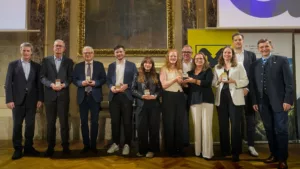
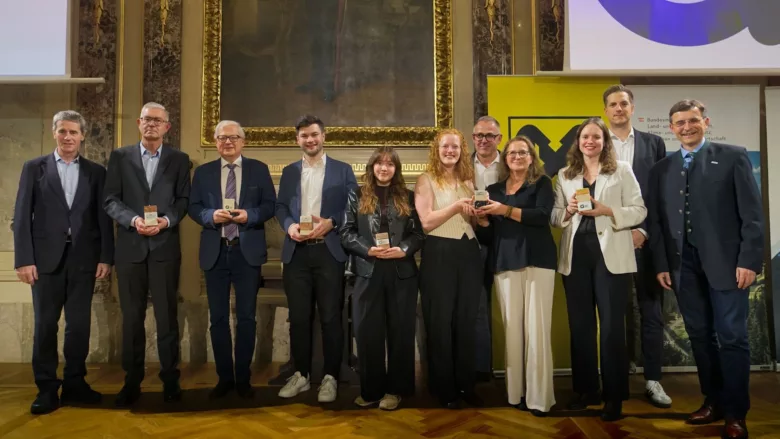
Old plasterboard becomes new plasterboard, returned goods become sellable again and glass comes back out of household waste. Last week, the Circular Innovation Award Austria honored companies that make money from the circular economy for the first time, at a ceremony at the House of Industry in Vienna. From 57 submissions, an international jury picked five category winners and two special prize winners. Among them are the Vienna-based scale-up Refurbed, the glassmaker Vetropack and the Graz-based start-up Byeagain.
The award is backed by the Circular Economy Forum Austria, the law firm Schiefer Rechtsanwälte and Raiffeisen-Landesbank Steiermark. Austria’s Ministry of Agriculture and Climate Protection (BMLUK) is its official patron, and the start-up category is supported by the Vienna Business Agency.
The 2026 Winners
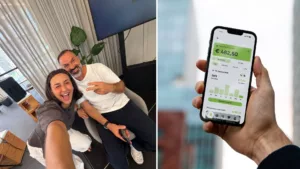
- Circular Business Model Innovation: Refurbed. The marketplace for refurbished electronics operates in 24 countries and is expanding its trade-in program, which brings used devices back into circulation. The company recently said it expects to top €100 million in revenue for the first time this year.
- Circular Industry Innovation: Vetropack Austria. With “Rezon,” Vetropack says it has developed the world’s first reusable glass bottle made of tempered lightweight glass. It requires less material and survives more refill cycles.
- Technological Circularity Breakthrough: Brantner Green Solutions. The company’s GLASY technology recovers glass from residual waste processing and makes it usable again for the packaging industry. The solution is already in industrial use.
- Circular Start-up of the Year: Byeagain. The start-up from Graz refurbishes nonstandard returned goods with A.I.-supported processes and brings them back to market as “refurbishment as a service.”
- Circular Collaboration Award: GzG Gipsrecycling. The joint venture of PORR, Saint-Gobain Austria and Saubermacher runs Austria’s first gypsum-to-gypsum recycling plant, which turns old plasterboard into raw material for new products.
The jury also handed out two special prizes. The Social Circular Impact prize went to BauKarussell, which reuses building components and materials when large buildings are dismantled and involves social enterprises in the work. The textile service company Salesianer was recognized as a Circular Pioneer for its rental model for workwear and linens, which has relied on professional care, repair and long product life for years. Even the trophies are circular: The design studio materialnomaden turned old trophies into one-of-a-kind awards that can be taken apart again.
Three Ministries, One Goal
The award is meant to put companies in the spotlight that show with concrete solutions that the circular economy is economically viable and competitive, said Karin Huber-Heim, president of the Circular Economy Forum Austria.
Two federal ministers and a state secretary also weighed in by video. Norbert Totschnig, the agriculture minister, called the shift to a circular economy a central building block for a resilient and future-proof Austria. Peter Hanke, the infrastructure minister, set out a concrete goal: Austria should rank among Europe’s top three in circular material use by 2035, he said, with €2.6 billion in funding available through 2029 under the country’s Industrial Strategy 2035. Elisabeth Zehetner, a state secretary in the economy ministry, called a competitive circular economy a real economic opportunity for Austria.
How Far Austria Is From the Top Three
The road there is long. According to the European Environment Agency, only 14.3 percent of the materials used in Austria came from recycling in 2023. That is more than double the 2010 level, but not enough to meet the targets, the agency said. Austria’s own circular economy strategy aims for a rate of 18 percent by 2030.
The leaders in Europe are in a different league. According to Eurostat, the Netherlands led in 2024 with 32.7 percent, followed by Belgium at 22.7 percent and Italy at 21.6 percent. The E.U. average was 12.2 percent. To make the top three, Austria would have to raise its rate significantly in less than a decade.
The next round is already set: Submissions for the 2027 award open in April.