DeepSeek Ships a Faster Flash Model and Its Own Search API


Set Trending Topics as a preferred source on Google.
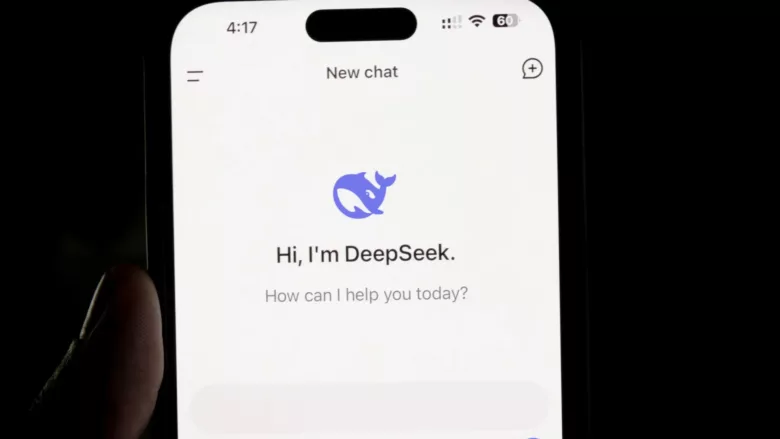
DeepSeek is sticking to its playbook: little fanfare, a lot of performance per cent. On Saturday, the Chinese A.I. lab released DeepSeek-V4.1-Flash-1017, a new version of its fast Flash model. According to DeepSeek’s own changelog, it delivers better benchmark results, finishes tasks faster and produces shorter answers. Prices stay the same. DeepSeek is also opening its in-house search engine to developers for the first time.
More Performance for the Same Price
The update is already live in the web app, the mobile apps and the API, under the name deepseek-flash. The model makes its biggest gains in coding and in so-called agentic tasks, in which the A.I. completes several steps on its own. On Terminal-Bench 4.0, its score rises from 31.2 for the September version to 42.3, and on the DeepSWE software engineering test from 74.2 to 77.0. The model was optimized mainly for DeepSeek Harness, the company’s own agent environment, and for Tencent’s coding assistant CodeBuddy.
Under the hood, V4.1 Flash is a mixture-of-experts model with 552 billion parameters, of which only 8 billion to 16 billion are active per token. Its context window holds one million tokens. Pricing remains $0.30 (about €0.27) per million input tokens and $1.20 (about €1.07) per million output tokens. Because answers are shorter, tasks should end up cheaper overall.
A Search Engine as an API
The search API is new. DeepSeek runs its own search engine, which the company says indexes hundreds of billions of web pages and handles hundreds of millions of queries a day. It is designed to filter out SEO spam, GEO manipulation and low-quality A.I. content. Through the API, developers can now retrieve search results or have individual web pages returned as text. A thousand successful requests cost $0.75 (about €0.67). That puts DeepSeek in competition with providers such as Brave, Exa and Tavily, whose search APIs power many A.I. agents.
Where DeepSeek Ranks Among Open-Weight Models
The independent benchmarking site Artificial Analysis has not yet tested the new version. The September version of V4.1 Flash scores 39 points on its Intelligence Index. Among models with openly available weights, that puts DeepSeek in a tie for sixth place with Meta’s Muse Spark Open. All of the models ahead of it come from Chinese rivals:
- No. 1: Xiaomi’s MiMo-V2.6-Pro, with 46 points
- No. 2: Z.ai’s GLM-5.3, with 45 points
- Nos. 3 and 4: StepFun’s Step 5 Preview and Moonshot’s Kimi K3, with 44 points each
- No. 5: Z.ai’s GLM-5.3-Flash, with 42 points
In the overall ranking of all models, DeepSeek lands only around 46th place. The top spots belong to closed models from Anthropic, Meta, OpenAI and Google, with up to 58 points. Meta is the strongest American provider of open-weight models, followed by Reflection with Beam 1.0 (30 points) and Nvidia with Nemotron 3.5 Super VL (26 points).
An analyst at the routing provider OrcaRouter predicts 45 to 46 points for the new version, which would be enough for the top three. That has yet to be measured, however. Robert Lea, an analyst at Bloomberg Intelligence, estimates that the gap between Chinese models and the leading American ones has narrowed to about 3 percent since the V4.1 launch, down from 15 percent earlier this year.
The Numbers Come From DeepSeek
The benchmarks call for caution. All comparison figures for the new version come from DeepSeek itself, and in several tests the model still trails the expensive top models from the United States. It is also unclear whether DeepSeek will publish the weights of the new checkpoint. The September version is freely available on Hugging Face under an MIT license, but reports on the update are contradictory. Companies that build products on DeepSeek also have to live with silent updates: The model behind the name deepseek-flash changes without much notice.