The Exploration Company: European SpaceTech Raises $450 Million in the Largest Series C


Set Trending Topics as a preferred source on Google.
The Franco-German space company The Exploration Company (TEC) has just announced a Series C round of $450 million. According to the company, it is the largest Series C ever raised by a European space company, and also the largest funding round ever secured by an EU-headquartered company led by a female founder and CEO. The round is co-led by Bessemer Venture Partners, Atomico and the Scaleup Europe Fund, which is managed by EQT. TEC’s existing European investors Balderton, Plural, Cherry and Red River West are also taking part. Alex Ferrara, a partner at Bessemer, is joining the board of directors.
The round brings TEC’s total funding to roughly $680 million. Closing remains subject to the required regulatory approvals. The company had previously raised, among other rounds, 150 million euros in a Series B that was itself a record for the European space sector at the time.
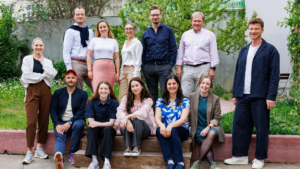
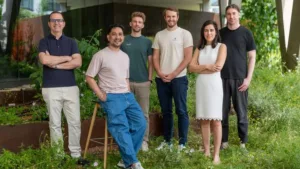
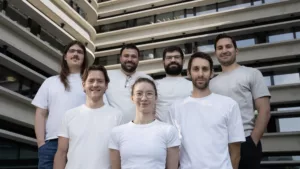
TEC was founded in 2021 by Hélène Huby, formerly a manager at Airbus, together with a team of aerospace veterans. It now employs more than 550 people across sites in Europe, the United States and the United Arab Emirates. The fresh capital is earmarked for further hiring and industrial scale-up, specifically in engineering, manufacturing, mission operations, propulsion and program delivery.
What Nyx Is and What the Capsule Is Meant to Do
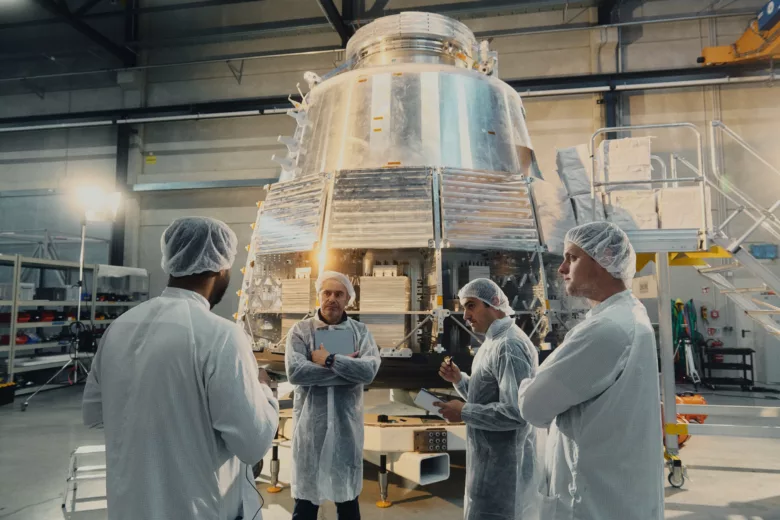
At the center of the company sits the Nyx capsule. It is designed as a reusable and refillable transport system that carries cargo to space stations in low Earth orbit and brings it safely back to Earth. Nyx is launcher-agnostic, meaning it can in principle fly on different rockets, and it is intended to serve both public and commercial space stations. A version for carrying crew is planned further down the line. The company cites a return payload capacity of up to 3,000 kilograms.
The next major milestone is the first full-scale orbital demonstration: Nyx is to dock with the International Space Station and then return to Earth, proving the complete transport chain from ground to orbit and back in a single flight. A first taste came with the demonstrator flight “Mission Possible,” which launched last year as a rideshare on a Falcon 9. The test flight went largely to plan, though contact was lost shortly before splashdown and the capsule was never recovered. TEC described the outcome as a partial success.
Storm: A Reusable Engine for a European Heavy-Lift Launcher
The second part of the financing goes into Storm, a reusable high-thrust rocket engine. It burns liquid oxygen and biomethane and uses a full-flow staged combustion cycle, an approach that so far has been industrialized mainly by SpaceX with its Raptor engine. According to TEC, this is the first time in Europe that funding on this scale has been committed to a reusable engine of that class.
Storm is meant to provide the propulsion foundation for a future European reusable heavy-lift rocket capable of placing up to 40 tons into low Earth orbit in a reusable configuration. Along the way, the company plans a test campaign: pre-burner tests with a subscale thrust chamber in the coming months, followed by an oxygen-rich power pack test and, in the years after that, a test of the full workhorse engine.
Commercially, TEC points to more than $2 billion in contracts and commitments, split between public programs and private customers. These include agreements with the European Space Agency (ESA) as well as cargo logistics deals with commercial space stations. TEC was also the first European space startup to sign a Space Act Agreement with NASA.
What Else the Scaleup Europe Fund Does
For European tech policy, the round is notable because it marks the fourth investment by the Scaleup Europe Fund. The fund is an instrument of the European Commission, but it is run on commercial terms and managed by EQT. It combines public and private capital, targets a volume of 5 billion euros, and invests in deeptech, artificial intelligence and life sciences. The reasoning behind it: European scaleups should be able to close large growth rounds while relying less on American or Asian capital providers.
Alongside TEC, the fund has so far backed three companies:
- Iceye: The Finnish radar satellite specialist was the fund’s first investment, as part of a round worth roughly 1 billion euros.
- Lovable: The Swedish vibecoding startup raised a Series C of around $400 million at a valuation of $13.3 billion.
- Mistral AI: The French AI lab secured about 3 billion euros in its Series D.
Ted Persson, partner at EQT and co-head of the Scaleup Europe Fund, frames the investment around access to space becoming critical infrastructure, and around building that capability inside Europe. EQT Ventures had already backed TEC at an earlier stage.
The fund is also the subject of an ongoing debate about whether capital alone addresses Europe’s innovation gap. One line of criticism holds that its tickets have gone to companies that would likely have closed their rounds anyway, while the real shortfall sits at earlier stages and in the regulatory environment.
A Strong Year for European Space Funding
The TEC round joins a series of large European spacetech deals. German rocket developer Isar Aerospace raised 270 million euros this year, and Iceye brought in roughly 1 billion euros. The announcement also came with prominent political backing: French President Emmanuel Macron pointed to the “French German engine” behind the company, while European Commission President Ursula von der Leyen called it a strong moment for Europe’s space industry, highlighting that a company built across several member states was able to secure major financing in Europe.
Whether this turns into a genuine European alternative to the established US providers will be decided by the next technical milestones: the ISS docking maneuver of Nyx and the first firing tests of Storm.