HYPE Jumps 17 Percent as NYSE Owner ICE Teams Up With Hyperliquid Platform


Set Trending Topics as a preferred source on Google.
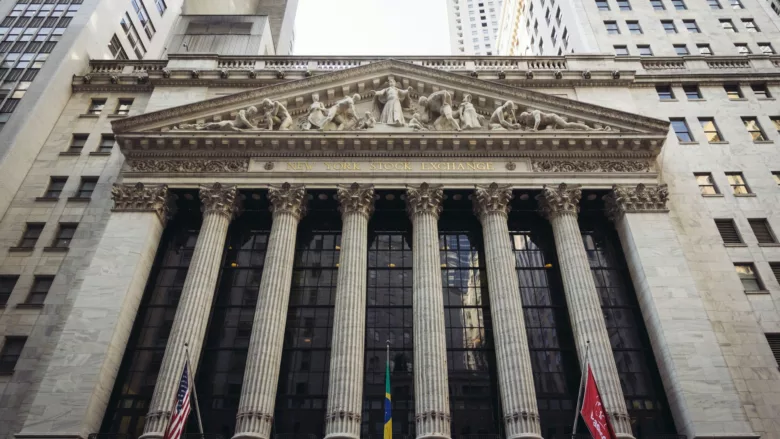
In the spring, Wall Street was still warning about Hyperliquid. Now it is buying in. Intercontinental Exchange (ICE), the owner of the New York Stock Exchange, plans to bring the markets of Trade[XYZ], a platform built on the crypto exchange Hyperliquid, to the United States in regulated form. The price of Hyperliquid’s token, HYPE, briefly jumped about 20 percent on the news and is currently up 17 percent. At about $94 (roughly €84), HYPE is closing in on its record high of nearly $98, set in September.
What ICE Is Planning
According to ICE’s announcement, the two companies have signed a definitive agreement. The key points:
- Operation: ICE is to be the exclusive operator of Trade[XYZ]’s regulated U.S. markets, with a dedicated trading and clearing structure for retail investors.
- Stake: ICE is taking a minority stake in Trade[XYZ]. The company did not disclose how much it is investing.
- Products: The plan covers so-called perpetual futures on cryptocurrencies, stocks, commodities and currencies. These derivatives have no expiration date and are usually traded with leverage.
- Access: Customers will have to verify their identity and trade through registered futures brokers. Among other channels, the products are to be distributed through ICE’s joint venture with the crypto exchange OKX.
- Timeline: No launch date has been set, as U.S. regulators must first sign off.
The retail business is to be kept strictly separate from ICE’s existing operations, since more than 99 percent of trading activity on its markets currently comes from institutional investors, according to the company. Jeffrey Sprecher, ICE’s chief executive, sees the perpetual markets as a complement to the group’s existing futures markets.
What Trade[XYZ] Is
Trade[XYZ] is one of the largest applications on Hyperliquid. It offers users outside the United States round-the-clock perpetual futures on stocks, stock indexes, commodities and currencies. According to Trade[XYZ], its markets have handled more than $650 billion (about €584 billion) in trading volume in just over a year. This is made possible by a Hyperliquid upgrade called HIP-3, which lets outside providers set up their own markets on the blockchain. Hyperliquid supplies the infrastructure, and Trade[XYZ] designs the products.
Trade[XYZ]’s investors include the hedge fund legend Stanley Druckenmiller. He wrote on X that he was excited to be an investor and planned to use the products himself. Elon Musk summed up the deal in one word: “Interesting.”
The Race to Bring Hyperliquid to the U.S.
ICE is not the only company trying to bring Hyperliquid to the United States. It recently emerged that Payward, the parent company of the crypto exchange Kraken, also wants to launch its own regulated markets on Hyperliquid. Those would be handled through Bitnomial, an exchange registered with the Commodity Futures Trading Commission (C.F.T.C.), the U.S. derivatives regulator.
There is also support from Washington. President Trump said in August that the C.F.T.C.’s chairman, Michael Selig, was working to bring Hyperliquid into the United States in a compliant way. So far, the exchange blocks U.S. users. The first precedent came in May, when the C.F.T.C. approved a Bitcoin perpetual future from the prediction market Kalshi. However, the agency said it would review perpetuals on other asset classes case by case.
According to DefiLlama data, Hyperliquid itself is the largest decentralized exchange for perpetual futures. The HYPE token now has a market value of about $22 billion (about €20 billion).
From Critic to Partner
ICE’s change of heart is striking. According to CoinDesk, which cited an earlier Bloomberg report, ICE and its rival CME Group urged the C.F.T.C. and lawmakers in Congress in May to take a closer look at Hyperliquid. The concern was that the largely anonymous, round-the-clock exchange could enable market manipulation and sanctions evasion and could even distort global oil prices. At the same time, HIP-3 markets were increasingly competing with the two exchange operators in commodities and stocks.
Consumer advocates are critical, too. Better Markets, a U.S. financial reform group, considers perpetual futures among the most dangerous crypto products for retail investors. Because they have no expiration date, it argues, they are not designed for hedging, their high leverage encourages constant speculation, and price swings can quickly trigger forced liquidations. Benjamin Schiffrin of Better Markets said the C.F.T.C. had completely ignored the risks when it approved Kalshi’s product.