iPhone Duo: First Reviews See a Gadget for Early Adopters, With App and Button Problems


Set Trending Topics as a preferred source on Google.
Apple’s riskiest iPhone in years is a device for gadget fans: That sums up the verdict of the first major reviews of the iPhone Duo. Shortly before its market launch on Friday, The Verge and the YouTuber Marques Brownlee (MKBHD) put the first foldable iPhone through extensive testing. Both praise the inner display, the hinge and many well-thought-out details. But both also see an expensive first-generation device with noticeable compromises, especially when it comes to apps.
An iPhone the Size of a Passport
The iPhone Duo is a wide foldable in a passport format. On the outside is a glossy 5.4-inch display; on the inside, a 7.6-inch 120-hertz OLED with a matte nano-texture finish. Both screens share the same 1.4-to-1 aspect ratio, so the phone sits sideways in the hand when unfolded. It is powered by the A20 Pro chip and, lacking room for Face ID, unlocks via Touch ID in the power button.
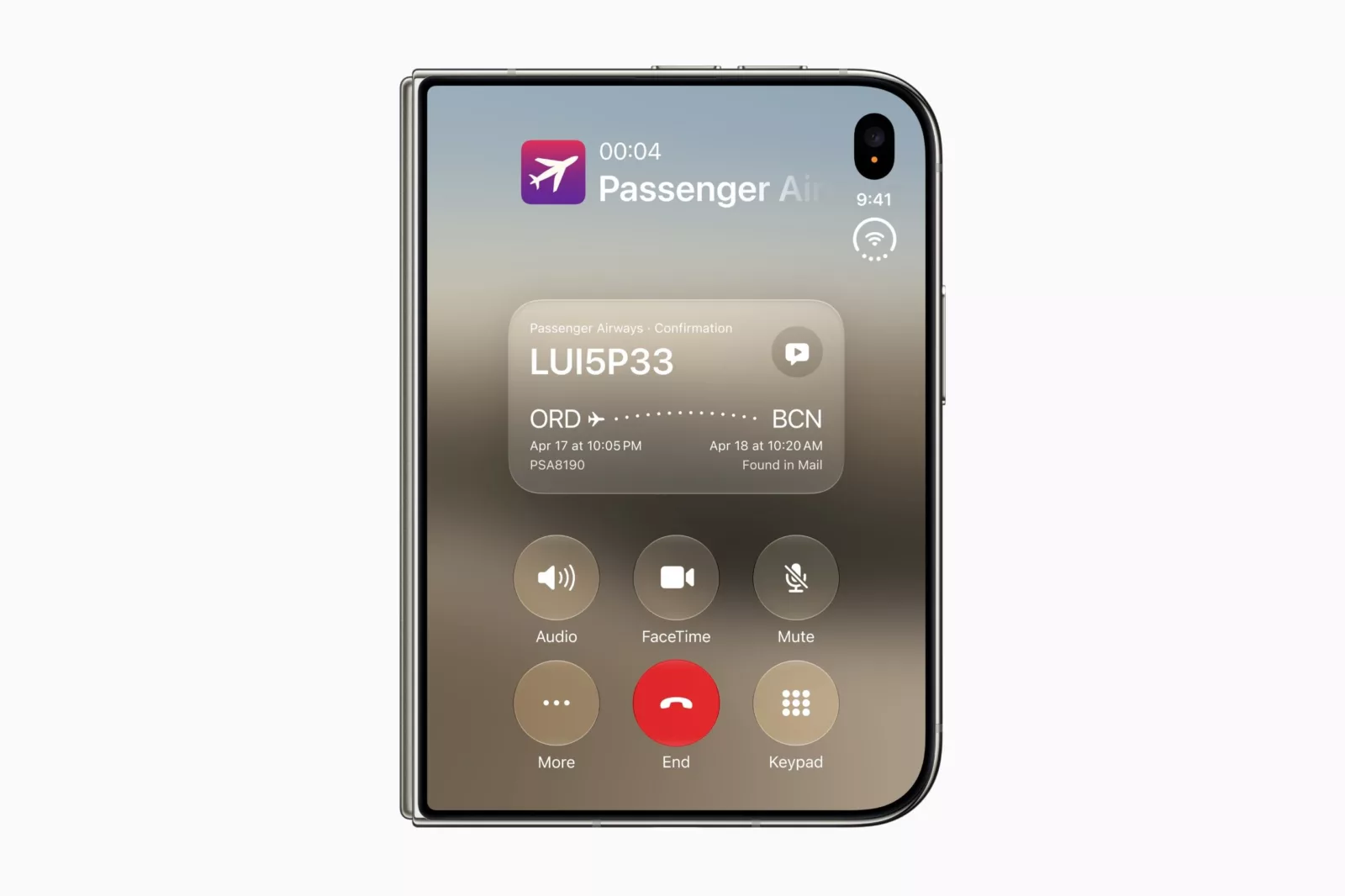
It doesn’t come cheap. In the United States, the Duo starts at $1,999, and in Austria it costs from €2,319, rising to €3,819 with 2 terabytes of storage. Anyone ordering now will wait until late January.
The Verge: ‘Only for Early Adopters’
At The Verge, a two-person team including the senior reviewer Allison Johnson tested the Duo in a video review. Their verdict: The device is the most interesting Apple product in years because it fundamentally rethinks the iPhone, but it is also one of the least finished. Most people should not buy it yet, they say, as the Duo is probably at least another year of refinement away. The review compares it with the first MacBook Air, which won no one over and only took over the industry after a redesign.
The reviewers see the core problem in the outer display. It is so small that you have to unfold the Duo for almost everything, and the apps are not ready for that yet. With Android foldables, it is the other way around: There is often little reason to unfold them.
MKBHD: ‘Polished Around the Edges, Rough in the Middle’
Marques Brownlee describes the Duo in his review video as a device that is very polished around the edges but still rough at its core. The animations, the hinge and the inner display are excellent, he says, while the weight and the app situation are typical of a first-generation product. His image for the device: a 120-hertz OLED iPad mini that fits in your pocket, for $2,000. For most iPhone users who mainly text and scroll social media, it isn’t worth it, he says. But those who can easily afford it and want something new will get a phone that is a lot of fun once they get used to it.
The Pros
- Matte inner display: Both reviews hail the nano-texture finish as a highlight. It cuts reflections and makes the crease largely disappear, though it is not completely invisible.
- Hinge: The resistance changes as you open it, and according to MKBHD, the Duo stays half-open more stably than any other foldable. Propped up, it automatically turns into a standby display with a clock or alarm.
- Thoughtful animations: The transition between the displays intuitively shows newcomers what is happening. Apps continue seamlessly where you left off when you fold or unfold the phone.
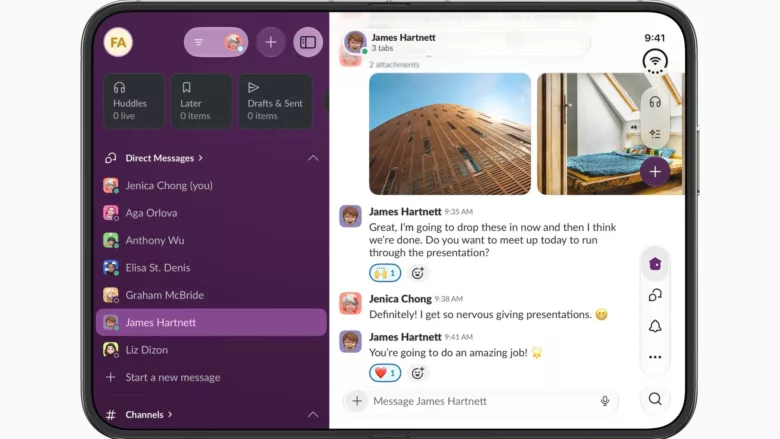
- Optimized apps shine: Where developers have caught up, as with Instagram’s Edits, Flighty, Netflix or Apple’s Books app, the Duo shows its potential, according to The Verge.
- Multitasking: Two apps can be opened side by side and linked into a pair like a book, for example to copy codes from one app to the other.
- IP68 and MagSafe: The Duo is fully dust- and waterproof and supports MagSafe. The rival Galaxy Z Fold8 lacks both in that form.
- Battery and performance: MKBHD ended most days with more than 30 percent battery left. The Verge saw more mixed results; Ms. Johnson had about 30 percent left after six and a half hours of screen time.
The Cons
- Price: Starting at €2,319 in Austria, the Duo is the most expensive iPhone without offering the best cameras or pro features.
- Small outer display: According to The Verge, it feels more like a status display. In Messages, with the keyboard showing, you can often see only two or three messages.
- Unfinished apps: Most apps have not been adapted. They show a black bar on the outer screen and run as tiny iPhone apps on the inner one. There are no iPad apps, and Google apps such as Gmail and Maps have not yet been optimized.
- No Face ID: According to MKBHD, Touch ID unlocks with a built-in delay that he could not turn off. The volume buttons on top can be hard to find depending on how you hold the phone.
- Thick and heavy: According to MKBHD, the Galaxy Z Fold8 is significantly thinner and about 20 percent lighter, and the Duo is hard to use with one hand.
- Camera compromises: The main sensor is smaller than the one in the iPhone 18 Pro, and there is no telephoto lens. MKBHD simply calls the selfie camera under the inner display bad.
- Heat and bugs: The Verge found that the Duo got hot and laggy during extended camera use. MKBHD reports glitches in the animations between the displays.
Competition From Samsung
The main rival is the Galaxy Z Fold8, which Samsung released a few months ahead of Apple and which also uses the wide passport format. It is thinner, lighter and, according to The Verge, more pleasant to use with its outer display, but it is rated only IP48 and lacks MagSafe. Apple, on the other hand, scores with the better inner display and the sturdier hinge.
Both reviews agree that the Duo will get better with every app update. MKBHD expects most major apps to be adapted in about six months. Whether Apple made the right choices on the format, however, will only become clear with the second generation, according to The Verge.