move2pay: Father-Daughter Hit From Vorarlberg Pushed ChatGPT and Claude Off the Top Spot

Set Trending Topics as a preferred source on Google.
The most powerful A.I. companies in the world were, for a while, outranked in the App Store charts by a father and his daughter from Vorarlberg.
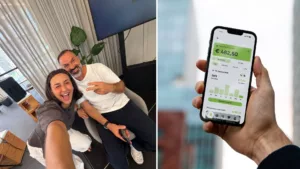
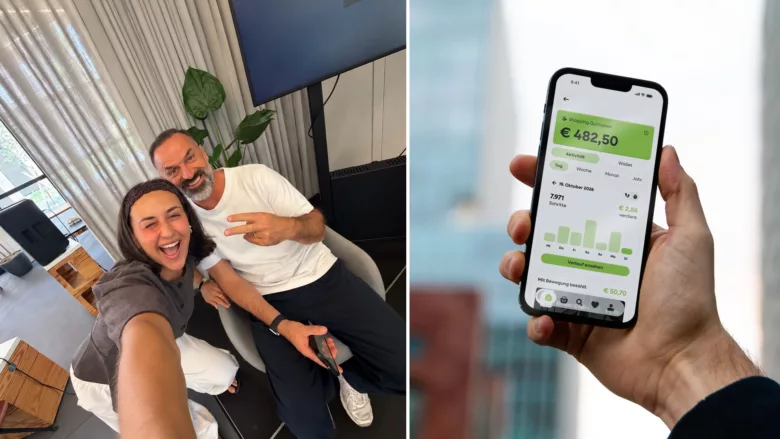
From October 19, move2pay spent seven days at No. 1 among free apps in Germany and Austria, and at No. 1 in Health & Fitness, ahead of OpenAI’s ChatGPT and Anthropic’s Claude. The app was built by Karim and Mia Allouche, father and daughter, without investors and without a billion-dollar budget. The principle: Movement becomes shopping credit. Anyone who walks, runs or cycles can use it to pay part of a purchase at 163 partner shops. After the pitch on “Die Höhle der Löwen,” the German version of “Shark Tank,” the company says it went from 70,000 to 330,000 users in seven days, with 300 inquiries from brands in 24 hours and 15,000 orders in a single day. The deal with investor Frank Thelen over €350,000 agreed on the show did not go through afterward. The company behind move2pay is SVAX GmbH. Founder and CEO Karim Allouche, a former ice hockey player for EHC Lustenau and EC Dornbirn, answered our questions in writing.
How much can users save with the app on average? What is a kilometer worth, for example?
Karim Allouche: At Move2Pay, movement becomes shopping credit: 10,000 steps correspond to 3 euros, for example. Assuming a stride length of 70 centimeters, that is around seven kilometers, so roughly 43 cents per kilometer. The app evaluates the recorded steps and activities. On top of that, there are challenges and additional rewards for regular exercise.
Depending on the partner and the campaign, users can pay up to 50 percent of the product price with movement credit. A concrete example: For a product costing 100 euros with a 50 percent movement share, 50 euros of credit is used. Added to that are 50 euros in cash and a 5 euro service fee. The actual saving is therefore 45 euros compared with the underlying product price (RRP).
We do not yet report a reliable average across all purchases. Individual savings depend on the purchase, the respective movement share and the available credit.
What do retailers get out of offering discounts, and how do you win partner shops?
Retailers gain access to a community that actively earns shopping credit through movement. That creates a concrete incentive to spend this credit with our partners. For brands, Move2Pay is therefore an additional sales and customer acquisition channel.
Instead of paying exclusively up front for advertising reach, the retailer grants the agreed movement share on an actual sale. The retailer decides which products take part and what share customers can pay with movement. Joint challenges, placements in the app and targeted campaigns can further support demand.
We win our partners through direct outreach, personal recommendations, our network and joint marketing campaigns. Since the TV broadcast, a great many brands have also been approaching us actively. Well-known partners such as SNOCKS, waterdrop and Ankerkraut help build trust in the model.
How does your business model work? Where do you generate revenue?
Move2Pay is a marketplace where people can pay part of their purchase with movement. The partner shop makes the agreed price reduction possible, and we provide the platform and the technical processing.
Our central source of revenue is a service fee per order. It amounts to 10 percent of the share actually paid in cash, up to a maximum of 6.90 euros. For a cash share of 50 euros, Move2Pay therefore receives a 5 euro service fee.
For new retail partnerships, depending on the package agreed, there are onboarding and ongoing platform fees. Additional revenue opportunities come from bookable marketing measures and brand collaborations.
Why did the deal with Frank Thelen ultimately not go through?
We agreed on a deal with Frank Thelen on the show. In the subsequent talks, different ideas about the strategic development of Move2Pay emerged. We therefore decided together not to go ahead with the investment.
Which factors besides “Die Höhle der Löwen” contributed to the app’s growth? Marketing measures, influencers?
The show was an enormous accelerator. But we had already built a community and a network of brand partners before that. Several measures contribute to growth: social media, creator and influencer collaborations, joint campaigns with our partner shops, as well as PR and performance marketing.
Our brand ambassadors Steffen Baumgart and Gernot Kulis play an important role. With campaigns such as “Baumgart bewegt,” we combine a shared movement goal with a concrete shopping benefit. Collaborations with brands such as SNOCKS or Ankerkraut also bring the concept into existing communities.
Then there are personal recommendations: The idea of earning part of your next purchase through everyday movement is easy to pass on. The strong visibility in the App Store charts further supported this effect. In the seven days around the broadcast, our user numbers rose from around 70,000 to around 330,000. Which individual channel accounted for what share cannot yet be reliably quantified. What was decisive was the interplay of TV reach, social media, brand collaborations and the activation of our community.
How did you come up with the idea in the first place?
The basic question was: How can we motivate people to move more in everyday life, and give them an immediately tangible benefit for doing so? From my own background in ice hockey, I know how important exercise is. At the same time, athletic performance goals do not reach everyone by a long way.
The scale of the need for action is illustrated by the WHO’s “Global status report on physical activity,” published in October 2022. In it, the WHO forecasts almost 500 million new cases of preventable non-communicable diseases worldwide between 2020 and 2030 due to physical inactivity, unless activity levels improve. The associated treatment costs were estimated at around 27 billion US dollars a year.
Our approach is to link movement with something that is relevant to almost everyone: their own purchasing power. Anyone who walks to the shops, takes the dog out or does sport can use that to earn part of their next purchase. That makes the benefit tangible and creates an additional incentive to build movement into everyday life permanently.
On the retail side, there is at the same time a need to win new customers. Move2Pay connects these two interests: People get a concrete benefit for their movement, brands get additional access to potential customers.
What is your background? It sounds like a well thought-out marketing concept for getting an app like this to the mass market.
I originally come from competitive sport, have been an entrepreneur for many years and have built companies with more than 250 employees and around 40 million euros in revenue, one of which I sold in 2013. I therefore bring experience in building companies, in sales and in leadership.
My daughter Mia, as co-founder, contributes the perspective of her generation as well as her experience with content and social media. This combination is valuable for us: entrepreneurial experience on one side and an immediate understanding of how young people communicate and which content reaches them on the other. Added to that is our team for technology, design and content.
The marketing is deliberately structured: Brand partnerships create attractive shopping opportunities and bring their own communities with them. Personalities such as Steffen Baumgart and Gernot Kulis make the concept known. Challenges give people a concrete reason to try the app and use it regularly.
But the broad appeal is already built into the product idea: You do not have to be a competitive athlete to take part. Everyday movement is enough. This low barrier to entry and the easily understood financial benefit are, in our view, essential prerequisites for reaching many people.
Which companies were or are they, and which competitive sport?
I am or was the owner of, among others, ovis Holding GmbH including its holdings, ADM Netzwerk GmbH and SVAX GmbH, the company behind move2pay.
When I came to Austria from Tunisia at the age of 10, my neighbor took me along to go ice skating. Afterward, the ice hockey players trained. I went straight onto the ice with them and never wanted to get off again. That was the start of 20 years of ice hockey, during which I played for EHC Lustenau and EC Dornbirn and for Austria’s youth national teams (U16 to U20).