Oil Price Jumps Above $90: Escalation in the Iran War Rattles Markets


Set Trending Topics as a preferred source on Google.
The war between the United States and Iran continues to push oil prices higher. On Monday, North Sea Brent crude temporarily climbed above the $91 mark – its highest level since June. The drivers: new waves of US strikes on Iran, Iranian counterattacks on shipping in the Strait of Hormuz, and another fallen US soldier underscoring the conflict’s sustained intensity.
In trading on Asian exchanges on Monday at around 3:00 a.m. CEST, a barrel of Brent for September delivery was quoted at $90.50 (€79.16), a gain of 2.72 percent. At one point, the price crossed the $91 mark. The US benchmark West Texas Intermediate (WTI) rose 2.39 percent to $84.46.
Strait of Hormuz: Shipping Traffic Collapses
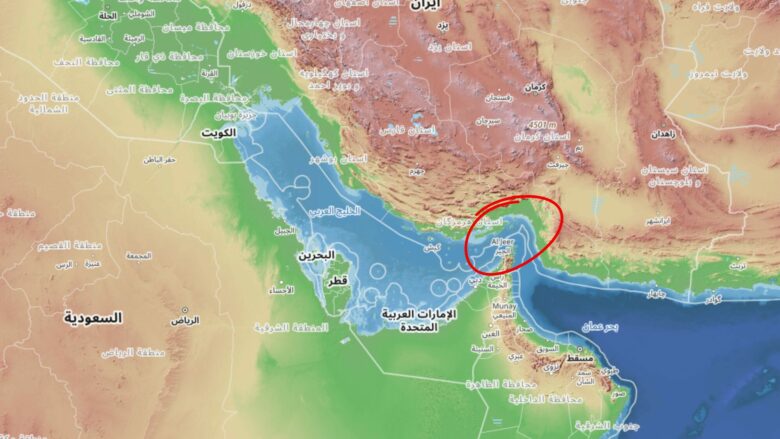
The trigger for the latest price move is the increasingly precarious situation in the Strait of Hormuz, through which roughly one-fifth of globally traded oil normally passes. Shipping traffic through the chokepoint dropped sharply over the weekend: according to data from financial data provider LSEG, only four vessels transited the passage on Sunday, down from eight on Saturday.
Both sides of the conflict are now deliberately targeting shipping. The US government says it is enforcing a naval blockade of Iranian ports. Iran, for its part, is taking action against vessels that, in its view, violate the rules in the Strait of Hormuz.
Overnight into Monday, the UK Maritime Trade Operations (UKMTO) agency reported that a ship was on fire in the Strait of Hormuz near Oman. The cause of the blaze was initially unclear; vessels are advised to transit the region only with caution. Iran’s Revolutionary Guards declared that two oil tankers had been blown up on the southern route. As long as “US aggression” in the region continues, Tehran stated, the strait would be safe neither for petrochemical products nor for “a single drop of oil and gas.”
17th Fallen US Soldier as a Measure of Escalation
The latest announcement from the US military illustrates just how tense the situation is: on Saturday, a US soldier was killed in northern Iraq during a controlled detonation of unexploded ordnance from a downed Iranian one-way attack drone, according to US Central Command (Centcom). The officially confirmed number of US soldiers killed in the Iran war thus rises to 17, and another soldier was injured in the incident. The US and Iran continue to threaten each other with retaliation – an end to hostilities is currently nowhere in sight.
LNG Tankers Stuck in the Gulf
The gas market is also feeling the effects of the de facto blockade: since Thursday, no liquefied natural gas (LNG) tankers have been registered transiting the strait. However, some vessels temporarily switch off their transponders to conceal their routes.
LNG production in Qatar and the United Arab Emirates has remained relatively stable despite the disruptions, according to S&P Global. As a result, the volume of LNG sitting on waiting ships in the Gulf is growing: as of mid-July, an estimated 570,000 tonnes were aboard seven loaded Qatari LNG tankers, and LNG carriers with a total capacity of nearly 1.9 million tonnes are currently in the region. Should the de facto blockade of the Strait of Hormuz ease in the coming weeks, these vessels could drive a rapid surge in exports, S&P Global analysts said.