OpenClaw: Europe Left Peter Steinberger With no Choice but to go to the US


Set Trending Topics as a preferred source on Google.
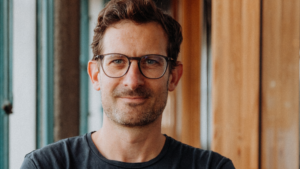
Peter Steinberger is joining OpenAI. An Austrian developer who created OpenClaw, the fastest-growing GitHub project of all time, is leaving Vienna for San Francisco. Sam Altman called personally. Mark Zuckerberg wrote via WhatsApp and tested OpenClaw himself. Satya Nadella also reached out. And Europe? Europe watched and cheered Steinberger on his way to San Francisco.
This story is more than just another case of brain drain. It is a magnifying glass for the structural deficits of a continent caught between regulatory obsession and capital scarcity.
The missed opportunity
While American tech CEOs made personal contact within hours, Europe was probably still waiting for HR approval. No European CEO apparently bothered to seriously speak with Steinberger. That is not just embarrassing, it is symptomatic. And before long, Steinberger was in San Francisco, being courted by the most famous podcasters and able to weigh whether he preferred Meta or OpenAI in the future.
The question is not whether Steinberger made the right choice. The question is: did he even have an alternative?
Alternative 1: The startup itself
Theoretically, Steinberger could have used the hype and CEO contacts to raise a lot of money and attempt to build the much-needed AI lab in Europe. A nice dream. But let’s be honest: after more than ten years as a founder, Steinberger apparently did not want that anymore. Instead, he found the idea of working at Big Tech with enormous resources quite appealing.
And even if he had: where would the capital have come from? Not many European companies and VCs have the financial means to close a nine-figure deal for an individual within a few weeks. We are not talking about venture capital for a startup, but about the sheer purchasing power needed to compete with OpenAI, Meta, or Microsoft. And then the next question: which European AI models would even be ready to let Steinberger do his work.
Alternative 2: Mistral and Europe’s AI hope
Would Mistral AI, Europe’s AI hope, have had a chance? Theoretically yes. Practically: unlikely. Mistral has neither the compute resources nor the global reach of OpenAI. And let’s be honest: even if Mistral CEO Arthur Mensch had called personally, what could he have offered? Access to a smaller model? A more modest budget? The prospect of working in Paris instead of San Francisco?
None of the European AI companies have the size, computing power, and reach of OpenAI. It is only a matter of time before something like OpenClaw is offered to 900 million ChatGPT users, and the Europeans can stand on the sidelines and then point out again that its origins were in Vienna.
The incompatibility: USA vs. EU
The differences between the USA and Europe are not merely gradual, they are fundamental. And they can be reduced to two core problems: capital and data protection.
In the USA, money flows to where innovation happens. Quickly, uncomplicated, in gigantic sums. In Europe, people save. Pension funds are conservatively invested, venture capital is scarce, and stock markets are too shallow to finance truly disruptive technologies. The result: European talent must go to the USA if they want to work at the cutting edge.
Alongside the capital problem, there is a second one: the matter of data protection. How slow would OpenClaw become once GDPR, NIS2, AI Act, and ISO certifications have to be dealt with to address the many security concerns. In the USA, where AI services are usually launched earlier than in the EU, go-to-market is faster. In an enormously accelerated race, the time factor is relevant, and time is not gained in heavily regulated Europe.
You can look at it positively, but you don’t have to
Of course, you can look at it positively and celebrate. After all, an Austrian will now work in a central position on how AI agents will function and be shaped for the masses in the future. Steinberger is a new hero and an important bridge, and some may well follow him to OpenAI. But amid all the celebration, one overlooks the essential: Steinberger had to leave Europe to realize his vision. That is not a success for Austria or Europe. That is a certificate of poverty.
Martin Gabriel sums it up well on LinkedIn: „Europe is applauding itself. America is building. Europe celebrates milestones. America turns them into platforms.“ As long as we are satisfied that „one of us” made it to the USA instead of asking ourselves why he had to leave, nothing will change.
Steinberger is not an isolated case
The Steinberger case is not an isolated case; previously, AI talents like Eric Steinberger and Sebastian De Ro (Magic) or the Koska brothers trio from SF Tensor went to Silicon Valley, and other talents like Mojmir Horvath are already on the verge. He is the symptom of a deep structural crisis. Europe has the talent, the education, the infrastructure. But it lacks the courage, the capital, and the willingness to take risks. We regulate where we should invest. We hesitate where we should act. And we lose where we could win.
The hard question we must ask ourselves: what could Steinberger have achieved further from Vienna? In recent days, we have already seen tech companies begin to rebuild OpenClaw. Manus from Asia, recently acquired for approximately 2 billion dollars by Mark Zuckerberg’s Meta (yes, the same one who did not get Steinberger despite courting him heavily), has begun building an OpenClaw clone.
Europe must answer to that. And quickly. Otherwise, the next Peter Steinberger will not even consider staying.