After Pausing Its I.P.O., Oura Jumps on the GLP-1 Hype With Weight-Loss Tracking


Set Trending Topics as a preferred source on Google.
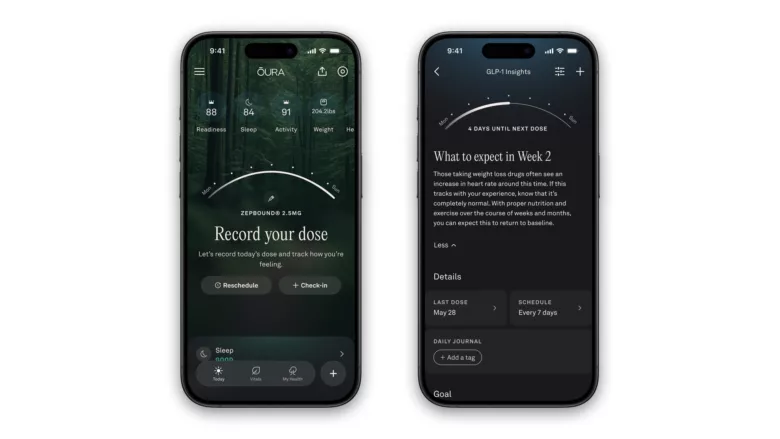
The smart ring now wants to keep tabs on weight-loss shots and pills, too: Oura is bringing its GLP-1 Insights feature, along with the new blood pressure and breathing analyses in Health Radar, to more than 30 additional markets, including the European Union. The feature lets users log how their bodies respond to drugs like Ozempic or Wegovy, whether taken as an injection or a pill. At the same time, the Finnish ring maker has had to put its biggest project on hold: Oura recently shelved its planned Nasdaq listing.
What GLP-1 Drugs Are
GLP-1 stands for glucagon-like peptide-1, a hormone the gut releases after a meal. It stimulates insulin production, slows down gastric emptying and creates a feeling of fullness. Drugs such as semaglutide (Ozempic, Wegovy) and tirzepatide (Mounjaro) mimic this hormone. Originally developed for Type 2 diabetes, they are now widely used as weight-loss shots. They also come in pill form: Novo Nordisk recently won E.U. approval for weight loss for its Wegovy pill, which is taken daily instead of once a week, while Eli Lilly’s pill Foundayo (orforglipron) has so far been approved only in the United States. Common side effects include nausea, fatigue and digestive problems, and resting heart rate can rise.
The market is huge: According to Oura, more than 100 million people worldwide are expected to use GLP-1 drugs by 2030. Many of them currently juggle several apps to record their dose, side effects and weight. That is the gap Oura wants to fill.
What Oura Actually Measures
To be clear, the ring does not measure the drug itself or its level in the blood. GLP-1 Insights is a log that Oura combines with its own sensor data:
- Manual entries: Users record their dose and schedule, side effects like nausea or appetite changes, and their weight.
- Automatic data: The ring adds its readings on sleep, activity, recovery (Readiness) and stress.
- Long-term view: Together, these create an overview of how the body and well-being change over the course of treatment, for example as a basis for conversations with a doctor.
The feature is already available in the United States, India and the United Arab Emirates and works with the Oura Ring Gen3 and later models. Oura itself stresses that the ring is not a medical device, does not recommend dosages and does not replace medical professionals.
Blood Pressure and Breathing During Sleep
Health Radar brings further health features to Europe. At its core is Blood Pressure Signals: The feature analyzes the ring’s optical pulse signals (PPG) in the background and looks for patterns that may point to strain on the heart and circulation. It is joined by Nighttime BP, which tracks whether blood pressure dips overnight as it normally should. If it does not, Oura says, that may indicate risks that daytime measurements miss. The ring does not replace an actual blood pressure measurement, but readings from a conventional cuff can be entered in the app and compared with the trends.
The second pillar is Nighttime Breathing: Over 30 days, the feature shows how regularly someone breathes during sleep and how often breathing disturbances occur. According to Oura, Health Radar was developed with more than 40 in-house physicians and scientists. The features will roll out over the coming weeks in markets including the E.U., Britain, Canada, Australia, New Zealand, Mexico and Saudi Arabia.
I.P.O. on Hold for Now
The expansion comes at a turbulent time. Oura had planned to raise up to $2.2 billion (about 1.9 billion euros) on the Nasdaq and would have been worth around $14 billion (about 12 billion euros) at the top of its price range. But the company then postponed the I.P.O. “despite strong demand,” citing “uncertainty in the I.P.O. market,” without setting a new date. The business was not the problem: In the first nine months of its fiscal year, revenue rose 74 percent to $1.21 billion, and Oura now has 5.7 million paying members.
Oura did not name Anthropic as a reason, but the maker of Claude is likely to have played a role. Anthropic plans to go public in mid-November, and its backers are hoping for a valuation of more than $2 trillion (about 1.7 trillion euros). According to Bloomberg, some candidates are deliberately holding back because it is hard to get any attention alongside such a mega-I.P.O. Oura is not alone: The gas station operator EG Group, the SoftBank-backed SB Energy and the nuclear company Holtec have also paused their plans, as Trending Topics reported. Observers, however, have also pointed to other reasons for the I.P.O. drought, including the Federal Reserve’s latest rate increase, geopolitical tensions and volatility in A.I. stocks.
Competition on the Wrist
Oura is not the only one focusing on GLP-1. Its U.S. rival Whoop published its own study based on member data last year, which found that resting heart rate rose less among GLP-1 users who stayed physically active. Apple, Samsung and Garmin are also steadily expanding their health features for blood pressure and sleep breathing. Then there are specialized apps that focus entirely on supporting people using weight-loss shots and pills.
Disclosure: This article was written with the help of Claude, an A.I. model made by Anthropic, which is mentioned in the text.