Germany Funds Tens of Thousands of Quantum Systems Interceptor Drones for Ukraine


Set Trending Topics as a preferred source on Google.
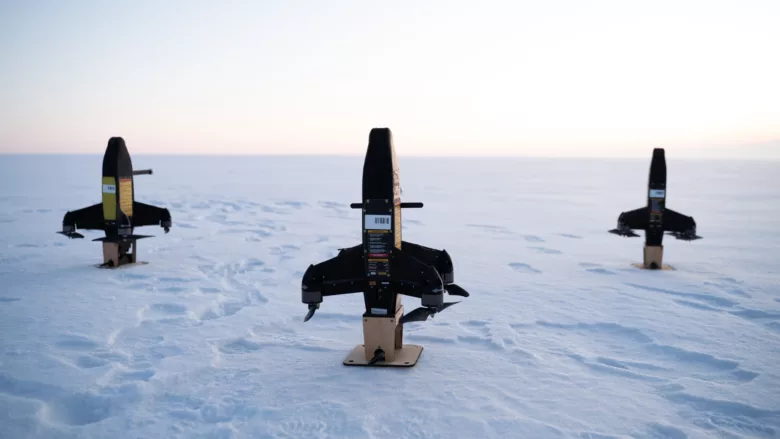
The only answer to Russian drone swarms is more drones: Germany is paying for several tens of thousands of interceptor drones from the Munich-based defense tech unicorn Quantum Systems for Ukraine. Chancellor Friedrich Merz announced the deal during a surprise visit to Kyiv. The drones are part of Germany’s military aid package for the winter of 2026/2027 and will be produced directly in Ukraine.
Built in Ukraine, Aimed at Faster Drones
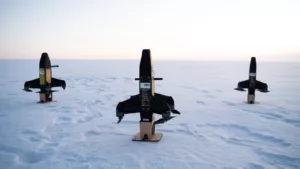
The interceptors were developed by the Ukrainian team at Quantum WIY Industries, which is backed by the Ukrainian manufacturer WIY Drones, a company Quantum Systems has invested in. The systems are designed to protect cities, civilian facilities and critical infrastructure from drone attacks and are already in use. The new order will significantly scale up their production. They are controlled through Quantum Systems’ MOSAIC UXS software platform.
The backdrop is a new threat from the air. Alongside its classic Shahed drones, Russia is increasingly deploying faster, jet-powered models that fly at up to about 230 miles per hour, roughly twice as fast. Countering them requires interceptors in far greater numbers. Quantum Systems is working on faster platforms itself and set an electric drone speed record of 699 kilometers per hour with a test aircraft this summer, technology that is meant to flow into future interceptors.
“Ukraine needs interceptor drones at industrial scale,” said Sven Kruck, co-chief executive of Quantum Systems. “By expanding production in Ukraine, we can respond faster to the immediate threat while building an industrial capability that will also strengthen Germany and its allies.”
A Billion-Euro Package for the Fifth Winter of War
Mr. Merz traveled to Kyiv with Economy Minister Katherina Reiche and representatives of defense and industrial companies including Hensoldt, Diehl Defence, Siemens Energy and Quantum Systems. Besides the drones, Germany pledged one billion euros for the joint production of long-range weapons and 350 million euros to repair damaged power plants, according to Euronews. “Ukraine needs all our support for the coming weeks,” Mr. Merz said, looking ahead to the fifth winter of the war. Support at home is eroding, however: More than 40 percent of Germans now say the aid to Ukraine has gone too far, according to polls.
At an industry round table with President Volodymyr Zelensky and Mr. Merz, Quantum Systems also signed a memorandum of understanding with the Ukrainian arms maker Fire Point. The two companies plan to jointly develop new technologies for unmanned systems and for countering advanced aerial threats.
A German-Ukrainian Production Network
For Quantum Systems, the order is the next big step in Ukraine. In the spring, the company had already won a contract for 15,000 interceptor drones from the Ukrainian armed forces. It now runs a German-Ukrainian production network made up of Quantum Frontline Industries, Quantum WIY Industries and Quantum Tencore Industries and employs several hundred people in Ukraine. The model is meant to combine frontline experience with German industrial capacity and, over the long term, to build production capability for the Bundeswehr and allied forces as well.
The company has the money to do so. This summer, Quantum Systems raised $1.2 billion in one of Europe’s largest defense tech rounds, lifting its valuation to about $8 billion (about 6.8 billion euros).
Rivals Are Arming Up, Too
Quantum Systems is not the only German defense tech company benefiting from the drone war. The Munich-based A.I. defense company Helsing already supplies strike drones to Ukraine and is valued at $18 billion. Together with Stark Defence, Helsing has also won Bundeswehr contracts worth 540 million euros. The Munich start-up Tytan Technologies also specializes in drone defense. In Ukraine itself, more than ten manufacturers build interceptor drones, including Wild Hornets with its Sting drone.