Germany’s Former Finance Minister Lindner Invests in Cyber Start-Up QuoIntelligence


Set Trending Topics as a preferred source on Google.
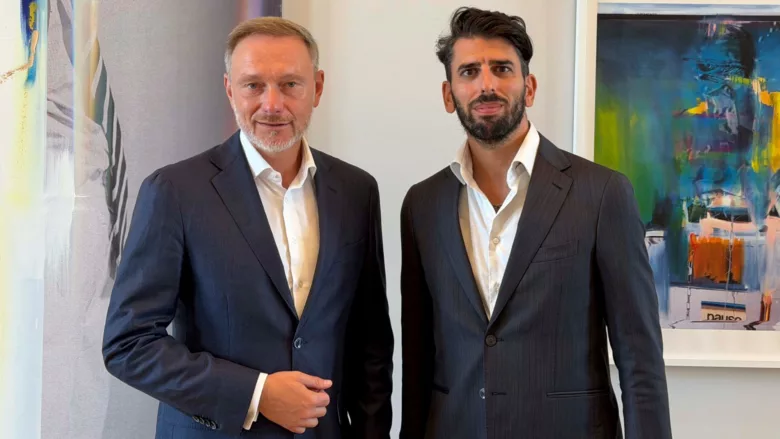
From the finance ministry to the cap table: Christian Lindner has invested in QuoIntelligence, a cybersecurity start-up based in Frankfurt. The former German finance minister is backing the cyber threat intelligence specialist through his investment company, Christian Lindner Beteiligungsgesellschaft. The European Cyber Security Organisation (ECSO) has named QuoIntelligence Europe’s most promising cybersecurity start-up of 2026. The size of the investment was not disclosed.
Lindner Bets on European Cyber Defense
Mr. Lindner is coming in after QuoIntelligence closed a €7.3 million Series A round in the spring. That round was led by Elevator Ventures, the Vienna-based venture arm of Raiffeisen Bank International, together with BMH Beteiligungs-Managementgesellschaft Hessen, with eCAPITAL and Mercurius also participating.
Europe needs more tech companies that can hold their own internationally in strategically important markets, Mr. Lindner said, adding that QuoIntelligence combines human expertise with A.I.-powered technology in a field where demand is growing rapidly. The founder and chief executive, Marco Riccardi, said he was particularly impressed by Mr. Lindner’s entrepreneurial mindset, noting that at their first meeting he immediately focused on the market, the business model and the team. The start-up’s goal, Mr. Riccardi said, is to become Europe’s market leader in cyber threat intelligence.
It is not Mr. Lindner’s first start-up investment. Since leaving federal politics, he has, by his own account, invested in about ten start-ups, including the legal tech company Leegle, the govtech start-up Merlin, the Berlin tax advisory roll-up Limetax and the Munich A.I. start-up Zeit AI, according to deutsche-startups.de. The F.D.P. politician also serves, among other roles, as deputy chairman of the management board of the car dealer Autoland.
What QuoIntelligence Does
Founded in Frankfurt in 2020, QuoIntelligence provides ready-to-use analyses of cyber threats and other risks that companies can use without an in-house security team. Its Mercury platform combines digital risk protection, cyber threat intelligence and analyses of geopolitical, physical and compliance risks. Instead of unfiltered data feeds, analysts prepare the information for customers.
The start-up places a strong emphasis on digital sovereignty: Its analyses are produced in Germany, Italy and Spain, and customer-specific data stays within the E.U. Its customers include companies in transportation, manufacturing, finance and retail, as well as E.U. institutions. In 2025, ENISA, the E.U.’s cybersecurity agency, awarded QuoIntelligence a four-year contract worth €1.4 million.
Tailwinds From NIS2 and DORA
Regulation is providing a tailwind. In Germany alone, an estimated 29,500 organizations fall under the E.U.’s NIS2 directive, while DORA has tightened requirements for technology risk management in the financial sector. Many of these organizations now have to manage their cyber risks systematically, often without a dedicated team of their own.
QuoIntelligence does not have the market to itself. Major threat intelligence providers include U.S. companies such as CrowdStrike, Google’s security unit Mandiant and Recorded Future, which Mastercard acquired in 2024. In Europe, the French company Sekoia.io is among the players.