“Raising the Lobster”: Inside China’s OpenClaw Frenzy

Set Trending Topics as a preferred source on Google.
Perplexity recently introduced its version of OpenClaw, Nvidia is said to be building one, and OpenAI and Meta certainly are too. But the OpenClaw virus is spreading not only in the West, but also in the East. The AI agent that can automate tasks around the clock is spreading rapidly in the Chinese tech ecosystem. Local governments are luring with million-dollar subsidies, tech giant Tencent is jumping on the bandwagon, and queues are forming on the streets of people who want to install the tool.
What is OpenClaw?
OpenClaw differs fundamentally from conventional chatbots. Rather than just answering questions, it is a permanent digital assistant that can independently operate software, manage files, execute workflows, and work in the background. The creator Peter Steinberger, an Austrian developer, recently switched to OpenAI to work on the next generation of personal AI agents.
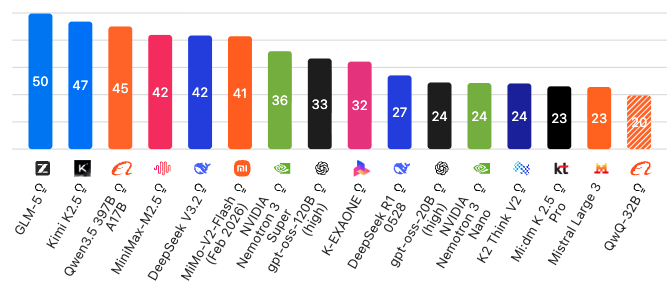
In China, the nickname “raising the lobster” has become established for the work with OpenClaw agents. The tool can be integrated into various apps and automate tasks such as scheduling, monitoring, or creating AI employees. OpenClaw remains open source even after founder Peter Steinberger’s move, which of course fits with the large open-source movement in China. There, startups like Zhipu AI (GLM-5), Moonshot AI (Kimi K2.5), DeepSeek, and MiniMax have since brought leading open-source AI models to market. These naturally lend themselves to being plugged into OpenClaw.
Cities compete with massive subsidies
Chinese municipalities are outbidding each other with incentives for OpenClaw developers, as Business Insider reports. The high-tech zone of Wuxi in eastern China announced measures in a draft to promote startups and developers.
Wuxi: Up to $720,000 for breakthroughs
The city offers tiered rewards:
- Projects for industrial AI applications (such as predictive maintenance or quality control): 500,000 yuan ($72,000)
- Breakthroughs in robotics or embodied AI: up to 5 million yuan ($720,000)
- Free office space for up to three years
- Cost-of-living subsidies for outstanding contributors to the OpenClaw community who are founding a company for the first time
Shenzhen: Support for solo entrepreneurs
The Longgang district in Shenzhen, a major tech hub in southern China, published a similar draft with subsidies of up to 2 million yuan ($290,000). The offer includes:
- Support for projects that contribute code to international communities
- Support for developing skill packages for Shenzhen-relevant industries
- Up to two months of free accommodation for newly registered solo startups
- 18 months of discounted office space under the “one desk, one office, one floor” system
- Settlement subsidies of up to 100,000 yuan for young talent
QClaw: Tech giant Tencent jumps on the bandwagon
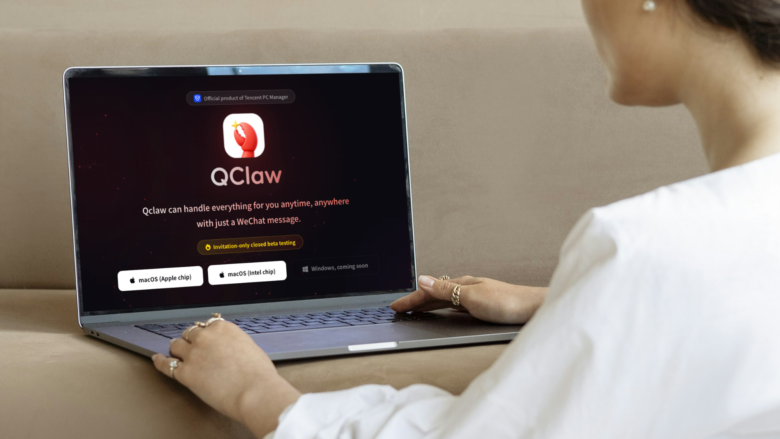
While among China’s tech giants, Alibaba (Qwen models) and ByteDance (video AI) are currently leading in AI models, Tencent (primarily known for WeChat and QQ with enormous user bases) has now jumped on the AI train and taken on the OpenClaw topic. Rumors alone about its own version called QClaw and the leak of an internal test version of QClaw in Chinese tech communities (invitation codes are being traded on secondary markets) caused such hype that Tencent’s stock price shot up 10 percent on Tuesday.
Yet QClaw is not even a finished product, but is still in closed beta. Nevertheless, Tencent employees helped people at pop-up stands install their own AI agents:
The charm of #OpenClaw! 🌟
Tencent’s public setup service event drew in 60+ year-olds incredible enthusiasm! From retired aviation technical engineer to librarian, they’re looking forward to embrace AI agents. Stay curious, stay digital! pic.twitter.com/ln3Us6kmrI
— Tencent AI (@TencentAI_News) March 6, 2026
QClaw is based on the OpenClaw framework but solves a crucial problem: it can connect to WeChat. In China, digital life runs through WeChat (work messages, payments, communities, customer service). An AI connection to email or Slack is useful, but a connection to WeChat makes the AI agent suddenly directly usable and tangible for many. The team behind QClaw reportedly consists of only six people. Product leadership is held by Shuyu Zhang, a 26-year-old humanities scholar.
Mass phenomenon and security concerns
Recently, a queue of almost a thousand people formed in front of Tencent’s headquarters in Shenzhen, waiting for free installation assistance from engineers. Posts are circulating on RedNote from users offering paid installation services. One user reported that some installers earned up to 260,000 yuan ($36,000) in just a few days.
The rapid spread has also raised concerns. China’s National Vulnerability Database, operated by the Ministry of Industry and Information Technology, warned in early February of potential security risks. Improperly configured OpenClaw installations could expose users to cyberattacks and data breaches. As already reported, China has by far the largest number of exposed OpenClaw instances.
This has now gone so far that there are not only people who help others install OpenClaw for a fee, but also those who offer the opposite. Paid OpenClaw uninstallation services are already appearing on Chinese secondhand marketplaces like Xianyu, a resale platform of Chinese tech giant Alibaba. Some even offer to remove leftover files and viruses after deleting the software.