With Starfall, SpaceX Makes a Big Push Into Microgravity



Set Trending Topics as a preferred source on Google.
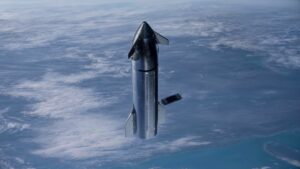
The Vienna start-up Tumbleweed had barely raised €6.9 million for its own return capsule when the biggest player in spaceflight opened its doors for business: SpaceX has started courting customers for Starfall on a dedicated website. The disk-shaped capsule is designed to carry up to 1,000 kilograms of cargo into orbit, keep it in microgravity for weeks and then bring it back to Earth. With it, Elon Musk’s rocket company is going after exactly the business that Tumbleweed, Varda and a number of European start-ups are betting on.
What Starfall Offers
SpaceX promises “affordable, routine access to microgravity” for research and manufacturing in space. The key facts, according to the new website:
- Payload: Each mission can carry up to 1,000 kilograms, with 1 kilowatt of power and an Ethernet interface.
- Connectivity: Experiments stay online through Starlink for the entire flight, so data can be retrieved while still in orbit.
- Duration: Mission length is tailored to the customer. SpaceX touts weeks of microgravity, compared with seconds in drop towers and parabolic flights.
- Applications: SpaceX is targeting biomedicine, with stem cell organoids and replacement tissue; drug research, with protein and small-molecule crystals; and materials science, including semiconductors.
- Rocket: Starfall is set to fly on Starship. That gives the capsule “a reliable and scalable cadence previously unavailable to the market,” the website says.
SpaceX does not say what a mission costs or when the first commercial flight will take off. According to filings with the Federal Aviation Administration, the capsule is 3.1 meters wide and 75 centimeters tall and weighs about 2.1 metric tons empty. Starfall has no engines and can control its orientation only with nitrogen gas. It returns under parachutes, splashing down in the Pacific about 1,300 kilometers off the U.S. West Coast.
Two Test Flights, Three Orders
SpaceX developed the capsule largely in secret. The first test flight launched in June on a Falcon 9, and SpaceX cut its webcast shortly after liftoff. On the second flight in October, Starfall flew on the Bandwagon-5 rideshare mission together with 31 other payloads, including a capsule from its rival Varda. On board were cargo pods from the Air Force Research Laboratory carrying emergency gear such as batteries, medical supplies and food, which were recovered after splashdown in the Pacific. The U.S. military is using the flights to test how cargo could one day be delivered quickly through space to anywhere on Earth.
Paying customers are already lined up. In the third quarter, SpaceX signed three commercial Starfall missions, which are to fly on Starship. Gwynne Shotwell, SpaceX’s president, spoke on the earnings call of “routine relatively low cost access to microgravity environments for scientific research,” including improving the understanding of diseases like cancer and diabetes. Two customers with flights in 2028 are known: The Luxembourg start-up Space Cargo Unlimited plans to send up to a metric ton of cargo in its BentoBox system, and Redwire 32 containers for pharmaceutical research.
What It Means for Tumbleweed
For Tumbleweed, the move comes at a delicate moment. The start-up has just raised €6.9 million in a seed round led by the health tech investor Pact. Much of that money will go into its own return capsule, which is set to fly for the first time in 2028, and Tumbleweed plans at least three launches in 2027. The start-up sent its first satellite, Oasis Alpha, into orbit this summer on, of all things, a SpaceX rocket.
The scale is very different, though. Starfall is built for a metric ton of cargo, while Tumbleweed built Oasis Alpha in nine months for less than €500,000 and targets customers flying to space for the first time. Julian Rothenbuchner, Tumbleweed’s chief executive, sees the competition playing out on different terms anyway: What matters, he says, is who can switch gravity off and back on at the lowest project cost and on the shortest timelines.
What makes things uncomfortable for start-ups like Tumbleweed is SpaceX’s double role as both carrier and competitor. Mr. Rothenbuchner already complains that SpaceX offers less room for rideshare customers and that prices have risen. Tumbleweed is therefore looking for alternatives and has signed a memorandum of understanding with the French rocket maker SIRIUS Space Services. According to Bloomberg, SpaceX has also stopped accepting bookings for Falcon 9 rideshare flights after 2028.
The Competition
Varda Space Industries of the United States is furthest along so far. The start-up recently raised $251 million in a Series D round and has completed six return missions, but its W-series capsules bring back only a few dozen kilograms and also launch with SpaceX. In Europe, Munich-based The Exploration Company is working on its Nyx capsule, ATMOS Space Cargo on its Phoenix capsule and Wales-based Space Forge on semiconductors made in orbit. Space Cargo Unlimited has booked its BentoBox on Phoenix as well as on Starfall.
Plenty of Room, Uncertain Demand
Whether there are enough customers to fill a metric ton per flight remains to be seen. Space manufacturing is “a nascent industry at best,” Axios writes. Cody Tranbarger of the biotech investor Atlas Venture considers the full costs of biomanufacturing in space largely impossible to estimate today; existing processes have yielded only milligrams to grams of material, and there is no regulatory framework yet for drugs made in space. On top of that, Starfall depends on Starship for regular operations, and Starship has so far flown only test flights. Customers like Space Cargo Unlimited see precisely this as the opportunity: Nicolas Gaume, its chief executive, cites the volume and the regular cadence Starfall promises as the reason for booking with SpaceX.