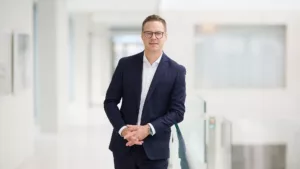
“Austria Is The Perfect Test Market for International Start-Ups and Scale-Ups”

Set Trending Topics as a preferred source on Google.
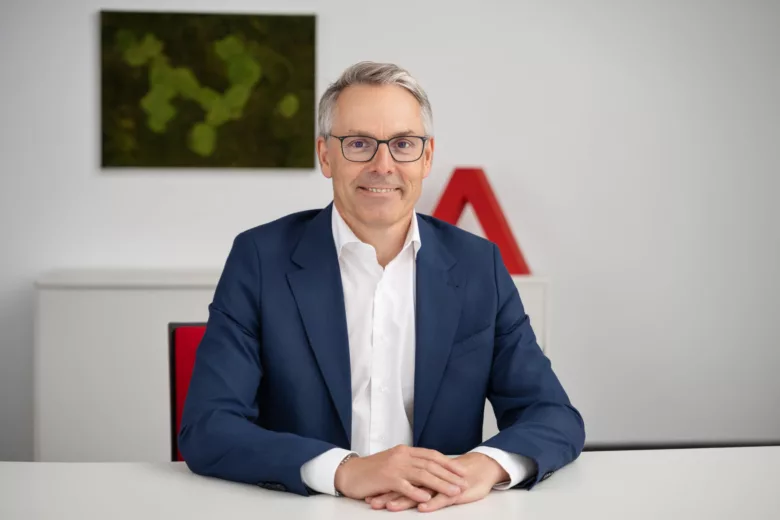
Looking at Vienna from Bratislava, Berlin or Budapest, many people see little more than waltzes and mountains. René Tritscher, managing director of the Austrian Business Agency (ABA), sees a research premium, a test market and proximity to customers. In this interview, he explains why international start-ups and corporations are choosing Austria of all places for their development work, what BMW is planning in Steyr and what the country still needs to work on.
The ABA is the Austrian government’s national business location agency. Through INVEST in AUSTRIA, it advises foreign companies on entering and expanding in the Austrian market, and through WORK in AUSTRIA, it supports employers with international recruiting. Over the past five years, it has supported 369 business location projects, around 70 a year, which have created more than 2,100 jobs.
Why Austria?
A founder from Bratislava, a scale-up chief executive from Berlin and a developer from Budapest ask you: Why Austria, of all places? What do you tell them?
René Tritscher: Austria is a market with strong purchasing power and an exceptionally strong research and innovation landscape, highly skilled workers, stability and quality of life. It is the ideal starting point for growing in the DACH region and across Europe, and it is just a stone’s throw from Bratislava or Budapest.
What prejudices about Austria as a business location do you hear most often?
First, that Austria is bureaucratic. That is exactly what INVEST in AUSTRIA and WORK in AUSTRIA are for: We guide companies and skilled workers through the administrative landscape. And when it comes to digital government, Austria is an international role model anyway. Second, that setting up a company takes a long time. For start-ups in particular, the FlexCo is a good tool, because it is tailor-made and speeds up the founding process. Third, that Austria is too small a market. In practice, we see exactly the opposite. As a small country, Austria is an ideal test market where companies can try out products and services with lower entry costs and grow from there.
Start-Ups and Scale-Ups: Who Is Coming?
Last year, the ABA helped 42 start-ups and scale-ups set up in Austria. From 2020 to 2025, there were 223 in total, which invested around €300 million in Austria and employ almost 1,400 people. What do these companies have in common?
They come from different industries and stages. More than half are in IT, telecommunications and software, an important and highly innovative field. Then there are pharma and biotech, where start-ups cooperate internationally. We also have a broad mix of countries of origin: Germany is still strongly represented, 26 start-ups and scale-ups came from the United States, and that number is rising, plus Switzerland and the Netherlands, for example.
What they have in common is a strong focus on technology, driven by A.I. and quantum, and a strong drive to internationalize. We are pleased about that, because growing companies that have gained a foothold in Austria often keep many corporate functions here, with a high share of research and close cooperation with research institutions.
Why do founders choose Austria over other locations?
There is never just one reason; it is the overall package that counts. That includes the test market, fast access to universities, research institutions and universities of applied sciences, and qualified staff. At the beginning, a start-up does not need a hundred people, but it does need highly qualified ones. The higher technical colleges and universities of applied sciences produce graduates who can be put to work quickly thanks to their practice-oriented training. Then there is access to the E.U. single market.
Quality of life rounds out the package. The first anchor for a skilled worker is an interesting job; for founders, it is market opportunities and proximity to customers. But we also notice it at large corporations: People would rather go to Vienna than elsewhere because the infrastructure, public transportation, cultural offerings and safety are all right. Skilled workers from South America often tell us how impressive it is to be able to walk safely through Vienna’s streets at night.

Funding Rounds, Exits and the Mistral Question
This year saw strong funding rounds at Waterdrop, Gropyus, Aviloo, Enpulsion and nyrahealth, as well as major exits such as Tractive and Emmi AI. What does that say about Austria as a business location?
More than 71 percent of Austrian start-ups are developing key technologies that the Austrian federal government aims to promote with its Austria 2035 industrial strategy. So the economic policy agenda is right: We are building on our strengths. The companies you mentioned come from completely different fields. The ecosystem is broad, and in a complex world, that is an advantage. It also shows that we can develop globally scalable technologies.
Emmi AI was acquired by France’s Mistral, and a large Mistral site is to be built in Linz. Some see this as a loss, others as a gain. How do you see it?
You cannot look at it one-dimensionally. Yes, it is a weakness we have. But it is not only due to a lack of venture capital. Here, risk tends to have negative connotations in people’s minds; that is a cultural thing. People prefer to invest in something supposedly safe at later stages rather than at the beginning, when the outcome is uncertain.
At the same time, we have seen a trend in recent years in which Austrian companies are acquired by international corporations and then grow strongly here. In a globalized economy, it is normal for companies to finance one another. What matters is that the value creation stays in the country. That depends first and foremost on local management and on which functions remain on site. We have many corporate units in which Austrian sites take on tasks for other countries. That has to be the goal.
Austria as a Research Hub
At 3.34 percent, Austria’s research spending ratio is among the top three in the E.U., and around €17.6 billion is expected to be invested in 2026. Where does the money go?
A large part goes to companies themselves, both Austrian and international. Development is moving so fast that you can only stay ahead with high research spending. In capital-intensive sectors such as microelectronics, public funding, E.U. programs and national subsidies are also needed to keep up internationally.
What is interesting is that international companies account for only 2 percent of all companies in Austria but for more than 50 percent of research and development spending. On top of that, research here often goes hand in hand with production. Companies try out what emerges from research right around the corner in manufacturing. Austria is both a research country and an industrial country.
Which international companies do research in Austria without people knowing it?
The list is long. GE Healthcare, a U.S. corporation and world market leader in prenatal diagnostics, does research and manufacturing in Upper Austria, with a focus on 3D and 4D technology. NXP in Gratkorn is an important site for vehicle security, cryptography and digital identities. Boehringer Ingelheim in Vienna is a central pillar of the group’s global research. Then there are BMW in Steyr and Bosch, as well as small start-ups in which industries merge. The great thing is that it is spread across the whole country, not just Vienna.
How does the research premium work?
Companies receive 14 percent of their eligible expenses for research and experimental development as a tax-free credit. This applies to in-house research and to contract research, which is not the case in every country, and it can be combined with programs from the Austrian Research Promotion Agency, FFG. For large projects, it is often the deciding factor in a decision to set up or expand, because research involves large sums and long time frames. With this instrument, we are at the top in Europe. The fact that the government is continuing the premium is an important signal.
Do you have a favorite example of cooperation between science and industry?
The COMET center in Graz. There, universities, together with industrial partners such as AVL, Magna, Siemens Mobility and Infineon, developed a simulation model with an open interface through which different manufacturers work together. It is already on the market and has led to massive savings in the development of new technologies. There are almost 70 international patents, and the results are used in the automotive and rail vehicle sectors. One thing has to be said honestly: We do not yet monetize research results the way we would like to, but in individual projects, it works very well.
At the Virtual Research Talk, 153 researchers from 42 countries got to know Austria’s research landscape. What attracts them?
I had the impression that scientists had little interest in industry. There, I experienced the opposite: Many wanted to take a career step into business. Austria is also seen as a country with very modern research structures and close ties between science and industry. What surprised me was how quickly the questions went beyond the actual job: How do I bring my partner along, how do I integrate my family? We have a complete offering for that, from advice on the Red-White-Red Card to everyday questions. It is the overall package that counts.
Skilled Workers: Careers and Support
If you could name only one argument for skilled workers from Central and Eastern Europe?
Great career opportunities at internationally oriented, very successful companies. Their brands are often not known worldwide because they operate in the business-to-business sector, but the work is still very exciting.
How does WORK in AUSTRIA help a start-up or scale-up with international recruiting?
In several phases. We advertise positions internationally at trade fairs and in webinars and highlight Austria’s labor standards and companies. Once the employment contract is in place, we help skilled workers from non-E.U. countries with the Red-White-Red Card and administrative processes. There are also information packages: How do I find my way around, how do I find an apartment, how do I find a school or training place for my children? We are also there when residence permits need to be renewed. We support skilled workers from the first contact until they have settled in and beyond.
A West-East Hub and the Competition
What is your favorite success story?
BMW’s investments in Steyr, because they are so recent. BMW operates the group’s largest engine plant there, where it produces electric motors. By 2030, BMW plans to invest around €1 billion, and from 2028, fuel cell systems are also to be developed or produced there. The ABA supported this project. It shows that even in a fiercely competitive industry, with competition from Asia and a difficult phase for the German auto industry, you can attract massive investments when companies, the framework conditions and the public sector work together. The site is being secured and expanded, with a core function within the group.
Which locations does Austria beat, and where does Austria struggle?
That depends on the type of investment. When it comes to wage and energy costs, Austria has a hard time competing with some locations in Europe. In research, we make up for that with the research premium, research institutions and qualified workers. In production, it is more difficult: Here it is about high automation and niche manufacturing, not serial mass production. For the latter, in the automotive sector for example, we compete with regions such as Hungary, which receive substantial E.U. funding. In high-value manufacturing, the competitors are more likely to be Switzerland, the Nordic countries, the Netherlands or Germany, which have similar wage structures.
An example of proximity to customers: A highly automated production company near Vienna with around 200 employees is deliberately located there because its customers are in Austria. It can reach its customers in one hour; with production abroad, it would need nine. Proximity to markets and customers is one of the main reasons for setting up and expanding.
What the ABA Actually Does
What does the support look like when a company is considering Austria?
It starts even before that. We proactively approach markets; a colleague is currently in Canada and recorded a podcast with a Canadian influencer. Many companies looking to expand do not even have Austria on their radar yet, so that is the first thing we change. That is followed by an initial meeting, information about the location’s advantages and, when three to five countries are on the shortlist, a concrete pitch against the alternatives. If the company chooses Austria, we help with funding advice, the search for real estate, networking with research institutions, universities and regional agencies, approval procedures and bringing in skilled workers. We support companies from A to Z and keep going afterward when further expansion steps come.
The Outlook: Three Priorities
What is the ABA planning for the next few years?
First, the federal government’s industrial strategy with nine key technology fields. There, we will put a strong focus on both business location projects and proactive promotion abroad, for example on A.I., quantum and life sciences. Second, we want to provide even more support to start-ups and especially scale-ups, including university spinoffs, where we see great potential. Third, we are relying on a mix of digital advice and personal support. In large, challenging projects, where small details decide the outcome in the competition between locations, personal advice remains indispensable.
International companies and founders considering setting up or expanding a branch in Austria can get free advice from the ABA: investinaustria.at. Employers looking for skilled workers from abroad can find support at WORK in AUSTRIA. To stay up to date, subscribe to the Austrian Business Update.