U.N. Report: The World Will Overshoot the 1.5-Degree Limit


Set Trending Topics as a preferred source on Google.
The 1.5-degree target is history, at least in its original form: According to the Emissions Gap Report 2026, just released by the U.N. Environment Programme (UNEP), it is no longer possible to halt global warming at 1.5 degrees Celsius without a significant overshoot. Under current policies, the world is heading for 2.8 degrees by 2100. Even so, the report is titled “The Point of Return.”
The Projections at a Glance
The 17th edition of the report models several scenarios for warming by the end of the century:
- Current policies: 2.8 degrees
- Unconditional national climate plans: 2.7 degrees
- All climate plans, including those that depend on financial support: 2.6 degrees
- All climate plans plus net-zero pledges: 2.1 degrees
That means the picture has not improved since last year. A year ago, UNEP projected 2.3 to 2.5 degrees if countries fully implemented their climate plans. According to the Australian Associated Press, the projections are worse partly because of the U.S. withdrawal from the Paris Agreement and updated emissions estimates.
Global greenhouse gas emissions totaled 58.4 billion metric tons of CO2 equivalent in 2025, slightly below the previous year. That is no reason for relief: Emissions from fossil fuels kept rising, and the decline came mainly from fewer wildfires than in 2024. The G20 countries account for 76 percent of global emissions, and their emissions excluding land use rose 0.7 percent in 2025.
Overshoot Is Not Surrender
Even in the most favorable scenario, temperatures would rise to 1.7 to 1.8 degrees by midcentury before possibly falling back to 1.5 degrees by 2100, with a 50 percent probability. That would require emissions to fall 18 percent by 2030, 45 percent by 2035 and 69 percent by 2040 compared with 2025, or almost 6 percent a year. Countries’ current climate plans deliver a reduction of only 11 to 15 percent by 2035. On top of that, technologies that pull CO2 out of the atmosphere on a large scale would be needed.
“The world can no longer avoid overshooting the 1.5 degree limit,” said António Guterres, the U.N. secretary general. But overshoot, he added, “is not surrender.” Inger Andersen, UNEP’s executive director, called for fast, deep and sustained emissions cuts, saying that the point of return begins “now, not later.” According to the report, every five years of delay in cutting emissions locks in roughly another 0.1 degree of warming.
The U.S. as a Drag
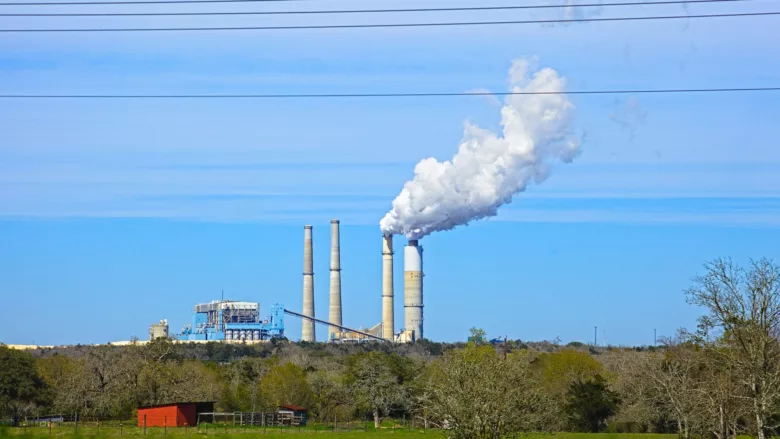
The report is particularly critical of the United States. U.S. emissions rose by 133 million metric tons in 2025, driven by higher electricity demand and a comeback of coal power. The reason U.S. emissions for 2030 and 2035 still look lower in the projections is the withdrawal from the Paris Agreement, which UNEP describes as “policy changes, not policy progress,” according to Carbon Brief. China, the E.U., India, Russia and Indonesia, by contrast, kept their emissions relatively flat in 2025.
Many other countries are lagging, too. By early September, 124 countries had submitted their new climate plans, together covering 75 percent of global emissions. Ninety-five percent of countries missed the original deadline in February 2025.
Optimists and Pessimists
How realistic a return to 1.5 degrees is remains disputed. Bill Hare, the chief executive of the research institute Climate Analytics, believes that with maximum ambition, warming could be halted at around 1.7 degrees by midcentury and pushed well below 1.5 degrees by 2100. On the other hand, the report itself shows how far reality is from that: Coal use would have to fall 55 percent by 2035, while it is currently rising again in the United States.
The effects of breaching the 1.5-degree limit can already be felt. 2024 was the first calendar year with warming of more than 1.5 degrees, and last month was the second-hottest September on record. At the same time, a super El Niño is building that is already breaking temperature records. The next opportunity to raise ambitions comes at the COP31 climate summit in Antalya, Turkey.