ZuckOff: Free App Now Warns You When Someone Nearby Is Wearing Meta’s Glasses

Set Trending Topics as a preferred source on Google.
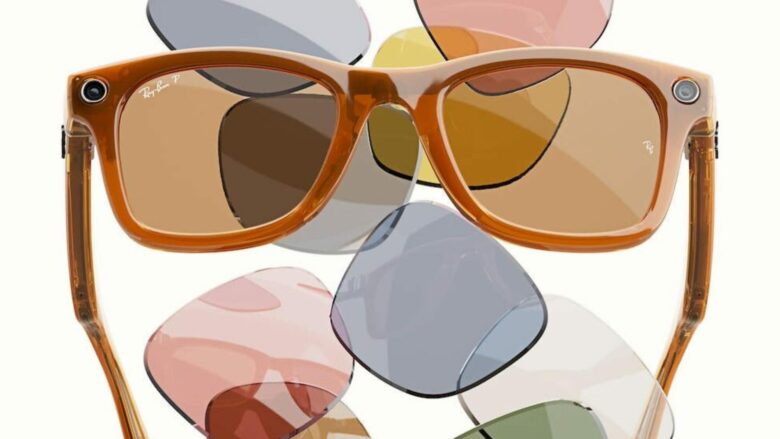
Smart glasses with built-in cameras have become part of everyday life, showing up in cafés, on the subway and in clubs. If someone wearing Ray-Ban Meta glasses is filming you, you often won’t notice. A free app wants to change that: ZuckOff sounds an alert when camera glasses are nearby. On the tech platform Hacker News, it is currently one of the most discussed topics.
Bluetooth Signals Give the Glasses Away
ZuckOff was built by Polish software developer Paweł Szydłowski. The app relies on something that isn’t really a flaw at all: smart glasses constantly send out Bluetooth signals, for instance to connect to a smartphone. ZuckOff picks up those signals and checks them against a catalog of known devices. If the manufacturer ID and other identifiers match, the app reports a hit, as The Next Web reports. “If the unique identifier matches, and also if the manufacturer identifier matches, then we have like an ultimate combo there,” Szydłowski explained. To build the catalog, he bought several models of the glasses himself.
According to the app’s website, ZuckOff detects, among others:
- Ray-Ban Meta and Oakley Meta: the camera glasses made by Meta and EssilorLuxottica
- Other Meta wearables: devices registered to Meta Platforms
- Snap Spectacles: Snapchat’s camera glasses
- Other devices: models that can be identified by name, such as Apple Vision Pro, with lower confidence
The app also estimates how far away a device is, from “very close” to “far.” The glasses transmit most strongly when they are switched on, being paired or taken out of their case.
Free on iPhone and Android
ZuckOff is free on the App Store and Google Play, with optional donations for anyone who wants to support the developer. It offers background notifications, a home screen widget and a Live Activity on the iPhone lock screen. According to the developer, detection data stays on the device. People who own smart glasses themselves can mark their own pair so the app doesn’t keep going off.
According to IBTimes UK, the app reached about 5,000 users on the App Store in its first month. It has been spreading fast ever since, including on the club scene, where partygoers don’t want to be filmed without being asked.
What the App Can’t Do
As useful as ZuckOff is, it has clear limits. It can tell that camera glasses are nearby, but it can’t tell whether they are recording video or taking photos. It doesn’t show who is wearing them either. And it only works within Bluetooth range of your own phone.
Szydłowski still defends the project on principle: “We as a society have the right to at least know that someone is recording.” Unlike a smartphone held up in the air, a camera built into glasses is hard to spot, he argues. He was prompted by videos in which people were filmed without their knowledge and then identified online.
Meta Relies on the Recording Light
When privacy concerns come up, Meta points to the small LED on the glasses that lights up during recording. Chief Technology Officer Andrew Bosworth has stressed that the glasses were designed so the camera would be noticed by the people around the wearer. Over the summer, Meta also tightened things up: if the LED is covered or damaged, the camera shuts off.
Critics say that isn’t enough. Back in 2024, Harvard students showed with their I-XRAY project how Ray-Ban Meta glasses could be paired with facial recognition to identify strangers in real time. In Britain, the glasses have since been banned from courtrooms.
In Europe, the issue is especially sensitive. Ray-Ban Meta glasses have become a bestseller here, and Meta has changed the glasses’ privacy terms to support A.I. training. The newer model with a display, meanwhile, remains blocked from the EU market for now. Apps like ZuckOff show that the debate over cameras worn on people’s faces is only getting started.