Anthropic Accuses Alibaba of Large-Scale AI Model Theft


Set Trending Topics as a preferred source on Google.
US AI company Anthropic is leveling serious accusations against Chinese tech giant Alibaba: in a letter to US senators and the White House, the company accuses operators linked to Alibaba’s Qwen AI lab of siphoning off capabilities from its Claude chatbot on an industrial scale. Anthropic calls it the “largest known distillation attack” on its models to date. The allegations have not been substantiated so far — this is Anthropic’s own account, not a finding established in court or through forensic analysis.
What Anthropic Claims
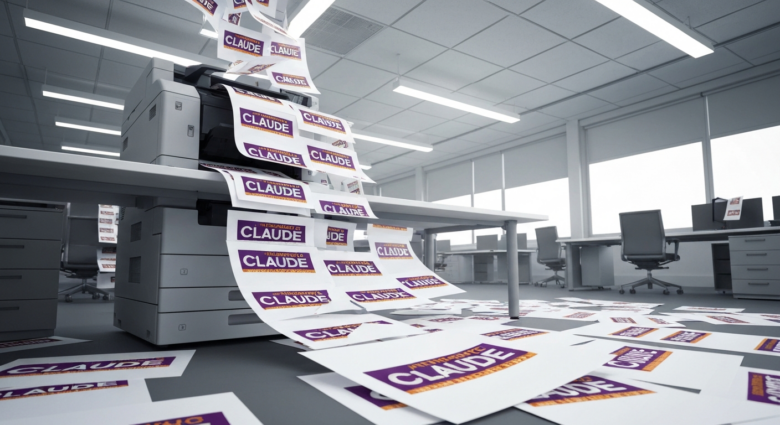
According to the letter, dated June 10 and reviewed by several outlets including Reuters, Bloomberg and CNBC, around 25,000 fraudulently created user accounts conducted roughly 28.8 million interactions with Claude between April 22 and June 5, 2026. The letter was addressed to Tim Scott, chairman of the US Senate Banking Committee, and to its ranking member, Elizabeth Warren.
At the center of the accusation are not basic question-and-answer functions but Claude’s most commercially valuable capabilities: writing software (software engineering) and so-called agentic reasoning — the ability to independently handle multi-step tasks.
Anthropic refers to the underlying technique as “adversarial distillation.” It involves systematically confronting a powerful model with targeted queries in order to collect its responses, reasoning patterns and generated code. That data can then be used to train a cheaper, competing model — without bearing the high research and training costs of the original. Anthropic does not offer Claude commercially in China; the alleged operation would have circumvented this geographic restriction.
Important Context: Allegation, Not Proof
Anthropic’s wording — “operators affiliated with Alibaba and Alibaba Qwen” — is deliberately cautious. It is not the same as confirmed involvement by Alibaba itself, nor does it prove that the Qwen models have actually successfully replicated Claude’s capabilities. Anthropic says it identifies distillation campaigns through IP correlation, request metadata, infrastructure indicators and account behavior. These methods may be sufficient for account bans and government briefings — but they are not a publicly verifiable technical record directly linking Qwen’s model weights or benchmark gains to Claude-derived data.
Alibaba has not yet commented publicly on the allegations. Requests from several media outlets initially went unanswered. The accusations only became public on June 24, so the company may still be formulating its position.
Market Reaction and the Broader Conflict
Publicly listed Alibaba stock (BABA) fell by around 3 percent on Wednesday. The accusation hits the company during an already tense period: in early June, the US Department of Defense added Alibaba to a list of Chinese firms it deems linked to the People’s Liberation Army. Alibaba rejects any military affiliation and filed a lawsuit this week to challenge the designation, calling it without “any factual or legal basis.”
It is the first time Anthropic has named a major Chinese tech conglomerate as the source of such an attack. Back in February 2026, the company had accused three smaller AI labs: DeepSeek, Moonshot AI and MiniMax. At 28.8 million interactions, the volume now attributed to Alibaba significantly exceeds those earlier cases.
The Policy Dimension
The letter is also a political move. Anthropic urges the US government to take tougher action against such practices — among other things through clearer antitrust guidance that would allow greater information sharing among US firms, and through penalties against actors that systematically engage in distillation. The company also reiterates its support for export controls on advanced AI chips. Anthropic notes that the alleged Alibaba campaign took place only after an April White House memo that directed agencies to crack down on the exploitation of US AI models through proxy accounts.
Things are moving in Congress in parallel: Senators Bill Hagerty and Andy Kim plan to introduce an amendment to a must-pass defense bill that would sanction Chinese firms found to be improperly accessing the outputs of US AI models. A related bipartisan bill in the House of Representatives is also under consideration.
Notable is the dual role in which Anthropic finds itself: while the company presses the government to crack down on Chinese labs, it is simultaneously fighting restrictions imposed by that same government. Less than two weeks ago, the US Commerce Department imposed export controls on two of Anthropic’s newest models, Fable 5 and Mythos 5, citing national security. Anthropic subsequently disabled access to those models.
What’s Really at Stake
The case highlights a new fault line in the AI race: frontier models are themselves generators of training data. Every API call can be a legitimate customer interaction — or an attempt to transfer one company’s expensive capability into another company’s cheaper model. Whether Washington shares Anthropic’s view and starts to control model access, account verification and AI outputs the way it controls chip exports is likely to shape both the regulatory environment for US AI firms and the industry’s competitive dynamics.