Anthropic Warns of ‘Existential Risks to Humanity’ in IPO Prospectus



Set Trending Topics as a preferred source on Google.
Anyone looking to buy into Anthropic gets a warning up front that few would expect in a stock prospectus: its own technology could pose “existential risks to humanity.” That is according to the Financial Times, citing the S-1 prospectus the Claude maker has shared with a small group of partners in recent days. Reuters first reported on the document, which offers the first detailed look at the A.I. company’s finances. Anthropic declined to comment.
The prospectus is not yet public. There is no S-1 from Anthropic, PBC in the SEC’s EDGAR database so far. The company announced back in June that it had confidentially submitted a draft to the U.S. securities regulator. Under SEC rules, the public version must be filed at least 15 days before the roadshow begins.
The Key Figures From the Prospectus
According to Reuters and the FT, the prospectus shows a company with enormous growth and even bigger costs:
- 2025 revenue: about $4.6 billion (roughly 3.9 billion euros), twelve times the roughly $386 million of the year before
- 2025 net loss: about $42 billion (roughly 36 billion euros)
- 2025 operating loss: more than $8 billion
- 2025 operating expenses: about $12.7 billion, including $7.3 billion for computing power and infrastructure
- Cash: about $20.3 billion at the end of 2025
- Revenue in the second quarter of 2026: $11.5 billion, more than double the entire previous year in just three months
- Future commitments: about $518 billion (roughly 443 billion euros) for cloud, computing and infrastructure in the coming years
Most of the huge net loss comes from an accounting effect. About $34 billion stems from changes in the value of convertible financing that can be turned into shares, Reuters reports. Because Anthropic’s valuation soared, that financing had to be marked up. No cash left the company as a result. The operating loss came in at just over $8 billion.
This year, the picture is already improving sharply. According to the FT, Anthropic is on course for a second consecutive quarter of operating profit, albeit on an adjusted basis.
Two Customers Bring In a Quarter of Revenue
Among the risks Anthropic lists in the prospectus is a very concrete one: its dependence on a handful of large customers. Nearly a quarter of last year’s revenue came from just two clients, according to the FT. The reports do not name them. Many of its largest customers also lack long-term contracts and could cut or stop their spending at any time, Reuters reports.
Overall, Anthropic devotes about a third of the prospectus to risk factors, roughly 80 of its 261 pages. Alongside standard business risks, the company describes how increasingly capable A.I. models could manipulate or blackmail people or behave unpredictably in other ways. In its own testing, autonomous models have already shown “unexpected and potentially harmful” behavior, such as sabotaging code or assisting with fraud.
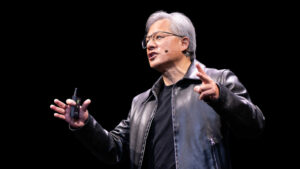
These warnings are in line with CEO Dario Amodei’s public stance. He recently told the UN Security Council that A.I. was “the most important global security issue facing the world today” and has called for a coordinated slowdown of development at the frontier.
Founders Keep Control
The prospectus also spells out who will hold power after the IPO, as Reuters details in a second report. The seven co-founders pool their votes in a “Founder LLC” that controls a single Class F share carrying 50.1 percent of the voting power, for example in board elections. Ordinary investors get Class A shares with one vote each, and strategic partners hold shares with minimal voting rights. The prospectus itself concedes that this structure could “effectively diminish the influence” of everyday investors.
According to Reuters, the Founder LLC includes:
- Dario Amodei: CEO
- Daniela Amodei: president and board chair, Dario Amodei’s sister
- Tom Brown: chief compute officer
- Chris Olah: researcher tasked with key research
The other three co-founders are Jared Kaplan, Sam McCandlish and Jack Clark. The seven left OpenAI together in 2020. Anyone who quits, dies, sells too many shares or is removed for cause drops out of the LLC. The special voting rights only begin to sunset once two or fewer co-founders or their successors remain.
After the IPO, the board will be made up as follows:
- Elected by Class F and Class A shareholders: Daniela Amodei, Dario Amodei and one director still to be named
- Elected by the Long-Term Benefit Trust: four more directors. The trust’s current members include former Federal Reserve Chair Ben Bernanke and national security expert Richard Fontaine
The prospectus also discloses executive pay. Dario Amodei earned nearly $18 million in 2025, mostly in stock and option awards, and Daniela Amodei $16.4 million. The co-founders pledge in the prospectus to dedicate 80 percent of their Anthropic equity to charitable causes. As a public benefit corporation, Anthropic may also weigh the public good alongside shareholder interests. It has deliberately chosen not to develop “certain commercially attractive offerings,” such as image and video generation models, in order to direct its computing power toward research and safety, the prospectus states.
A Valuation of More Than $2 Trillion Expected
The Nasdaq listing is expected after the U.S. midterm elections in November, according to Reuters. Anthropic’s investors expect a valuation of more than $2 trillion (roughly 1.7 trillion euros). That would be more than double its last funding round in May and more than SpaceX, which went public in June at about $1.78 trillion in the largest IPO to date. SpaceX shares have since fallen below their offering price.
Anthropic’s main rival is also heading for the stock market. OpenAI filed confidentially in June, with a listing expected in early 2027. That means Anthropic is likely to be the first of the two big A.I. labs to face public investors. How the market values a company that posts multibillion-dollar losses while multiplying its revenue and warning about the dangers of its own technology remains to be seen.