Mistral’s Arthur Mensch: Why Open-Weight Models Won’t Save Europe


Set Trending Topics as a preferred source on Google.
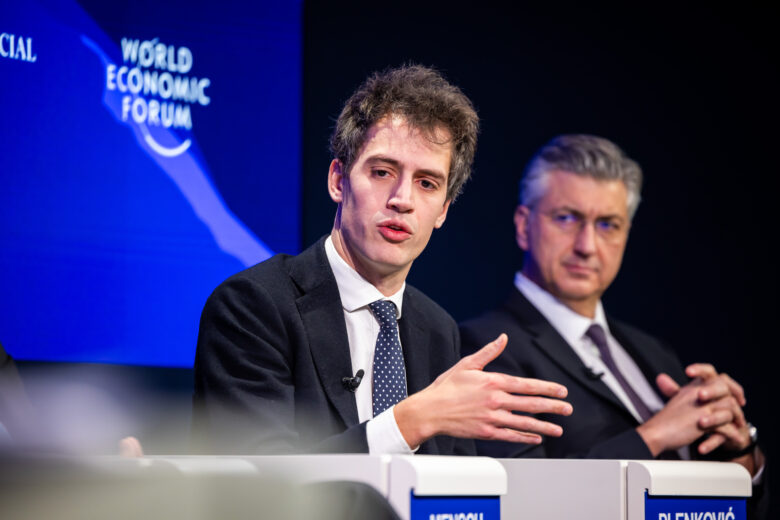
Build or surrender: That is the choice Mistral’s chief executive, Arthur Mensch, is putting to Europe in what may be the most important A.I. question of the decade. In an essay on LinkedIn, he takes aim at an idea that is gaining ground in Brussels: that Europe should leave expensive frontier models to the United States and China, focus on applications and rely on other people’s open models for everything else. To Mr. Mensch, that is “a fundamental mistake” that would lock Europe into economic dependence “unprecedented in the history of civilizations.”
The Lesson From Cloud and Software
Mr. Mensch’s argument starts with the past. Europe followed exactly this playbook with the internet, he writes: build the applications, leave the platforms to others. The result: European companies pay more than €260 billion a year to American cloud and software providers, according to Mr. Mensch. Europe, he writes, has become “the continent that consumes what others build.”
With A.I., he argues, the situation is even more precarious. The internet ran on open protocols that nobody owned. A.I. models have owners, and whoever controls the model sets the terms: prices, permitted uses, the withdrawal of a version. As an example, Mr. Mensch cites an incident in June, when an American lab suspended access to its most advanced models. He is apparently referring to Anthropic, which had to shut off its Fable 5 and Mythos 5 models for all customers on the orders of the U.S. government. “Nobody asked for our opinion,” Mr. Mensch writes.
Why Open Models Are Not Enough
Mr. Mensch anticipates the obvious objection: Open models can be downloaded, self-hosted and audited. That only partly solves the problem, he argues. Those who do not contribute to the ecosystem themselves have no say over what gets released, when, or under what license the next version will ship. “Dependence on others, even on their openness, is still dependence.”
Then there is security. A.I. models are taking on a central role in cyber defense and in protecting critical infrastructure. A state must be able to audit the systems it uses, adapt them and be certain it will still have access to them tomorrow, he writes. With a model designed and controlled elsewhere, none of these conditions is guaranteed over time. Frontier models are also becoming indispensable for research, and the companies that run them have little interest in sharing that advantage.
Mr. Mensch calls the supposed choice between frontier research and industrial deployment a trap. For the most demanding uses, mastering the model is a prerequisite, he argues: “You do not learn to modify and use a model effectively simply by importing it.”
Mistral Plans to Increase Its Compute Sixfold
As proof that Europe can compete, Mr. Mensch points to Black Forest Labs and ElevenLabs, which rank among the best in their categories, and to Mistral itself. The company plans to increase its compute capacity sixfold over the coming year and to raise more capital to do so. Mistral recently raised €3 billion at a valuation of €21 billion. Above all, he writes, Europe needs to break with pessimism: The story that Europe has already lost “suits those who are ahead.”
The Counterpoint: Applications Over the Race
Mr. Mensch is arguing against a position with powerful supporters. In her State of the Union address in September, Ursula von der Leyen, the president of the European Commission, said Europe could “reap enormous benefits” from A.I. without developing frontier technology itself. Max Junestrand, the chief executive of the Swedish legal A.I. start-up Legora, called building a competitive frontier lab “wishful thinking,” according to Politico.
The market is also supplying arguments against Mistral. The search engine Ecosia recently dropped Mistral as its A.I. supplier and now relies on open models, including Chinese ones, that run on E.U. servers through a German provider. Its founder, Christian Kroll, cited quality problems and costs that were cut roughly in half, according to Politico, as Trending Topics reported. And Mistral’s new flagship model, Large 4, is the strongest open model outside China but ranks behind seven Chinese open-weight models on the benchmarking service Artificial Analysis. Mr. Mensch is also not a neutral party in this debate: As the head of Europe’s most important frontier lab, he stands to benefit directly if Europe invests in its own models.