U.S. Bans DeepSeek From Federal Agencies, and Windows Could Be Caught Up in It


Set Trending Topics as a preferred source on Google.
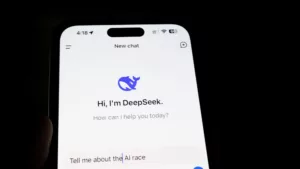
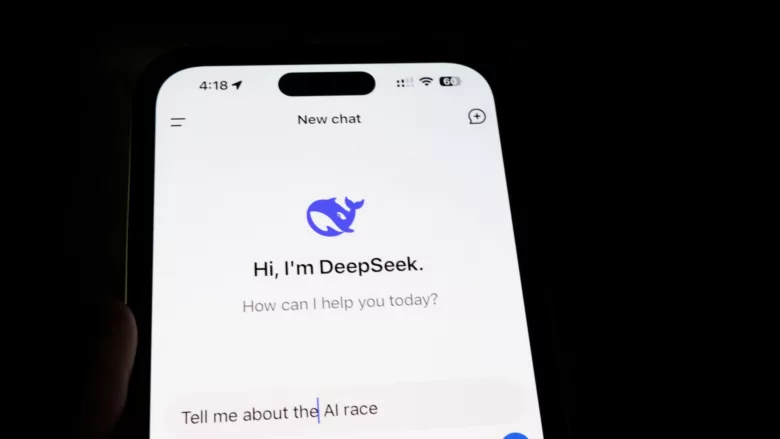
Washington is pulling the plug on DeepSeek, and doing it thoroughly: The U.S. Department of Homeland Security (DHS) is requiring all federal civilian agencies to remove products from the Chinese A.I. lab from their IT systems. That is according to an order in the Federal Register that has just been published. The most explosive part is a clause that also covers other vendors’ software built on DeepSeek. Soon, that could even include Windows.
Third-Party Products Are Covered Too
The order covers all products from DeepSeek and its affiliates, as well as “third-party products and services developed using DeepSeek implementations.” Agencies must remove existing installations and may no longer buy anything that falls under the order. The legal basis is a 2018 law on supply chain security, and the move follows a review by the Federal Acquisition Security Council. Exceptions require a “compelling justification” and must be requested 60 days in advance.
Homeland Security Secretary Markwayne Mullin lays out the reasons in a letter that dates back to the summer and has now been made public. DeepSeek collects personal data when users create accounts, can digitally track users, and prompts and responses could send sensitive data to the Chinese government, according to the letter. The models could also contain malware or vulnerabilities. Until DeepSeek is fully removed, agencies are supposed to monitor their network traffic more closely.
DeepSeek Is Just Arriving on Windows PCs
The third-party clause gets interesting when it comes to Microsoft. Only in early October, the company announced plans to turn Windows into a platform for “hybrid intelligence,” in which A.I. models run either locally on the PC or in the cloud, depending on the task. Alongside Microsoft’s own coding model and Nvidia’s Nemotron, DeepSeek V4 Flash, with 284 billion parameters, is set to run directly on computers with Nvidia’s new RTX Spark chip. Pavan Davuluri, who heads Windows, said the model even beats GPT-5 on some coding and reasoning tasks. Just last Saturday, DeepSeek released a faster version, V4.1 Flash.
Whether a DeepSeek model running locally falls under the ban remains unclear. The order does not define what “developed using DeepSeek” means, and DHS has not yet said whether models running on U.S. servers or directly on a device are included. For agency IT departments, that means they will have to check carefully which models are on their Windows machines. The same goes for A.I. gateways such as OpenRouter, which, depending on their settings, can automatically route requests to DeepSeek.
Criticism of the Order’s Reach
The security expert Katie Moussouris of Luta Security considers parts of the order nearly impossible to carry out. Banning the app and the API is workable, but the clause on third-party products is not, she told the tech site gHacks. There are no bills of materials for A.I. software that record which tools developers used, she said. Extending the ban to DeepSeek models hosted in the U.S. goes too far, according to Ms. Moussouris.
The distrust is not new. The Pentagon blocked DeepSeek on its networks in early 2025, and the Navy, NASA, the House of Representatives and several states, including New York, followed. Last month, the N.S.A., CISA and the F.B.I. accused Chinese A.I. companies, DeepSeek among them, of copying U.S. models on a large scale by using their answers for training. The order does not name other Chinese open-weight models such as Alibaba’s Qwen or Moonshot’s Kimi; DeepSeek is the only model it explicitly bans.