‘Non-Red’ Defense Tech Aims to Arm Taiwan Against the Threat From China

Set Trending Topics as a preferred source on Google.
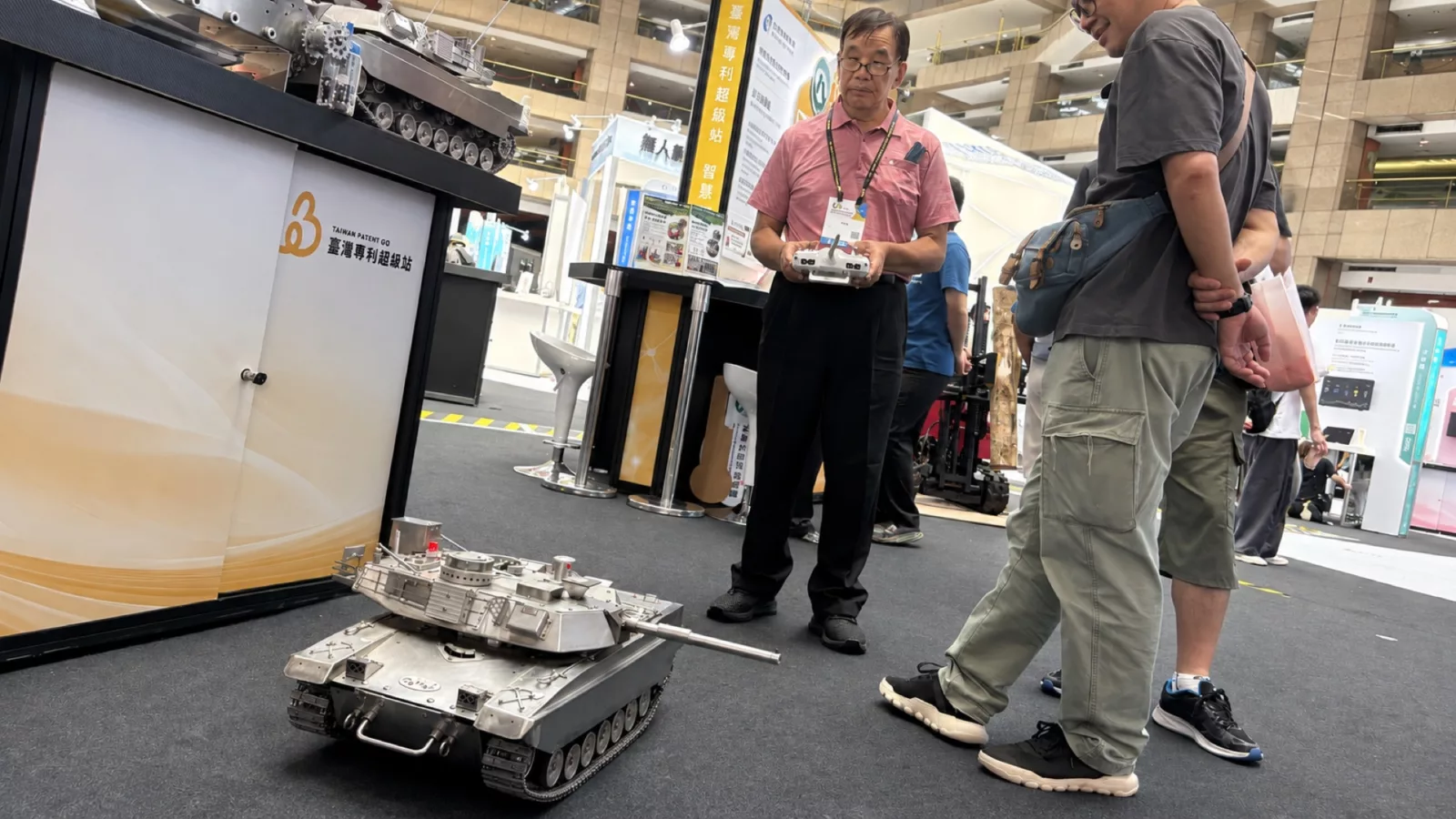
At a European innovation fair, a life-size tank and air defense guns standing between cute robots, smart mirrors and AI startups would be a novelty. At the Taiwan Innotech Expo in Taipei, they are a fixture. The Ministry of National Defense is one of twelve ministries co-hosting the fair, and defense is one of the “Five Trusted Industries,” the key sectors President Lai Ching-te has made a priority of Taiwan’s industrial policy. The goal is 非紅供應鏈 – a supply-chain independent of China.
The backdrop is well known. China has been ramping up military and political pressure on the island for years, and U.S. intelligence agencies believe Beijing wants its armed forces ready for a possible invasion by 2027. Taiwan is responding with a military buildup at remarkable speed: According to Reuters, the government plans to spend more than NT$1.1 trillion on defense in 2027, roughly $35 billion. That is an increase of 16 percent and, for the first time, more than 3 percent of GDP. By 2030, the target is 5 percent.
A growing share of that money is meant to go into technology free of Chinese components. The buzzword is “non-red supply chain,” with red standing for the People’s Republic, and it applies above all to drones, a market China dominates worldwide. According to the Taipei Times, the Ministry of National Defense plans to spend NT$42.1 billion on drones in 2027 alone. The Innotech Expo offers a look at how far the domestic industry has come on this path and where it still falls short. Here are four examples.
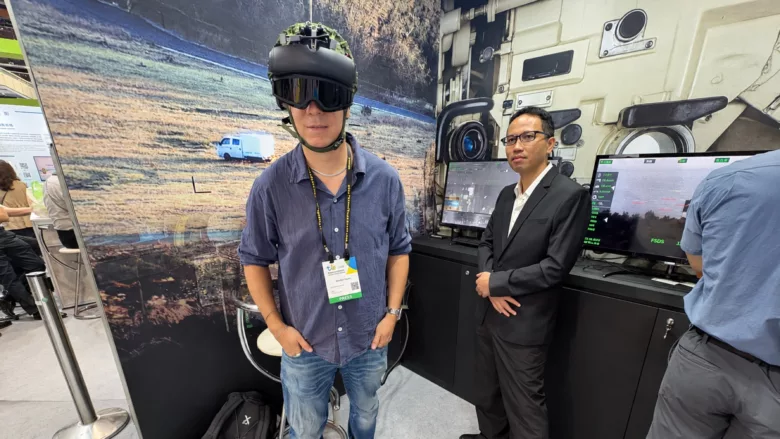
AR Helmet Display That Makes Armor “See-Through”
Anyone sitting inside an armored vehicle sees little of the battlefield: a few vision slits, a monitor at best. That is the problem tackled by an Augmented Reality Head-mounted Display System shown in Taipei by the state-run National Chung-Shan Institute of Science and Technology (NCSIST). The system combines an optical projection module in the helmet with head-tracking sensors and an external observation system. Four sensors mounted on the outside of the tank capture images that are stitched into a 360-degree view. When crew members turn their heads, the projected outside view moves with them, letting the soldiers inside effectively look through the armor. Because the sensors capture long-wave infrared as well as visible light, this also works in darkness. According to the Liberty Times, the system is being tested on a modified M60A3 test vehicle.
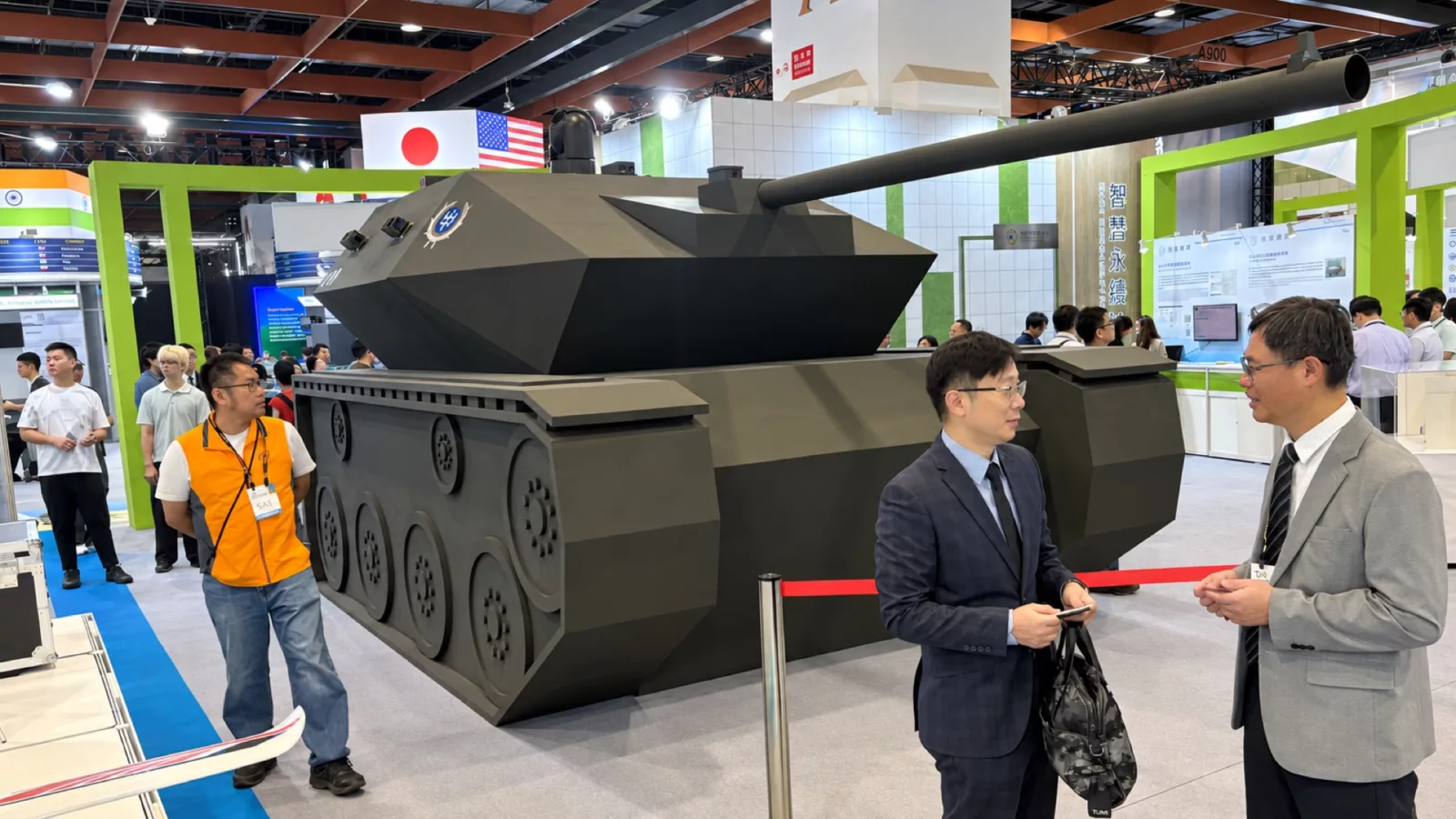
For gunners, the all-around view serves a second purpose. The panoramic image can be used to scan the surroundings for targets, with the results passed on to the turret’s fire control system. In an NCSIST demo video, the integration goes even further: When a crew member turns the helmet, the turret and machine gun swivel in sync in the same direction. The principle is familiar from Western programs such as Israel’s Iron Vision or the F-35 helmet system. The real message is that Taiwan is presenting its own state-developed version, with key components set to be built at home.
Two central questions remain open, however. The system does not yet have reliable friend-or-foe identification, so classifying detected targets is still up to the crew. It is also unclear how the externally mounted sensors are to be protected from damage. In combat, they would be an obvious target for deliberate fire, and a hit would rob the crew of exactly the all-around view the system promises.
AI Canon Full of Sensors
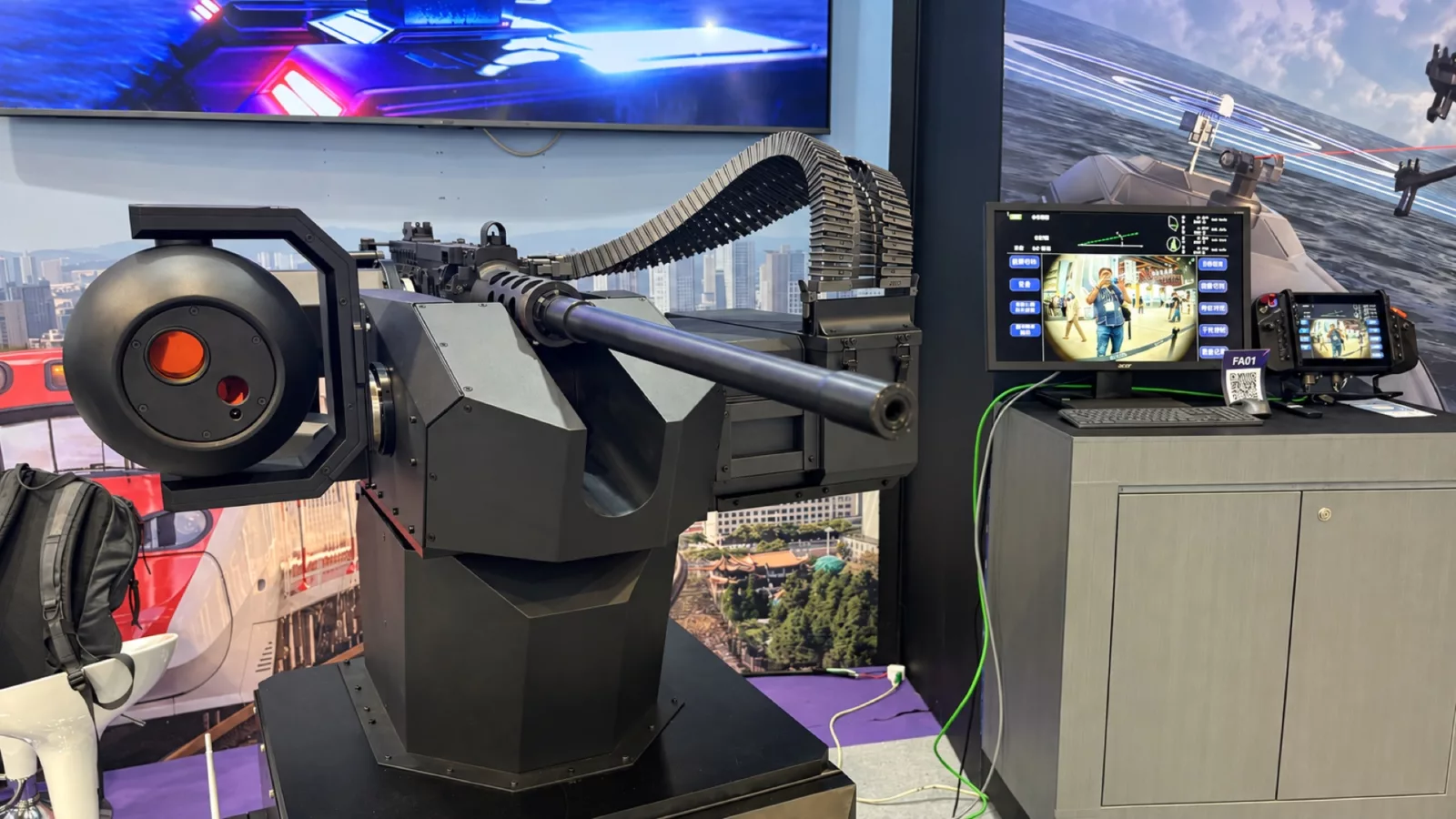
The second example comes from academia: National Kaohsiung University of Science and Technology, together with its Railway Technical Center, presented a Multi-Sensor Fusion Target Tracking and Suppression System, or AI-MFTSS. It is a machine-gun-style weapon equipped with an extensive sensor suite. The system merges data from electro-optical cameras, thermal imaging, radar and radio frequency sources and adds AI-based object recognition on top.
The goal is all-weather target acquisition and threat assessment for multiple objects at once, coordinated across land, sea and air platforms. The weapon detects and tracks targets on its own, while a human makes the decision to fire: An operator has to authorize engagement. Here, too, friend-or-foe identification remains a weak point, which makes human oversight all the more important.
Drones Built Almost Entirely From Taiwanese Parts
Coretronic Intelligent Robotics, a subsidiary of display and projector maker Coretronic, shows how research turns into business. The company presented AI-powered object recognition with dynamic positioning for drones: The software identifies moving targets in real time, tracks them continuously and transmits their location.
The numbers behind it stand out. According to TechNews, more than 98 percent of the components come from Taiwan, and the Ministry of National Defense has already placed production orders for more than 3,000 micro and surveillance drones. The company also works with U.S. firms and sells its products to police and fire departments. All of this falls under the “non-red supply chain” label, meaning a supply chain without Chinese components. That selling point resonates in Europe as well, where authorities and armed forces are paying closer attention to where the electronics in their drones come from.
A setback on the defensive side shows how urgently Taiwan needs to catch up on drones: According to the Liberty Times, an army procurement project for stationary counter-drone systems was scrapped after the supplier’s equipment failed acceptance tests. Off-the-shelf drones reportedly even flew through the defenses.
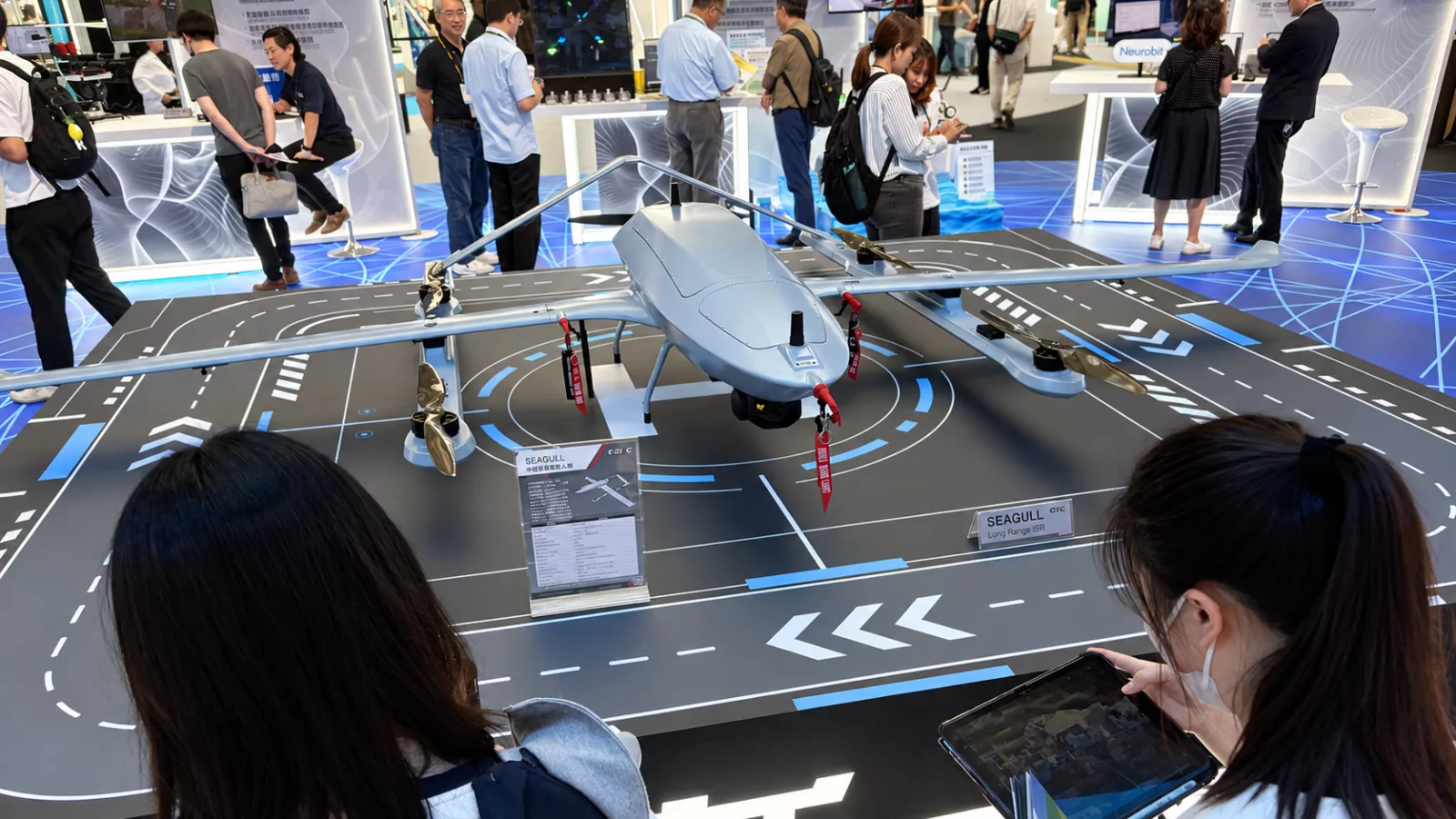
The Seagull drone, for example, comes with this specifications:
| Specification | SEAGULL |
|---|---|
| Drone Type | Hybrid VTOL |
| Dimensions | 237 × 350 × 49 cm (H × W × L, as listed) |
| Maximum Takeoff Weight (MTOW) | 45 kg |
| Cruise Speed | 72 to 100.8 km/h; default: 86.4 km/h |
| Maximum Travel Distance | Over 480 km |
| Ingress Protection Rating | IP54 |
| Flight Time | Over 6 hours |
| Maximum Wind Resistance | Gusts up to 54 km/h (Beaufort scale 7) |
| Navigation System | GPS/RTK |
| EO Camera | 4K, 20× optical zoom |
| IR Camera | Resolution: 640 × 512 pixels; hybrid zoom: 6×+ |
| Weight (Second Entry in Source) | 1,400 g |
| Laser Range Detection | Maximum distance: 2 km; accuracy: ±3 m |
| Gimbal Control Range | Pitch: +45° to −90°; yaw: −175° to +175° |
| Imagery Capability | NIIRS 6 |
| AI Tracking | Target identification, acquisition, and tracking |
| Communication | SDR + MESH (optional) |
A Homegrown Engine for the Drone Fleet
The fourth example looks the most inconspicuous at first glance, yet in terms of industrial policy it may be the most important: NCSIST showcased the PSD-250, a small turbojet engine developed in-house. Engines like this power faster, larger drones and cruise missiles, where electric motors reach their limits.
Above all, the institute stresses that the engine requires no foreign suppliers. NCSIST also cites low fuel consumption, low cost and a high thrust-to-weight ratio, and says the PSD-250 is designed for mass production. That last point is crucial: Propulsion is considered a bottleneck in drone production worldwide, and anyone able to build engines themselves makes their entire supply chain less vulnerable. For Taiwan, a homegrown engine is a step toward strategic independence.