Google Finally Brings Gemini 4 Into the Fight Against Anthropic and OpenAI


Set Trending Topics as a preferred source on Google.
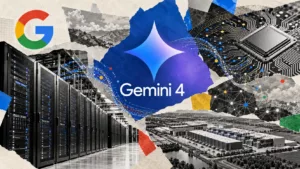
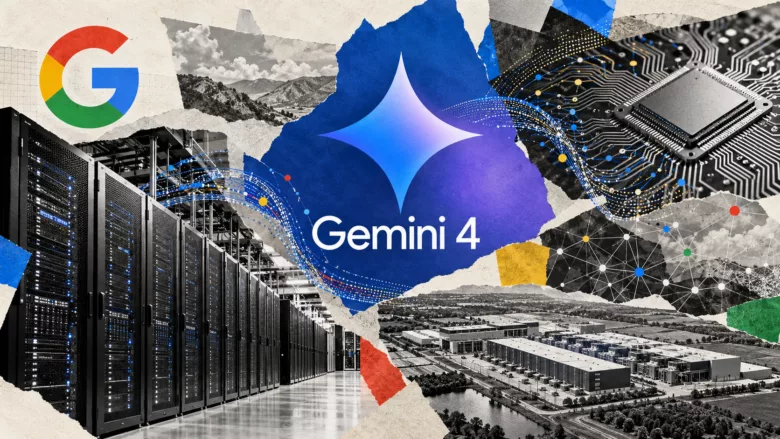
Google is back on top, at least according to Google. The company has just unveiled Gemini 4 Argon, its first true flagship model in almost a year. In benchmarks it published itself, Argon beats Anthropic’s Claude Opus 5.5 and Claude Fable 5.1 as well as OpenAI’s GPT-6 Astra in most categories. There are no independent tests yet, however, and for now only selected cybersecurity experts can use the model.
“Argon is fundamentally changing the way we work and build at Google,” Koray Kavukcuoglu, Google’s chief A.I. architect, wrote in the blog post announcing the launch. The model is built for deep reasoning across long, complex workflows, he said, and delivers frontier performance in software engineering, knowledge work such as law and finance, and cybersecurity defense.
What Google Promises
The most striking technical change is the output limit: Argon can generate up to one million tokens in a single response, up from 64,000 before. That is meant to let the model solve hard problems in one pass instead of breaking them into many steps.
Google says it is already using Argon internally. Thousands of employees use it for coding, research and writing. Among the examples Google cites are memory optimizations in its own data centers, which have so far freed up more than 300 tebibytes of memory, and the migration of large C and C++ codebases to the safer programming language Rust. A video decoder optimized by Argon agents runs 2.7 times as fast as the previous Rust version, according to Google.
Argon is set to launch at an introductory price of $2 (about 1.70 euros) per million input tokens and $10 (about 8.50 euros) per million output tokens. That is half of what Anthropic charges for Claude Opus 5.5.
How Google Rates Itself
In Google’s own comparison table of 19 benchmarks, Argon comes out on top alone 13 times and shares first place with GPT-6 Astra once. Its lead is largest in knowledge work: on the Vals Index, which measures economic impact across finance, coding, law and tax, Argon scores 68.9 percent, ahead of Claude Opus 5.5 at 67.0 percent, Claude Fable 5.1 at 65.8 percent and GPT-6 Astra at 63.1 percent. On Zapier’s AutomationBench, Argon reaches 51.3 percent, compared with 42.5 percent for Opus 5.5. On the coding benchmark DeepSWE v1.1, Argon’s 77.9 percent tops Opus 5.5 (74.2 percent) and GPT-6 Astra (74.1 percent).
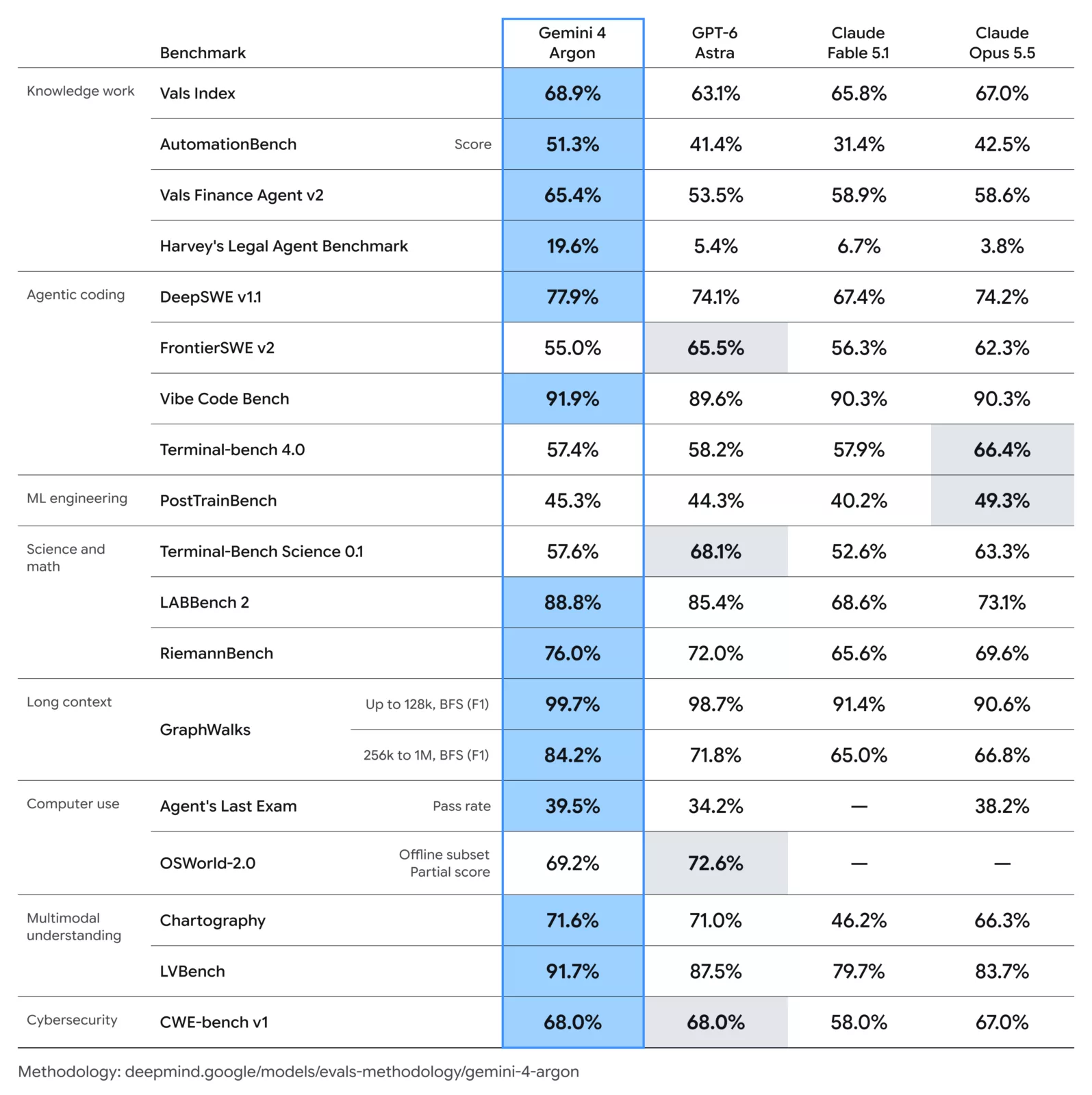
The table also shows where Anthropic and OpenAI stay ahead. On the important coding benchmark Terminal-Bench 4.0, Claude Opus 5.5 leads clearly with 66.4 percent against Argon’s 57.4 percent, and it also wins the machine learning test PostTrainBench. GPT-6 Astra wins on FrontierSWE v2, Terminal-Bench Science and computer use in OSWorld-2.0. On the cyber benchmark CWE-bench v1, Argon and Astra tie at 68 percent each, just ahead of Opus 5.5 at 67 percent.
No Independent Tests Yet
All of these figures come from Google itself. Independent measurements, for example from Artificial Analysis, are not yet available because the model is not publicly accessible. Terminal-Bench shows how far vendor claims and independent tests can diverge: for Claude Opus 5.5, Google uses the 66.4 percent that Anthropic reported itself, while Artificial Analysis measured only 59.6 percent with a different setup. Google describes the configurations it used for rival models in a separate methodology overview.
Inside Google, there are apparently doubts about the glowing numbers. As Bloomberg reported, citing people with direct access to the effort, Gemini 4 performs well on industry-standard benchmarks but less well when employees actually put it to work. The model struggles in particular with certain coding tasks. That contrasts with Google’s account that thousands of employees value Argon precisely for specialized coding tasks.
What is clear is how much pressure Google was under. Gemini 3.5 Pro, originally announced for May, never shipped, and Google released only cheaper Flash models instead. On the Artificial Analysis Intelligence Index, Google’s best model recently trailed the leader by 17 points, behind the big U.S. rivals and two Chinese providers.
Cyber Defense First
Argon is not yet broadly available. Selected cybersecurity teams get access first through Google’s Fairwind program, and without the usual cyber guardrails. According to Google, the model can autonomously find, validate and patch security vulnerabilities. The cloud security company Wiz has already used it to uncover a critical vulnerability in hospital software that earlier models had missed.
At the same time, Google is taking part in the U.S. government’s voluntary pre-release review of new A.I. models and plans to strengthen its safeguards further. After that, Argon is to be released first to paying API customers and Google AI Ultra subscribers. Google has not given a date, saying only “as soon as possible.” It is following a pattern Anthropic set with Claude Mythos: the most powerful models go to defenders first, before the public gets them.