Gemini 4 Rumors Are Mounting as Google Races to Catch Up


Set Trending Topics as a preferred source on Google.
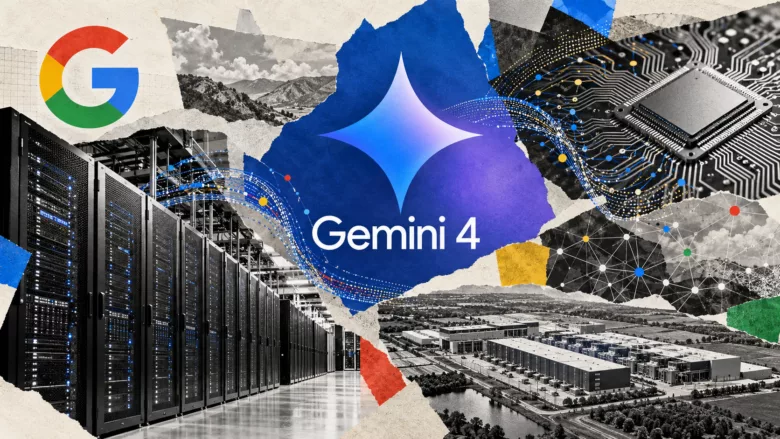
Google badly needs a big hit, and it may arrive sooner than expected. Gemini 4, the company’s next flagship model, is already in post-training and should launch “much earlier” than the end of the year, Koray Kavukcuoglu, the head of Google DeepMind, said at the AI Agenda Live Summit hosted by The Information. At the same time, a growing number of leaks about test versions and capabilities are surfacing.
What Google Has Said
Google hasn’t confirmed much so far, but the basics are clear:
- The training: In July, Google DeepMind started what it called its “most ambitious pre-training run yet” for Gemini 4.
- The focus: Sundar Pichai, Google’s chief executive, describes Gemini 4 as a “significantly larger” frontier model focused on coding and autonomous A.I. agents.
- The timeline: According to Kavukcuoglu, the model is currently being fine-tuned for safety and reliability. Google wants to release an early version “as soon as possible” and then improve it quickly, Android Headlines reports.
The pressure is largely self-inflicted. Gemini 3.5 Pro, originally announced for Google’s I/O developer conference in May, never shipped, reportedly because its coding performance fell short. Instead, Google released a series of cheaper Flash models, most recently Gemini 3.7 Flash in August and Gemini 3.8 Flash in early September. Its last true flagship, Gemini 3 Pro, dates back to November 2025.
What the Leaks Reveal
Unofficial sources are far more revealing, though caution is warranted because many of the claims contradict one another. The most credible observations come from TestingCatalog, which reports that Google has been testing checkpoints of Gemini 4 Pro under the code name “Argon” since mid-September. The leaks at a glance:
- Longer outputs: Argon can reportedly generate up to 256,000 tokens in a single response, four times the previous limit. In its highest reasoning mode, testers say the model took between 2.4 and 20 minutes per answer.
- Better design: Developers on X are particularly impressed by the websites and SVG graphics the model produces, saying the design weaknesses of earlier Gemini models have “finally” been solved.
- A huge context window: Estimates vary widely, from 1.5 million to 2 million to more than 10 million tokens. None of the figures has been backed up.
- A mysterious Arena sighting: In mid-September, an unknown model labeled “gemini-3.8-flash” appeared on the testing platform LMArena, which some believe was a disguised Gemini 4 variant.
- App preparations: According to TestingCatalog, the Gemini desktop app is already being rebuilt for Gemini 4, with avatars, plugins and widgets for Gmail and Calendar.
As for the launch date, October is circulating on X, while observers such as TestingCatalog lean toward November or December based on traces in the app’s code.
Google Needs to Catch Up
The independent ranking from Artificial Analysis shows how much pressure Google is under. Its Intelligence Index combines the results of numerous benchmarks into a single score. Google’s best model there is currently Gemini 3.8 Flash with 41 points, while the older Gemini 3.1 Pro scores just 30.
Six companies rank ahead of Google with their top models:
- Anthropic: Claude Opus 5.5 leads the ranking with 58 points.
- OpenAI: GPT-6 Astra scores 53 points.
- Meta: Muse Spark 1.3 reaches 48 points.
- xAI: Grok 4.7 comes in at 46 points.
- Alibaba and Zhipu: Qwen3.8 Max and GLM-5.3 each score 45 points.
That puts Google behind its major American rivals and two Chinese companies, 17 points off the top. Google is competing with a cheap Flash model against its rivals’ expensive flagships, and that is exactly the problem: it simply has no current top model in the race.
The Race Is Tightening
If Gemini 4 delivers the hoped-for leap, Google would be well positioned. With the Gemini app, which reaches more than a billion users, along with Android, Chrome and Google Search, the company has a reach its rivals can only dream of. It also has its own A.I. chips, which make training and running large models cheaper.
The competition isn’t standing still, though. OpenAI recently released GPT-6 Sol and Luna at half the price, and Anthropic and Meta have also updated their models several times. Kavukcuoglu remains confident nonetheless, saying Google will “always operate at the technological frontier.”