Spy Chief Jay Clayton to Lead Trump’s New Super Intelligence Force


Set Trending Topics as a preferred source on Google.
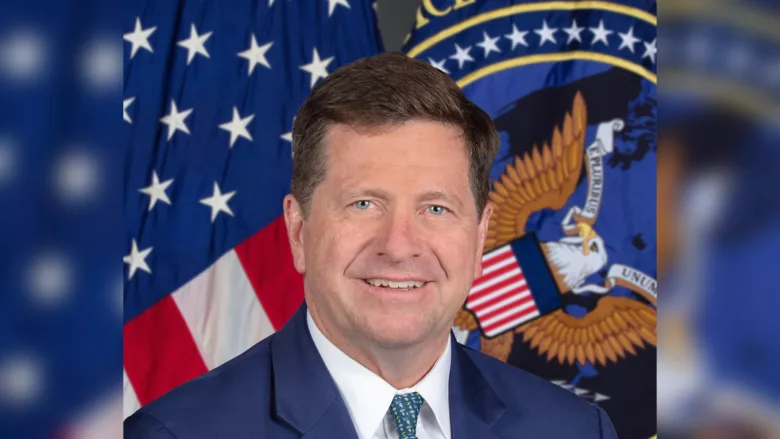
America’s top intelligence official will now also watch over artificial intelligence: President Trump has named Jay Clayton, the director of national intelligence, as the new A.I. czar. Mr. Clayton will remain the top coordinator of the U.S. intelligence community while also leading the newly created “Super Intelligence Force,” Mr. Trump announced on his platform Truth Social.
Four Men for ‘Super Intelligence’
Mr. Clayton will lead the force together with three other officials, according to The Washington Examiner:
- Andrew Ferguson: chairman of the Federal Trade Commission
- Emil Michael: the Pentagon’s chief technology officer and a former Uber executive
- Scott Kupor: director of the Office of Personnel Management and a former partner at Andreessen Horowitz
The four will report directly to Mr. Trump and his chief of staff, Susie Wiles. The goal, Mr. Trump wrote, is for America to keep leading the world in “Super Intelligence,” a technology he said many consider bigger than the Industrial Revolution and the internet. Mr. Trump had previously floated “Super Intelligence” as a replacement for the term “artificial intelligence,” even setting off a rush on .si domains.
An A.I. Czar Against Hitting the Brakes
On substance, Mr. Clayton stands for the president’s existing course. In a TV interview in late September, he argued against an industrywide slowdown in A.I. development, saying it would be reckless to back away and let countries like China take the lead. In his view, existing product liability laws are sufficient for now to address the technology’s risks.
The appointment fits Mr. Trump’s line. Only recently, the president dismissed warnings about the dangers of A.I. as a “hoax” and rejected any regulation. Shortly afterward, he hosted the heads of the major A.I. companies at the White House and unveiled a voluntary A.I. safety accord that contains no legally binding commitments. With Mr. Clayton, Mr. Trump is now charting a middle path: light regulation, but a signal that the administration takes the technology’s risks seriously.
More Clout Than David Sacks
Mr. Clayton gives the issue considerably more political weight. The former chairman of the Securities and Exchange Commission during Mr. Trump’s first term became director of national intelligence only in August and holds a cabinet-level post. His predecessor in the A.I. role, the investor David Sacks, served as A.I. and crypto czar only as a part-time government employee. Treasury Secretary Scott Bessent was also considered for the job, but Mr. Trump said he decided against it because Mr. Bessent was doing such a great job at the Treasury Department.
Mr. Clayton also brings close ties to Wall Street. Warnings from the financial industry, above all from JPMorgan Chase’s chief executive, Jamie Dimon, prompted the White House this spring to take the threat of autonomous cyberweapons to the U.S. economy more seriously.
Alarm Bells for Privacy Advocates
The dual role is contentious, however. As director of national intelligence, Mr. Clayton oversees an intelligence apparatus with a budget of more than $80 billion (about 68 billion euros). National security hard-liners are likely to welcome the appointment, since it gives the military and intelligence agencies a powerful voice in national A.I. policy. They are already pushing hard to integrate A.I. into everything from targeting in war to cyber operations and intelligence analysis.
Privacy advocates in the United States and the European Union, on the other hand, are likely to be uneasy. Since the revelations by Edward Snowden, they have warned that the U.S. government has too much power to force tech and A.I. companies to hand over sensitive user data. Putting the country’s top spy chief in charge of shaping policy for the very companies whose models millions of Europeans feed with data every day is likely to reignite that debate.