Klarna Beefs Up Its Subcriptions For More Recurring Revenue


Set Trending Topics as a preferred source on Google.
Klarna is taking another step in the fight for paying regulars, following a path Revolut has been walking for years: the Swedish fintech, listed on the New York Stock Exchange as KLAR since its IPO, recently unveiled what it calls the biggest upgrade of its membership programme to date. Four paid tiers now bundle cashback, insurance cover, travel perks and as many as 21 digital subscriptions – advertised with a value of up to 6,000 euros per year. The offer will be rolled out over the coming weeks in Austria, Germany, Italy, France, Spain, Belgium, the UK and the Nordic markets, among others.
Four tiers, from 4.99 to 44.99 euros a month
The entry level is now called Everywhere (previously Core) and costs 4.99 euros per month. It lets members use “pay later” without service fees anywhere Visa is accepted – subject to a credit check. At partner merchants, instalment payments remain free even without a membership.
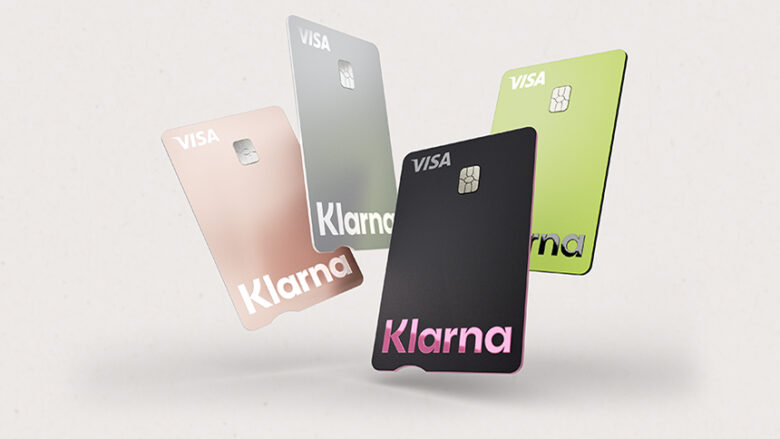
Above that sit Plus (9.99 euros), Premium (19.99 euros) and Max (44.99 euros). The higher the tier, the bigger the package: 0.5, 1.0 and 1.5 percent cashback respectively on every payment made with Klarna, plus a two- to fourfold multiplier on partner cashback in the app, interest premiums of 0.1 to 0.5 percentage points on balances, metal cards in silver and rose gold, travel and rental car insurance, lounge access, and, in the top tier, a “cancel for any reason” cover that refunds 70 percent of non-refundable travel and ticket costs.
Cashback collected can be converted into frequent flyer and hotel programmes, including Flying Blue, Turkish Airlines Miles&Smiles, ALL Accor and IHG One Rewards. On the subscription side, NordVPN and micromobility provider Voi join the existing bundle of ClassPass, Headspace, The New York Times, Storytel, Blinkist, Picsart, Clue and several Condé Nast titles.
“This is the democratisation of banking benefits. Nobody should have to lock themselves in for a year and take out a credit card to get cashback and premium benefits,” says Klarna CEO and co-founder Sebastian Siemiatkowski. Memberships can be upgraded and downgraded on a monthly basis, he says, with no annual commitment and no penalty fees.
A model familiar from Revolut
The mechanics are nothing new in the European fintech market. Revolut has been tiering its accounts along the same lines for years: in Austria, the range runs from the free Standard account through Plus, Premium and Metal up to the top tier Ultra, which comes in at 60 euros per month (see pricing plans). There, too, subscriptions are the central selling point: Ultra customers get Financial Times Premium, NordVPN, ClassPass, WeWork credits, eSIM data and unlimited lounge access, among other things. And Revolut also advertises big numbers – annual values ranging from several thousand to more than 10,000 euros for its higher tiers.
How such figures come about is the more interesting question. In its footnotes, Revolut explains that it adds up the list prices of the fixed benefits and factors in the fees customers save compared with the free account – calculated on the basis of average usage.
How the 6,000 euros add up
Asked about its own maths, Klarna takes a similar approach. “The stated value of up to 6,000 euros per year is made up of several components: the value of the bundled subscriptions, cashback benefits and interest on balances,” a company spokesperson says.
And further: “When it comes to the subscriptions, Klarna can negotiate different terms for the membership programme as a whole than consumers would get individually. Cashback and interest are largely borne by Klarna itself. On top of that, the respective membership fee feeds into the model.”
The advertised maximum is therefore not an amount an average customer realistically extracts, but a ceiling reached only by those who would use a large share of the included subscriptions anyway and who run correspondingly high volumes through Klarna. For everyone else, the calculation comes down to their own usage – at Klarna just as much as at Revolut.
Recurring revenues from consumers
Strategically, this is about more than a loyalty scheme. Klarna is gradually shifting its business model from transaction-based “buy now, pay later” towards a digital bank with predictable subscription revenues. The membership programme only launched about a year ago with the Premium and Max tiers; according to the company, it counted more than one million active members shortly after the start. Globally, Klarna reports more than 119 million active users and 3.4 million transactions per day.
The competition it has in its sights is explicitly not only neobanks, but the classic credit card business with its annual fees and lock-in periods. New members get their first month of Everywhere or Plus for 0.99 euros, while Premium and Max come with a 30 percent discount on the first three months.