Perplexity Computer Orchestrates 19 AI Models to Execute Month-Long Workflows



Set Trending Topics as a preferred source on Google.
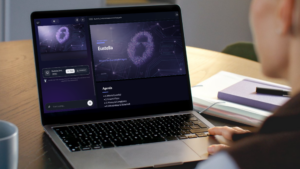
The AI company Perplexity has introduced a new system called “Perplexity Computer” that differs fundamentally from conventional chatbots and AI agents. Instead of relying on a single language model, Computer orchestrates 19 different AI models in parallel and is designed to autonomously execute complex workflows over hours or months.
Perplexity has faced some challenges in recent months. Anthropic in particular has stolen the show from the former darling of many in the AI industry, and the venture into advertising was recently discontinued. Now the company is trying again to increase revenue through subscription models and sees potential in the AI agent sector.
What is Perplexity Computer?
Perplexity Computer is positioned as a “digital employee” that uses the same interfaces as human users. The system combines file management, tools, memory, and various AI models into a unified platform. Users describe a desired outcome, whereupon Computer breaks down the task into subtasks and creates specialized sub-agents to execute them.
These sub-agents can perform web research, create documents, process data, or send API calls to connected services. Coordination happens automatically and asynchronously, allowing users to run multiple Computer instances in parallel. Each task runs in an isolated computing environment with access to a real file system, a browser, and tool integrations.
Key Differences from Chatbots and AI Agents
Multi-Model Orchestration Instead of Single Model
The essential difference lies in the architecture. While conventional chatbots like ChatGPT or Claude are based on a single model or model family, Perplexity Computer currently uses 19 different models. Each model is deployed for specific tasks for which it is particularly suited.
Specifically, Computer currently uses Opus 4.6 as the central reasoning engine, Gemini for deep research, Nano Banana for image generation, Veo 3.1 for videos, Grok for fast, lightweight tasks, and ChatGPT 5.2 for long-context recall and comprehensive searches. Users can also select specific models for particular subtasks themselves.
Workflows Instead of Conversations
While chatbots are primarily designed for question-answer interactions and simple AI agents handle individual tasks, Computer positions itself as a system for complete workflows. According to Perplexity, these can run for hours or even months without requiring constant user interaction.
“Chat interfaces deliver answers, while agents can complete tasks. Perplexity Computer is a system that creates and executes entire workflows.”
Autonomous Problem-Solving
Computer is designed to autonomously create sub-agents to solve problems as they arise. The system can find API keys, research additional information, program applications if needed, and only contacts the user when truly necessary. This autonomy goes beyond the capabilities of current agent systems.
Perplexity Computer will initially be available to all Max subscribers ($167/month). After successful load tests, Pro users should also gain access. Enterprise Max users are expected to follow shortly.
Strategic Positioning
With Computer, Perplexity is executing a strategic evolution. The company had already introduced Comet, an AI-native browser, and Comet Assistant, a personal AI agent. Computer builds on these foundations and integrates persistent memory as well as enhanced deep-research capabilities.
CEO Aravind Srinivas quotes Steve Jobs: “Musicians play their instruments, I play the orchestra.” This metaphor describes Computer’s approach of orchestrating various specialized AI models rather than relying on a universal model. Perplexity argues that no single model can be optimal for all tasks and that specialization represents the future.
Technical Foundation
The system is based on the assumption that AI models will increasingly specialize rather than become commodities. Perplexity sees this as a contrast to prevailing industry opinion. The model-agnostic architecture allows models to be swapped out as better alternatives become available without requiring the entire system to be redesigned.
“Perplexity Computer uses Opus 4.6 as the central reasoning engine and coordinates sub-agents with the best models for specific tasks: Gemini for in-depth research (creation of sub-agents), Nano Banana for images, Veo 3.1 for videos, Grok for fast, simple tasks, and ChatGPT 5.2 for retrieving long contexts and comprehensive searches,” it states.
Computer works with the same software tools as human users: file system, command-line tools, browser with real-time internet access, and personal connectors. This universality is intended to make Computer a versatile tool for a wide range of use cases.