‘Old-Fashioned’: PETA Takes Aim at Warhound’s Gene-Edited Military Dogs


Set Trending Topics as a preferred source on Google.
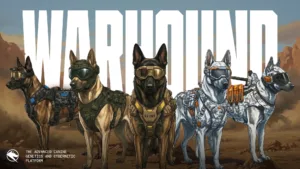
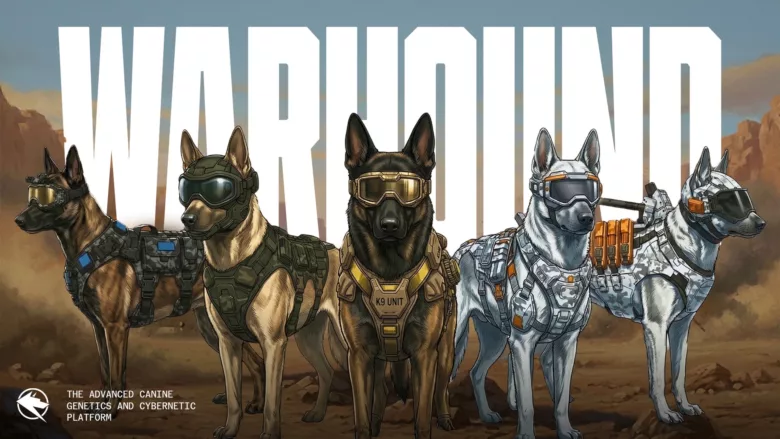
$200 million, a billion-dollar valuation and high-profile backers offer no protection against animal rights activists: PETA has sharply criticized Warhound, the new defense start-up that plans to supply cloned and genetically enhanced dogs to the U.S. military. “It’s a pity that some people with enormous amounts of money have very little common sense,” Colleen O’Brien, a senior vice president at PETA, said in a statement sent to Trending Topics.
‘A Stunningly Old-Fashioned Idea’
“Genetically engineering dogs for dangerous military work is a stunningly old-fashioned idea at a time when other agencies are phasing out the use of dogs in favor of robotics, AI, and other state-of-the-art technology that can be used without putting dogs in harm’s way,” Ms. O’Brien added.
PETA points out that robot dogs have already been deployed in active combat zones and can perform many of the same duties as military working dogs and police K-9s. Ukraine, for example, has been using robot dogs on the front line since 2024, including for reconnaissance. Real dogs, by contrast, risk being shot, blown up, strangled or dying slowly from heatstroke, PETA argues.
$200 Million From Day One
The criticism targets a start-up that burst onto the scene only last week. Warhound is backed by Ben Lamm, the chief executive of Colossal Biosciences, known for his plans to bring back the woolly mammoth and the dodo, and the Anduril founder Palmer Luckey. The key figures of the funding round:
- Size: $200 million (about €178 million) right at launch.
- Valuation: $1.2 billion (about €1.07 billion), making Warhound a unicorn from the start.
- Investors: Among others, In-Q-Tel, the C.I.A.’s investment arm, as well as Sequoia Capital and 8VC.
- Partners: The Colossal subsidiary ViaGen is to clone the dogs, and Anduril will supply equipment such as protective vests and sensors. The first puppies are due in early 2027.
PETA’s statement describes Warhound as “Palmer Luckey’s new startup.” According to Mr. Lamm, however, Mr. Luckey is a partner but, like Anduril, holds no stake in Warhound.
The Counterargument: ‘An Animal Welfare Play’
Warhound does not see itself as an opponent of animal welfare. The project is “an animal welfare play as much as it is a supply chain play,” Mr. Lamm said in an interview with GamesBeat. More than 80 percent of the U.S. military’s working dogs currently come from European breeders, and fewer than half pass their training, often because of genetic problems such as hip dysplasia or cancer risks. Warhound wants to use gene editing to breed healthier dogs so that fewer animals wash out. The Anduril equipment, Mr. Lamm stressed, goes on top of the dogs, not inside them.
The animal welfare organization American Humane is set to certify the training program and help reunite retired dogs with their former handlers. “We owe these dogs a commitment to their well-being that matches their service to us,” said Robin Ganzert, American Humane’s chief executive. Experts also see limits to robots: Dogs can follow a scent trail to its source, while sensors mostly just register it. Most robot dogs also still need to be steered by a human operator. And a robot such as Ghost Robotics’ Vision 60 costs about $165,000 (about €147,000) apiece.