Sabi Raises $50 Million for a Cap Meant to Read Your Thoughts



Set Trending Topics as a preferred source on Google.
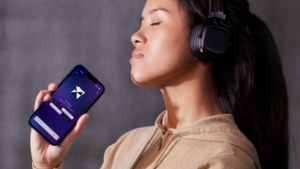
Typing is tedious and talking to your phone on the subway is awkward, so the next step is apparently just thinking: The Silicon Valley start-up Sabi is building a baseball cap that is supposed to turn brain signals into text and commands for A.I. assistants. Sabi has just raised a $50 million (about €45 million) seed round led by Khosla Ventures, with participation from Accel, Initialized Capital, DST Global, Collaborative Fund, Ascend and Kevin Weil, OpenAI’s former chief product officer.
EEG Without Gel or Surgery
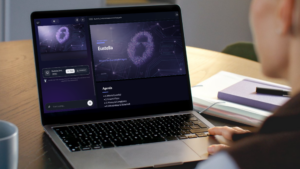
Technically, Sabi relies on electroencephalography, or EEG, which measures the brain’s electrical activity. Conventional EEG caps need conductive gel and sit tightly on the scalp. Sabi’s sensors are designed to measure without contact, through hair, across a gap of up to five millimeters. Each sensor is one to five millimeters in size, and according to Forbes, up to 100,000 of them could fit into a single cap. Sabi has also designed its own EEG chip, which it says was more than 50 times as power-efficient as a widely used Texas Instruments component in internal tests. The cap connects wirelessly to a phone or laptop, much like earbuds.
The heavy lifting is done by an A.I. model. Sabi is training what it calls a Brain Foundation Model on more than 100,000 hours of EEG recordings from participants imagining words or performing mental tasks, which the start-up says is the largest disclosed dataset of its kind. The cap is meant to do three things: put imagined words on screen as text, pass trained mental commands to A.I. assistants and predict which keys a user is about to press. “We are building a faster interface that does not require surgery or a laboratory,” said Rahul Chhabra, Sabi’s chief executive and co-founder.
First Demo at CES
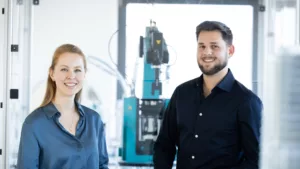
Mr. Chhabra founded Sabi with Atmadeep Banerjee, the chief technology officer, who co-authored MindEye, a study that reconstructed images people had viewed from non-invasive brain scans. The team includes alumni of Kernel, Apple, Microsoft, Meta and Nike. Sabi plans to show a first prototype at the CES electronics show in Las Vegas in January and is preparing devices for people on its waitlist. It has not announced a price. Brain data is supposed to be encrypted at the sensor and processed while still encrypted, so that servers never see the raw signals.
The Race for the Brain
Sabi is not alone. Elon Musk’s Neuralink relies on implants and was valued at $9 billion (about €8 billion) last year, while OpenAI’s chief executive, Sam Altman, has backed Merge Labs as a Neuralink rival. Meta already sells a wristband that reads muscle signals and is researching brain-to-text systems.
That very research shows how high the bar is for Sabi. In a Meta study with 35 participants, the error rate for decoding typed characters from EEG signals averaged 67 percent, meaning two out of three characters were wrong. Magnetoencephalography, or MEG, did much better at 32 percent but requires a room-size scanner. The study used conventional EEG directly on the scalp, while Sabi wants to measure through hair. There are no independent accuracy measurements for the Sabi cap so far.