Siri AI Wants to Replace ChatGPT on the iPhone – But Won’t be Available in the EU at First


Set Trending Topics as a preferred source on Google.
At its developer conference, Apple unveiled a fundamentally overhauled version of its voice assistant. “Siri AI” is set to deliver the long-delayed AI features—technically powered by Google’s Gemini models.
Apple presented a new generation of Apple Intelligence, including a redesigned voice assistant, at the 2026 Worldwide Developers Conference (WWDC). “Today, we are introducing a completely new version of Siri,” said Mike Rockwell, VP of Engineering, during the keynote. Apple is calling the assistant “Siri AI.” This marked Tim Cook’s final WWDC keynote as CEO; he is expected to be succeeded by John Ternus.
With this announcement, Apple is reviving features the company had already promised in 2024 but failed to deliver. In March 2025, Apple took the unusual step of officially admitting to the delay in the Siri overhaul. Additionally, the company recently paid $250 million to settle a class-action lawsuit in which Apple was accused of misleading customers regarding the availability of Apple Intelligence features.
Google Gemini as the Technical Foundation
The foundation of the new Siri is a partnership established with Google in January. Accordingly, Gemini models are intended to power the AI capabilities of Siri and Apple Intelligence. Craig Federighi, SVP of Software Engineering, spoke of a “deep collaboration” with Google: “Together, we have developed the next generation of Apple Intelligence models,” Federighi said in a video played during the keynote. Apple did not initially specify which concrete Gemini models would be used.
What is known, in any case, is that Apple has built the Gemini models in-house and hosts them on its own infrastructure or on the devices themselves.
Features: Screen Context, App Actions, and a Standalone App
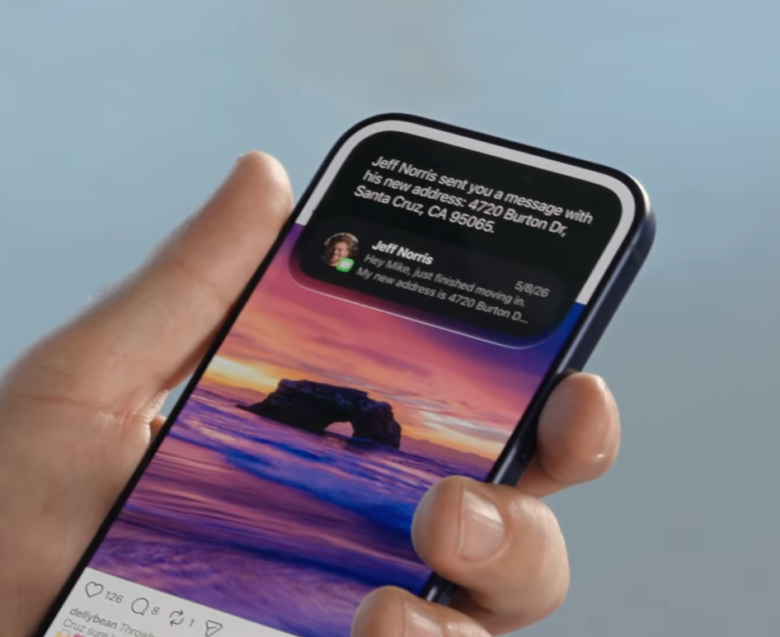
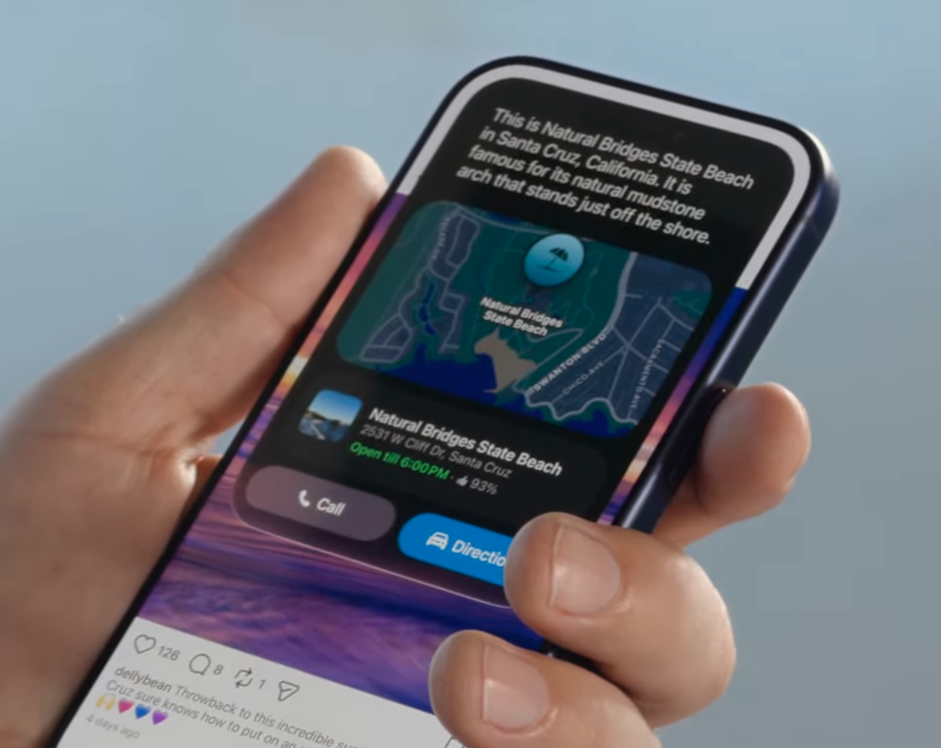
Rockwell demonstrated several AI functions that, according to Apple, incorporate the user’s “personal context.” This includes locating previously sent addresses or photos of specific locations. In one example, Rockwell showed how Siri finds requested photos and shares them with a group without the Photos app needing to be opened.
Siri AI is intended to be available system-wide, capable of capturing screen content and interacting with apps—even across app boundaries. Additionally, there is a standalone Siri app where users can communicate with the assistant much like with comparable chatbots; conversations are saved and synchronized across devices via iCloud. On the Mac, Siri AI will be integrated into the Spotlight search function.
Furthermore, there is a new, more expressive voice experience that can be adjusted in tempo, expressiveness, and accent, as well as an improved dictation function with higher accuracy. The “visual intelligence” for analyzing image content—such as object recognition via the camera—which was previously limited to the iPhone, will henceforth also function on macOS, iPadOS, and visionOS. In text fields, Siri AI will be able to generate text, check spelling, and provide feedback.
Privacy: On-Device Processing or in the Private Cloud
As usual, Apple placed privacy at the forefront. Siri AI was designed with “privacy at every step,” Federighi stated. Requests will be processed either directly on the device or via Apple’s “Private Cloud Compute.”
An interesting aspect of the presentation: OpenAI, the partner that was presented with deep ChatGPT integration for iPhone and other devices in 2024, played no role today, two years later. It is assumed that Siri AI is ultimately intended to displace ChatGPT on the iPhone due to its deep integration into the operating systems. This also explains why OpenAI has recently pivoted more heavily toward the B2B market with Codex and similar tools—knowing that Apple is pursuing its own path alongside Google, moving beyond ChatGPT.
Availability: Initially English Only, Not in the EU
At launch, according to Apple, Siri AI will function exclusively in English; other languages are expected to follow later. A beta version of Siri AI is expected to arrive during the course of the year. The assistant will be available across the Apple ecosystem—including iPhone, iPad, Apple Watch, Mac, and the VR headset—complemented by the cross-platform synchronized Siri app. In the EU, Siri AI will not be able to launch initially, just as regulatory frameworks in China are preventing the launch.
“Mac, Apple Watch, and Apple Vision Pro users in the EU will be able to access Siri AI when set to a supported language. Siri AI will not be available initially in the EU in iOS and iPadOS. Apple is working hard to find a path forward that preserves its users’ privacy and security”, Apple said in a statement.