Apple Watch Is Listening: “Walking Wiretap” Won’t Launch in the E.U. for Now


Set Trending Topics as a preferred source on Google.
Apple spent years selling privacy; now it is selling a watch that takes notes on your conversations.
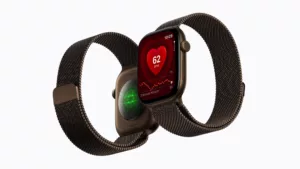
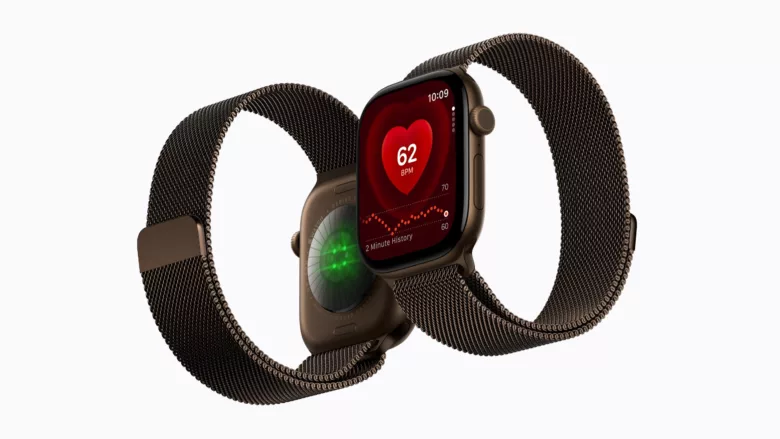
With the developer beta of iOS 27.3, Apple is putting the “Audio Intelligence” features announced in September for the Apple Watch Series 12 and Ultra 4 into testing. Behind the label are four functions, each of which has to be switched on individually: Sound recognition alerts deaf and hard-of-hearing users to sirens, alarms or doorbells, and music recognition identifies songs playing nearby via Shazam. The other two listen to people, and they are the reason the watch has been a topic of debate since September.
What Live Rewind and Siri Recaps Do
Live Rewind is the rewind button for conversations. Anyone who missed something double-presses the Digital Crown and gets the last 15 seconds as text on the watch face, say the directions you only half caught or the specials the waiter rattled off too fast. The snippet disappears after 30 seconds unless you save it to the new Siri app. Below it, an “Ask Siri” button appears for follow-up questions, for instance about a technical term that just came up. When triggered, the watch plays a chime, even in silent mode, and shows an animation with a microphone icon so the other person notices that something has just been captured.
Siri Recaps goes a step further. The feature listens in the background and summarizes conversations in a sentence plus bullet points, with dates, deadlines, prices or other facts, the way you would take notes yourself, only without tone or emotion. Apple cites meetings, parent-teacher conferences or training sessions as use cases, situations where your hands are full or you want to focus on listening. In the evening and when you first unlock the watch in the morning, the system asks which summaries you want to keep; the rest delete themselves after seven days. Users can turn Recaps on manually or set a schedule, for example only during working hours and never at night, and switch them off at any time from Control Center. The feature pauses when you are listening to music through headphones or using noise cancellation. According to Apple, the summary automatically omits sensitive content such as ID numbers, financial and login data and any language related to self-harm.
How Apple Wants to Protect Privacy
The technical architecture is elaborate, and Apple describes it in unusual detail, according to TechCrunch. Small A.I. models on the watch’s S11 chip detect whether a conversation is taking place that the wearer is part of. The raw audio lands in a buffer inside the Secure Enclave, a hardware-protected memory area the rest of the operating system cannot access, and neither can Apple. From there it travels, encrypted, exclusively to the paired iPhone, which converts the audio locally into condensed text with filler words removed. Only this text is sent, encrypted, to Apple’s Private Cloud Compute, which creates the summary and deletes all data immediately afterward. Raw audio is never stored, speakers are not identified, there are no verbatim transcripts, and the finished recaps are readable only by the users themselves, including when synced across multiple Apple devices. None of it is supposed to affect battery life.
It is a visible attempt to learn from the debacle around Meta’s A.I. glasses and other A.I. wearables, which fell into disrepute as invisible recording devices. Apple wants to offer the benefit of a memory on the wrist without turning the surroundings into the subject of a recording.
“Walking Wiretaps”: The Criticism
Security experts doubt that is enough. Miguel Fornés, Information Security Manager at the data privacy service Incogni and previously CISO at payment institutions, sees the Series 12 as “a worryingly new precedent: ambient, constant audio surveillance.” Apple, he says, “predictably hides behind promises of end-to-end encryption and local Secure Enclave processing,” but the reality is “that wearers are transforming into walking wiretaps.” The watch, he argues, is “capturing and summarizing the private conversations of everyone nearby, coworkers, family members, and strangers, without any visual indicator, explicit warning, or basic consent.” For Live Rewind, that is not accurate; there is a chime, an animation and a microphone icon. For Siri Recaps, which run in the background on a schedule, Apple has so far described no indicator for third parties, apart from advising users to consider the people around them in sensitive situations.
Mr. Fornés places the move in a broader trend. For years, he says, Apple justified its premium by defending privacy as a fundamental right, from the Secure Enclave in 2013 to App Tracking Transparency, which cut off Meta’s data supply chain, to the fight with the FBI over a backdoor into the iPhone. In the race for the A.I. market, that stance is crumbling, he argues, and the new Siri A.I. also needs constant processing of ambient sound for its proactive assistance. As a second example, he cites HomeView, Apple’s new home monitoring, where storing and reviewing recordings requires a paid iCloud+ subscription: “Your safe haven is being constantly monitored by default, but verifying exactly what the AI saw and heard in your home now requires a monthly premium.” His conclusion: Much like the CSAM photo-scanning plan Apple abandoned after protests in 2021, the “normalization of ubiquitous, non-consensual audio recording” shows that Apple’s era as the uncompromising defender of consumer privacy “has quietly come to an end.”
Against that reading stands the fact that Apple has built the features far more restrictively than its competitors: no stored audio, no transcripts, no speaker identification, no processing by Apple itself, opt-in rather than opt-out, automatic deletion and an audible signal for Live Rewind. Anyone wearing the watch ends up with less in hand than any smartphone with a dictation app. The question Apple does not answer, however, is the same one Meta faces: The people being summarized never agreed to it.
Not in the E.U. for Now
For European users, the question arises only later anyway. Live Rewind and Siri Recaps require Apple Intelligence and the new Siri A.I., plus an iPhone 16 or newer, and launch in English only at first. According to Apple, the Siri A.I. “will not initially be available in the E.U.” on iOS, iPadOS and watchOS. The pattern is familiar: Apple Intelligence already arrived in Europe months late because of the Digital Markets Act, and for features that process other people’s conversations, the GDPR and the AI Act are more likely to raise the bar than lower it. Users under 13 are excluded altogether, and those under 18 need parental approval. The public beta follows the developer beta, and Apple has not yet named a date for the broad launch.