Humanoid Robots: The Race for the Factory Floor Is Still Open

Set Trending Topics as a preferred source on Google.
Humanoid robots are rolling off production lines at a growing number of companies, but when will they lend a hand in industry themselves? Human-like machines are expected to soon work side by side with factory staff. How realistic that scenario is remains a matter of debate among experts, manufacturers and industry representatives.
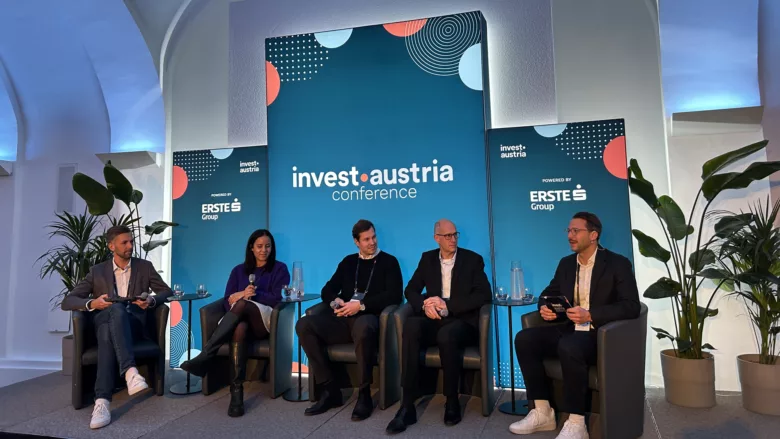
At the invest.austria conference 2026 on Wednesday, industry figures discussed the question and agreed on one point: the expertise exists, but the race for the first industrial applications is still open. Only once the robots are actually deployed in real-world settings can they prove themselves and win large-scale backing from investors. Some industrial companies are already placing their bets, as the auto supplier Schaeffler’s recent push into humanoid robots shows.
“A Huge Graveyard of Pilot Projects”
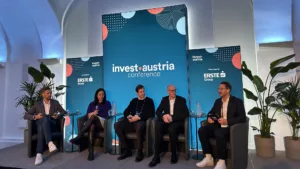
The panel “Building the Powerhouse: From Lab to Global Scale in Robotics & Industrial AI,” supported by EY, brought together four experts: Nikolaus Keuth, senior manager and chapter lead for industrial A.I. at EY; Majdoline Wahbi, co-founder and chief operating officer of the French tech accelerator Kiosmo; Christopher Polligkeit, senior investment associate at Plug and Play; and Christian Tauber, co-founder and chief executive of the Vienna-based robotics start-up NEOALP. Philipp Stangl, a venture capital investor at Noctua Science Ventures, moderated the discussion.
Mr. Keuth said the technology behind humanoid robots was already well advanced, yet many projects still failed. “Unfortunately, there is a huge graveyard of pilot projects in this field. At least there are many lessons to be learned from them. Sometimes the technology simply isn’t ready yet and expectations are too high. We first need to figure out how to scale the technology, and pilot projects should be designed around that. You need a real business case and real use cases from the start, otherwise you’re just chasing a fantasy,” he said.
In his view, individual robots should be able to cover a range of tasks. “We need use-case clusters to take automation from single use to multi-use. A robot could, for example, be deployed across different shifts within a company.”
Europe’s Research Rarely Turns Into Start-Ups
Ms. Wahbi also sees a wealth of talent and research institutions in humanoid robotics. “The problem is that Europe has far too little funding for a real go-to-market. We invest too little in turning research into products. Only 15 percent of researchers in Europe want to start a company, compared with 45 percent in the United States. The know-how is there, but there needs to be more connection between talent and industry. That’s also important for generating more real-world data. Otherwise, talent just goes into areas like software and A.I.,” she said.
Mr. Polligkeit brought a venture capital perspective to the panel, arguing that advancing humanoid robotics is crucial. “With an aging population, compensating for labor shortages is becoming increasingly important. We are keen to accelerate the integration of the technology into industry and to help companies connect with start-ups,” he said.
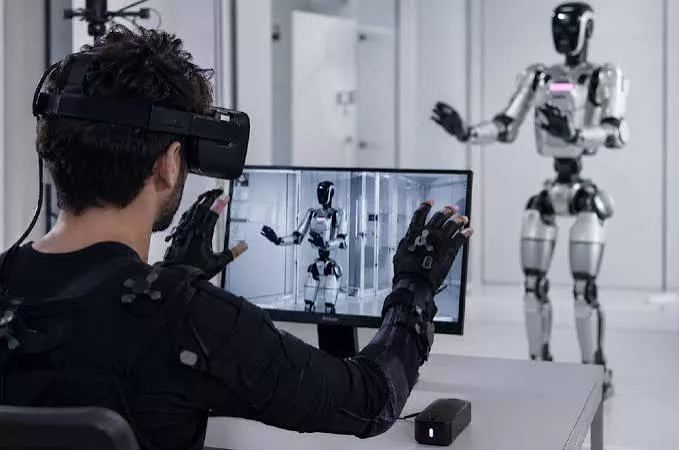
The Race for Humanoid Robots Is Still On
Mr. Tauber, whose company NEOALP showcased a humanoid robot at the conference, stressed how essential it is for companies in the field to bring the technology into industry. “Hardware has improved steadily in recent years. The real challenge now lies in the robots’ actual skills. You can see that investors are currently putting money into projects focused on data capturing and skill learning.”
According to Mr. Tauber, there is still no universal blueprint for integrating the technology into real-world environments. “The key question is who will be first to have industry-ready hardware. Models will keep getting better with more and more diverse data. At the same time, companies need to build an environment where their specific know-how is secure,” he explained.
The panel reached a shared conclusion: the race for industrial use cases is still undecided. If Europe wants to win it, it needs above all a stronger pipeline from research to real-world deployment.