Revolut Cuts A.I. Coding Costs 90% With a Chinese Open-Weight Model



Set Trending Topics as a preferred source on Google.
Unlimited tokens instead of spending caps, at a tenth of the price: The neobank Revolut has moved its roughly 2,000 software engineers from Claude Code and Codex to a self-hosted open-weight model from China. Instead of the coding agents from Anthropic and OpenAI, Revolut’s default is now GLM, a model from the Chinese A.I. lab Z.ai. According to Revolut, its bill is now about a tenth of what the fintech used to pay Anthropic and OpenAI.
David Abitbol, who oversees A.I. operations and infrastructure at Revolut, shared the details in his talk “Shipping like a startup, regulated like a bank” at the AI Engineer conference in New York. With more than 80 million customers in 45 markets and a recent valuation of about $115 billion (about €103 billion), Revolut is one of Europe’s most valuable start-ups. For its eventual I.P.O., the company is aiming for as much as $200 billion (about €180 billion).
From Gemini to Claude Code to GLM
Revolut got there step by step. It first rolled out Google’s Gemini across the company, which cut coding time by 20 percent and lead time, from picking up a task to merging it, by 10 percent, according to Mr. Abitbol. Claude Code came next, but with strict per-engineer budget limits. The benefit was small at first, he said, while the costs were high.
Since the spring, GLM has been running on Revolut’s own infrastructure, and the numbers look very different. In a sample of about 2,000 engineers, coding time fell 60 percent and lead time 70 percent. For Mr. Abitbol, the fact that lead time dropped more than coding time is telling: “The bottleneck for engineering is not necessarily coding,” he said. Engineers spend a lot of time searching inboxes, Jira and Confluence.
The biggest change for engineers is that token limits are gone. They no longer have to ration usage, for example near the end of a quarter or on particularly demanding tasks.
56 GPUs for 2,000 Engineers
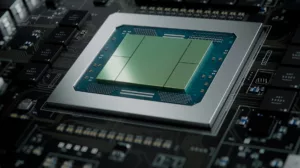
The technical setup is surprisingly modest. Revolut runs GLM, a model with about 800 billion parameters, on roughly 56 Nvidia B200 chips. The cost comes to about 30 cents per million tokens, Mr. Abitbol said, and a flat bill has replaced unpredictable month-end invoices.
- Tuning: Out of the box, inference was “terrible,” Mr. Abitbol said. After optimization, time to first token fell from more than 10 seconds to 1.6 seconds, even as demand rose 76 percent. Above five seconds, he said, “my Slack inbox starts to blow up.”
- Context: The context window is capped at 256,000 tokens. “Long context is a scam,” Mr. Abitbol said.
- Images: GLM handles only text. A router sends image tasks to Gemini.
- Exceptions: Claude Code and Codex remain available. The latest models from Anthropic and OpenAI are excellent, he said, but are now used sparingly as the exception.
Chinese Weights, Western Servers
For a regulated bank, the model’s origin is sensitive. “There’s been a lot of stigma in using Chinese open source model,” Mr. Abitbol acknowledged. Revolut therefore uses only the openly available model weights and runs them on infrastructure in the United States, rather than through the developer’s inference endpoint in China. Data is meant to be processed only in jurisdictions with equivalent data protection, such as the United States, the European Union, Britain and Israel, and providers must have zero data retention by default.
Revolut also tells regulators that its coding agents do not act autonomously. They run in a sandbox with approval rules that determine which commands are allowed. “They’re always with a human in the loop,” Mr. Abitbol said.
Revolut is not alone. Open models from China such as GLM, DeepSeek and Kimi have been catching up in benchmarks, and European developers like Mistral are also betting on open weights with Mistral Large 4.
What the Bill Leaves Out
Whether the approach carries over to other companies is an open question. According to an analysis by StartupHub.ai, the 90 percent savings exclude the costs of cloud, staff and monitoring. The results also depend on 56 B200 chips, ongoing tuning and Revolut’s ability to shape the load through sandbox rules and working hours. Smaller teams could face high bills or slow response times.
Then there is the hardware. Mr. Abitbol did not say whether Revolut bought its 56 B200 chips or rents them. Buying them would mean an investment in the millions: When Nvidia introduced the B200, Jensen Huang, its chief executive, put the price at $30,000 to $40,000 per chip, which would add up to about $1.7 million to $2.2 million (about €1.5 million to €2 million) for 56 chips. Complete servers with eight B200s each cost about $450,000 to $500,000, according to industry estimates. Seven such systems would come to $3.2 million to $3.5 million (about €2.9 million to €3.1 million), not counting power and data center costs.
And the chips have an expiration date. Nvidia now releases a new chip generation every year, and Rubin, the successor to Blackwell, is already on its way. Data center operators such as Nscale depreciate their GPUs over five to six years, but they acknowledge that this useful life could prove too long if technology changes quickly. Critics such as the investor Michael Burry consider two to three years more realistic.