‘Too Big to Fail’: Why Nvidia Can’t Simply Fire Jensen Huang


Set Trending Topics as a preferred source on Google.
Legally, a simple majority of the board is enough to fire Jensen Huang, but in practice Nvidia’s chief executive is as powerful as almost any corporate leader in the world.
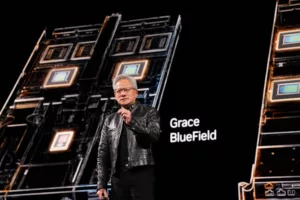
Since Sunday, Nvidia has been investigating its own founder. Huang admitted in an email to employees that he had been unfaithful to his wife, with a woman U.S. intelligence agencies believe is a Chinese agent: Alice Huang, an executive at Singapore-based Nvidia customer Megaspeed. The board then launched an independent investigation, led by its independent directors with outside counsel. Huang remains chief executive in the meantime. The stock fell about 5 percent in premarket trading. That raises a question nobody at Nvidia has had to ask in 33 years: Can this man be removed at all?
What the Board Can Legally Do
Formally, the answer is simple. Nvidia is a Delaware corporation with a single class of shares. Unlike Mark Zuckerberg at Meta or Google’s founders at Alphabet, Huang holds no super-voting shares that secure his control. He owns 3.56 percent of the company, worth around $150 billion at the current share price. That makes him the largest individual shareholder, but not a majority owner. The board appoints and dismisses the chief executive, and Huang is one of its eleven members.
There are also precedents. Intel chief executive Brian Krzanich had to leave in 2018 after failing to disclose a relationship with an employee, and McDonald’s fired chief executive Steve Easterbrook in 2019 for similar reasons. But neither had founded his company or made it the most valuable in the world.
A Board of Longtime Companions
The body that now has to judge Huang is closely tied to him. Tench Coxe and Harvey Jones have sat on the board since Nvidia’s founding in 1993; both come from the venture capital firms that financed the company back then. Mark Stevens served from 1993 to 2006 and returned in 2008, and Brooke Seawell has been a member since 1997. The lead independent director is 77-year-old lawyer Stephen Neal. Other members include a former Taco Bell executive, the former chief marketing officer of the NFL and an engineering professor.
Huang has viewed the board mainly as a governance requirement rather than as part of strategy or execution, The New York Times reported, citing three former employees. The board’s first signals sound correspondingly cautious: it said it has "no reason to believe" that national security or company secrets were compromised and expressed confidence in Huang and his leadership team.
Nvidia Is Jensen Huang
Even more important is how Huang has built the company. He runs Nvidia without a traditional hierarchy, with more than 60 managers reporting directly to him. By his own account, organizational charts make "no sense" to him; the company is steered through project meetings that cut across all levels, and Huang says he reads several thousand emails from across the company every day. He makes all major decisions himself.
Strategically, too, everything depends on him. More than a decade ago, Huang bet that graphics chips from the gaming world could also power AI and invested billions in chips and software. Today, Nvidia controls an estimated 90 percent of the market for AI chips and was the first publicly traded company to reach a $5 trillion market value. Then there is his line to Washington: Huang speaks regularly with Donald Trump, persuaded the administration to loosen export restrictions on chips to China and, according to the NYT, helped derail a government review process for AI systems. Even now, the president is standing by him, calling Huang "an honorable guy."
No Successor in Sight
The biggest obstacle to removing him is that no one is ready to take over. When Steve Jobs stepped down at Apple, Tim Cook took over seamlessly. Nvidia has no comparable candidate, no designated successor and no internal heavyweight with a public profile of their own. Instead, Huang’s children have risen through the ranks in recent years: his son Spencer is a director of product management and plays a leading role in robotics, his daughter Madison is a senior director of product marketing, and his son-in-law Nico Caprez works in business development. According to the NYT, customers and suppliers are already cultivating relationships with them, which has caused frustration internally.
Firing Huang would therefore cost Nvidia not just its chief executive but the nerve center of the company. "It’s very hard to envision Nvidia run by anybody else," Dan Gallagher, an analyst at Washington Post Intelligence, told Axios. Without Huang, he said, nobody may know how to value Nvidia at all.
AI’s First Too-Big-to-Fail Executive
Axios calls Huang the AI ecosystem’s first "too big to fail" executive, with no backup plan if he has to step down. That is partly because Huang’s role extends far beyond Nvidia. He has repeatedly turned market sentiment around when doubts about the AI boom emerged: in the summer, he argued that cheaper open models would actually boost demand for Nvidia chips, and in October he toured Europe pitching national AI projects while lenders hesitated to finance AI infrastructure. All this in the middle of a boom in which Amazon, Google, Meta and Microsoft plan to spend a combined $1.8 trillion on data centers this year and in 2027.
Nvidia also supplies many companies with more than chips: it provides capital and credibility. The most dependent are the so-called neoclouds such as CoreWeave, which rent out computing power. Nvidia has backstopped many of them with guarantees and investments, and CoreWeave suffered a selloff in its stock and bonds in October as investors questioned how it would finance its growth. AI startups such as Mira Murati’s Thinking Machines Lab have also received money and access to computing power from Nvidia. The big labs are better positioned: Anthropic already uses chips from Google and Amazon, and OpenAI is developing its own chips with Broadcom. Even for them, however, Nvidia cannot be replaced anytime soon.
Why Huang Could Still Fall
The case of Sam Altman shows that power alone offers no protection: OpenAI’s board fired its founder-CEO in 2023, even though he returned within days after an employee revolt. In Huang’s case, more than an affair is at stake. If the investigation concludes that he was the target of a successful Chinese intelligence operation, the case becomes a matter of national security. Lawmakers from both parties already want Huang to testify before congressional committees, and Citi analysts see risks for corporate governance, regulation and export controls.
Doubts are also growing on Wall Street. Fund manager Gary Black of The Future Fund has publicly questioned whether Huang can stay in office and expects many portfolio managers to reduce their positions. In the end, the board decides, and it now has to weigh what would cost shareholders more: a chief executive under suspicion of espionage, or an Nvidia without Jensen Huang.