Vienna Startup Soma Reality to Launch Eye-Tracking Glasses in 2027


Set Trending Topics as a preferred source on Google.
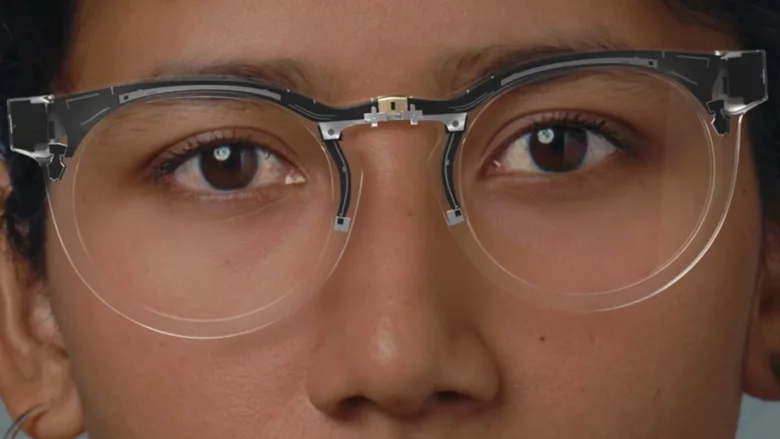
Vienna-based deep tech company Soma Reality is preparing its move from B2B into the consumer market. Under the Luchs Eyewear brand, the startup plans to launch its own pair of glasses in 2027, designed to track eye movements and turn them into readings of the wearer’s cognitive state. For now, interested buyers can sign up for a waitlist.
Luchs Eyewear targets a field that has largely belonged to research labs and specialist applications: eye tracking as a window into cognitive state. According to the company, the glasses measure involuntary eye movements, meaning blinks, fixations and pupil response. Over hours, days and weeks, those signals are meant to form patterns that add up to a picture of a person’s attention.
What the Glasses Are Meant to Do
Four measures sit at the center. Cognitive load captures how much mental effort a task costs. Cognitive fatigue is meant to show what drains a person fastest and how recovery unfolds. Cognitive performance sums up the overall picture, and attention is broken down by whether it stays focused or fragments. A companion app lets users follow the trend over time and add custom labels to individual stretches of the day, putting the data into context.
The purpose the startup gives the product is self-observation in everyday life. Eye tracking has been used for years in surgical training, aviation and military readiness to capture workload and alertness objectively. That same methodology is now meant to move into a pair of ordinary glasses. The company promises a product that works without prompts and without a subscription: you put the glasses on, wear them, and the analysis runs in the background.
A research component comes on top. Under the Luchs name, the startup says it is building a citizen science platform for cognitive health together with universities and research institutions. Anyone who wants to can share anonymized data and receive individual benchmarks in return. The long-term goal is to map how a healthy mind works in real-world conditions and to derive approaches for spotting cognitive decline earlier. Participation is opt-in.
Built Deliberately Without a Camera
One detail sets the Viennese product apart from the smart glasses currently dominating the debate: Luchs Eyewear leaves out the outward-facing camera. Its sensors look inward, at the wearer’s eyes. Privacy comes first, the company says, the data stays the property of the user, and even the manufacturer only gets to see it with explicit consent.
That positioning arrives at a moment when camera glasses are under considerable public pressure. Meta’s Ray-Ban glasses have turned into a commercial success, and criticism over covert recordings has been building alongside that success. A Polish developer recently released an app called ZuckOff, which uses Bluetooth to detect nearby Meta and Snap glasses and warn the people around them. The trigger was a wave of reports about tampered capture LEDs that allowed recording without consent. Meta responded with a security update that disables the camera once the LED is tampered with. The Electronic Frontier Foundation goes further and advises caution before buying the glasses at all. Against that backdrop, the Vienna startup’s decision to leave the lens out entirely reads as a deliberate counter-model.
What Soma Reality Does
Soma Reality was founded in Vienna in 2019 by Adrian Brodesser. The company develops algorithms that derive cognitive states from eye-tracking data in real time, and describes itself as the world’s first full cognitive insights solution based solely on eye tracking. Compared with methods such as EEG, the approach is non-invasive, so it requires no electrodes attached to the head.
The software is hardware-agnostic and, according to the company, works with the eye-tracking systems available on the market, among them Tobii, Pupil Labs and ViewPointSystems. Five proprietary algorithms form the core: cognitive load based on pupillometry, including compensation for changing ambient brightness; a Conscious Perception Index that distinguishes between merely looking and actually perceiving; an Attention Type Classifier for the kind of attention at work; a score for cognitive fatigue; and a combined performance index. Calibration takes under two minutes, and the results are analyzed in a dashboard called Soma Aware.
Customers so far come mainly from aviation, healthcare, professional sports and research. The Medical University of Vienna uses the technology to assess cognitive load in surgical training, while in aviation the focus is on the demands placed on pilots and the design of better training programs.
The startup has raised roughly 5.6 million euros to date. A first round of 1.5 million euros was followed by a seed round of 2.6 million euros, and most recently by an oversubscribed Series A of more than 3 million euros led by Romanian investor Catalyst Romania. Other backers include MT-Lab, RDY Ventures, Moondust Ventures, Gateway Ventures, Birdhouse Ventures and Startup Wise Guys, alongside the public funding agencies FFG and aws. The company says it has generated more than 2 million euros in B2B revenue since going to market in 2024 and more than doubled that figure most recently. The move into the consumer market with Luchs Eyewear is the next step, running in parallel with an expansion of its B2B segments and the start of longitudinal studies on cognitive health.
An Austrian Predecessor in the Eyewear Business
Another Austrian startup tried its hand at the eyewear market several years ago. Graz-based audio company USound founded a subsidiary called Fauna in 2019, which brought glasses with integrated MEMS speakers to market. The models connected to a smartphone over Bluetooth, played music and handled calls, all without visible headphones. A pair sold for around 250 euros in retail.
The product never took hold for good. As Trending Topics reported, the subsidiary was folded back into the parent company at the end of 2024, and Fauna Audio GmbH was eventually struck from the commercial register. USound CEO Ferruccio Bottoni later summed the chapter up plainly: Fauna had been a pure marketing project, meant to help the company’s MEMS speaker achieve its market breakthrough and win larger B2B contracts. Once that worked, the consumer product was discontinued and remaining stock went out through an auction platform. USound’s B2B business continues, with its speakers now built into products such as smart glasses for visually impaired users.