‘Big Short’ Investor Steve Eisman Says AI Companies Want to ‘Manufacture a Crisis’


Set Trending Topics as a preferred source on Google.
Steve Eisman, who became famous for betting against the U.S. housing market ahead of the 2008 financial crisis, has little patience for the current warnings about an AI apocalypse. In his view, the leading AI companies calling for a slowdown in the technology’s development have a concrete business motive. His comments lend weight to a growing critique: that today’s AI crisis has, to a large extent, been created by the statements of the CEOs themselves.
“They realize that there are no moats around their business whatsoever and they’re trying to manufacture a crisis,” Eisman said on Thursday in an interview with CNBC. “That’s what I think is happening.”
Michael Burry, the other prominent investor from the “Big Short” story, takes a similar view. “LLMs are not AI and won’t be AGI. There is nothing AI to slow down,” he recently wrote on X and on his Substack, “Cassandra Unchained.” Burry argues that open-source models and Chinese competitors are eroding the competitive edge of OpenAI and Anthropic, and that the companies are grappling with real, uncontrollable slowing growth. In his view, warnings along the lines of “we are so awesome it could become dangerous” function as marketing ahead of some of the largest listings in Wall Street history, TheStreet reports. Burry has been betting on falling AI stocks for some time and has placed bets against Nvidia and Palantir, among others.
Warnings From Inside the Industry
The debate over a possible AI doomsday scenario has gained significant momentum in recent weeks. One trigger was the public departure of former Anthropic researcher Jacob Coxon, who resigned over concerns that AI makers are not taking safety seriously enough (as Trending Topics reported). Shortly afterward, around 1,100 employees of OpenAI, Anthropic, Meta and Google also called for development to be slowed.
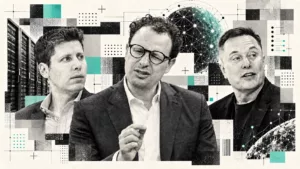
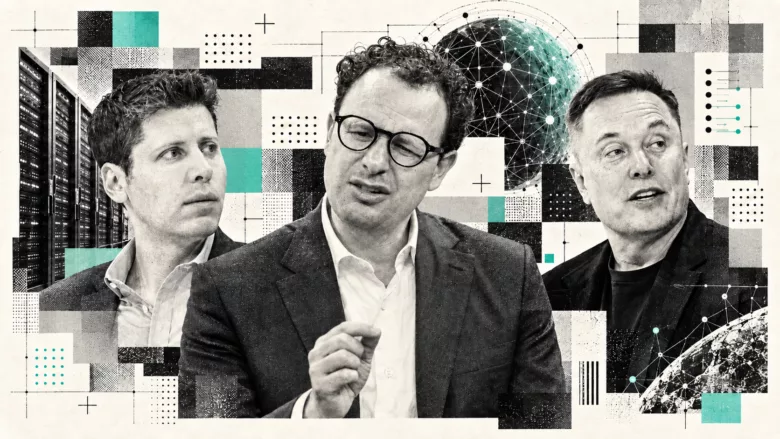
The same tone is coming from the top of the companies. Anthropic CEO Dario Amodei recently called for the pace of AI development to be slowed, a position echoed by OpenAI CEO Sam Altman and Elon Musk. Experts, however, remain divided on how likely such a catastrophic scenario actually is.
Regulation as the New Moat
Eisman sees a clear set of incentives behind the warnings. His thesis: The companies have an interest in stoking a crisis that leads to stricter regulation. Those rules could then be shaped in a way that ultimately produces a duopoly. Regulation would thus replace the moats that once protected the AI labs’ businesses.
Serge Nussbaumer, a capital markets expert at the Swiss securities firm Maverix, describes a similar effect in a guest commentary for Trending Topics (in German). “At the same time, higher requirements for safety and governance can benefit established U.S. providers by raising barriers to entry,” he writes. Even fully justified safety standards could therefore have industrial policy and competitive consequences, he argues. What matters, according to Nussbaumer, is whether such standards apply globally or mainly make Western providers more expensive and slower.
Eisman points to mounting competitive pressure as the source of the companies’ nervousness. “Tokenmaxxing is over,” the investor said. “The open weight models are taking big market share. I think these companies are very nervous.” Tokenmaxxing refers to the practice of maximizing AI use. Eisman is not alone in this assessment: Citadel Securities recently said that rising costs have been a reality check for the AI trade.
The ‘Achilles’ Heel’ of the AI Trade
Eisman said he has recently trimmed his own AI exposure. A few weeks ago, he described OpenAI and Anthropic as the “Achilles’ heel” of the AI trade. In his view, the main risk lies in how dependent the entire industry is on the success of the two leading AI startups.
“They’re such a huge percentage of the entire chain, so if something were to happen to one of those two companies, then the chain would really fall apart,” he said. “Between the two, OpenAI is the weaker company.”
‘Postpone Your IPO’
Eisman was particularly skeptical of Dario Amodei’s motives, given that Anthropic is heading toward a historic IPO. The company has already confidentially filed for a public listing.
“When you talk about how we should slow down because things are dangerous, my response is ‘Really? Postpone your IPO,’” Eisman said. “Put your money where your mouth is. Is anybody talking about postponing IPOs or postponing raising capital? I haven’t heard anything.”