Google Pushes Gemini 4 Argon Into the Market With Steep Discounts


Set Trending Topics as a preferred source on Google.
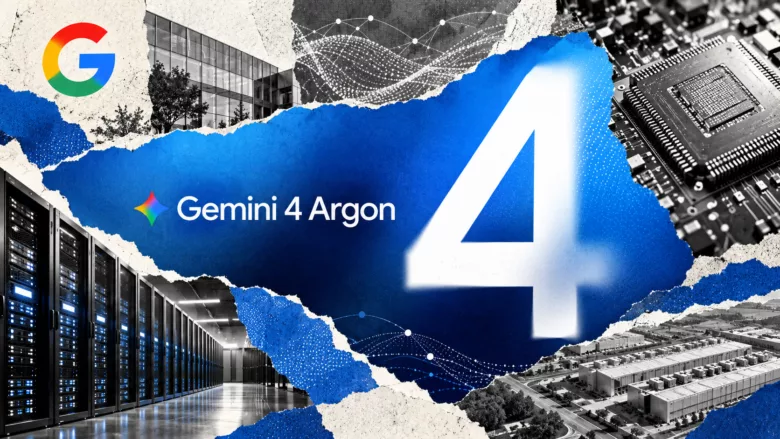
Google’s best A.I. model is now open to anyone willing to pay for it. Gemini 4 Argon is available globally through the Gemini API, for businesses and for subscribers to Google AI Pro and Ultra, Google said in a blog post. At the end of September, Google had initially given the model only to selected partners in cybersecurity. The 50 percent introductory discount on API prices, however, runs only until the end of November, after which the price doubles.
Who Gets Argon Now
Google is rolling out Argon to several groups at once:
- Developers: Access through the paid tier of the Gemini API. Google AI Ultra subscribers can also try Argon in the developer platform Antigravity, in AI Studio and in Android Studio.
- Businesses: Argon is available in Gemini for Business, through the API and in Antigravity.
- Consumers: Subscribers to Google AI Pro (€21.99 a month) or Ultra (from €99.99 a month) can use Argon in the Gemini app and in AI Mode in Google Search. Free users get nothing, and Google recently even took the Flash and Pro models away from them.
- Researchers: 10,000 scientists are to get the highest usage tier of Antigravity free of charge for six months. Applications are open, and Google will select participants based on eligibility and capacity.
- Cyber defense: The Fairwind Program is expanding to hundreds of additional partners. They get Argon without the usual cyber guardrails so they can find and fix vulnerabilities.
What Argon Costs
Through the API, Argon costs $2 (about €1.78) per million input tokens and $10 (about €8.90) per million output tokens at launch. Cached input tokens come with a 95 percent discount. The introductory price applies only until the end of November, however. After that, the price doubles to $4 (about €3.56) for input and $20 (about €17.80) for output, the same as Anthropic’s Claude Opus 5.5.
What a typical task actually costs says more than the token price, because models use different numbers of tokens depending on how much they reason. Artificial Analysis therefore calculates the cost of an average task from its Intelligence Index. Here is the ranking of the top models, from most to least expensive:
- Claude Fable 5.1: $7.63 (about €6.79)
- Claude Opus 5.5: $5.98 (about €5.32)
- Claude Sonnet 5.5: $5.46 (about €4.86)
- Muse Wonder: $4.52 (about €4.02)
- Gemini 4 Argon at the regular price from December: $3.98 (about €3.54)
- Grok 4.7: $3.74 (about €3.33)
- GPT-6 Astra: $3.26 (about €2.90)
- Gemini 4 Argon at the introductory price: $1.99 (about €1.77)
- Muse Spark 1.3: $1.60 (about €1.42)
- GPT-6.1 Sol: $0.72 (about €0.64)
At the introductory price, a task with Argon costs about 60 percent of what it costs with GPT-6 Astra, for practically the same performance, and about a third of the cost with Claude Opus 5.5. With the new prices from December, the cost per task doubles to $3.98. Argon will then be about 22 percent more expensive than GPT-6 Astra and will move ahead of Grok 4.7 in the cost ranking, while remaining about a third cheaper than Claude Opus 5.5. The cheapest option is OpenAI’s GPT-6.1 Sol, which trails Argon only slightly in the Intelligence Index but costs a fraction as much per task.
Sixth Place in the Independent Ranking
Google is not shy about superlatives. It says Argon outperforms other frontier models on benchmarks across domains and ranks first on the Vals Index, which measures work in finance, coding, law and tax. The Artificial Analysis Intelligence Index paints a more sober picture: At its highest reasoning setting, Argon scores 52.6 points. Five competitors rank ahead of Google’s model:
- Claude Opus 5.5 (Anthropic): 57.6 points
- Claude Sonnet 5.5 (Anthropic): 56.0 points
- Muse Wonder Full (Meta): 55.8 points
- Claude Fable 5.1 (Anthropic): 53.4 points
- GPT-6 Astra (OpenAI): 52.7 points
- Gemini 4 Argon (Google): 52.6 points
The 0.1-point gap to GPT-6 Astra is negligible, and the two are practically tied. Anthropic is clearly ahead, with three models in the top four. Meta also recently overtook Google with Muse Wonder. Compared with Google’s previous Pro model, Gemini 3.1 Pro, which scores 30 points, the leap is still huge. One of Argon’s strengths is its low hallucination rate: The model is more likely to admit when it does not know something than to make up an answer, as Trending Topics reported at launch.
What Google Has Done With Argon
Google is already using Argon internally for difficult coding tasks. On the Chrome team, the model helped restructure a legacy folder of about six million lines of browser code, finishing months of work in weeks, according to Google. Argon also made the open Gemma models almost three times as fast. In research, it is said to have helped with quantum error correction, nuclear fusion and the diagnosis of rare diseases. For long tasks, Argon has a limit of one million tokens covering input and output combined.