Swiss VC Redalpine Raises $250 Million for A.I., Robotics and Biotech


Set Trending Topics as a preferred source on Google.
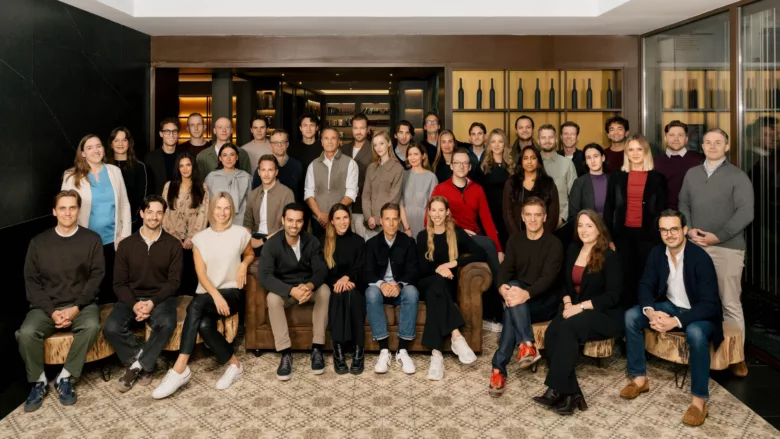
While many venture capital firms spend months courting investors, Redalpine was done in less than a year: The Swiss firm has closed its eighth early-stage fund, Redalpine Capital VIII (RAC VIII), at $250 million. The fund was oversubscribed and is larger than its predecessor, which closed at $200 million in 2024. Redalpine now manages more than $1.4 billion in total.
Where the Money Is Going
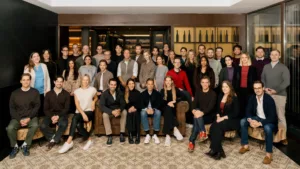
With RAC VIII, Redalpine plans to invest in about 20 European start-ups at the seed to Series A stage, selected from more than 5,000 companies it reviews each year. Checks range from $1 million to $15 million, and Redalpine often leads the rounds. The focus is on companies at the intersection of software and science. Half of the investment team has a background in the natural sciences or engineering, according to Redalpine.
The first three investments from the new fund:
- Enact Intelligence: The Zurich robotics start-up aims to give robots a sense of touch and recently raised a $30 million pre-seed round with backing from Yann LeCun, among others.
- Helical: The London start-up is building a virtual A.I. lab for drug discovery. Redalpine previously led its $10 million seed round.
- Arlequin AI: The team, based in Paris, Berlin and London, is developing an A.I. architecture to protect critical systems and works with government agencies.
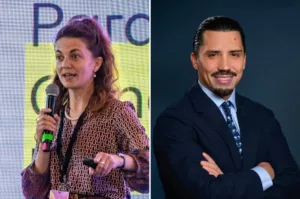
Sebastian Becker, a general partner, said artificial intelligence was leveling the playing field for founders around the world, giving the edge to those who best understand the science behind a product and the hardest problems.
Aviva, Flexstone and KfW as Backers
The limited partners in RAC VIII include existing and new investors, among them the British asset manager Aviva Investors, Flexstone Partners and the German development bank KfW. Redalpine was founded in Zurich in 2006, is now based in Zug and has offices in Berlin and London.
Its portfolio includes well-known names such as Mistral AI, N26 and Proxima Fusion. Redalpine led the Munich fusion start-up’s seed round, and in the summer, Proxima raised €411 million at a €2.4 billion valuation. Since 2023, Redalpine says it has sold or taken public 12 portfolio companies. They include the Swiss biotech Araris, which the Japanese drugmaker Taiho acquired for up to $1.14 billion, and, according to Redalpine, Memo Therapeutics (to Ipsen) and the A.I. security start-up Lakera (to Check Point). Companies from its previous fund, RAC VII, have raised more than $1.1 billion from investors in total.
The Competition
Redalpine is not the only firm raising fresh capital for European tech start-ups this year. In Zurich, Lakestar closed Lakestar Resilience I, a $300 million fund for defense and dual-use technologies. Headline raised $400 million for its eighth fund, which targets seed and Series A rounds in A.I., and Accel’s new European fund comes to $800 million. In Germany, Uplift Ventures launched a €100 million deep-tech fund that also invests in seed to Series A rounds.
Money Flows to Established Players
Fund-raising remains difficult for many venture firms, however. European venture funds raised $14.9 billion across 111 funds through the end of September 2026, compared with $15.5 billion in all of last year, according to PitchBook data compiled by SeedBlink. The money is concentrating in the largest funds, and the market beyond them remains tight, according to PitchBook. In the DACH region, 83 venture funds closed with a combined €6.2 billion in 2022, while in the first nine months of 2025, only 21 funds closed with €2.0 billion, according to PitchBook. The median time from launch to final close is 26 months.
That favors established firms with a record of exits, such as Redalpine, while new and smaller fund managers face a tougher climb. Deep-tech start-ups also often need many years and a lot of capital before they generate revenue or can be sold. Whether the bets on fusion energy, robotics and A.I.-driven biotech pay off will therefore only become clear many years from now.