X-energy Wins Permit for Small Nuclear Plant, but Power Won’t Flow Before 2033


Set Trending Topics as a preferred source on Google.
The permit is in hand, the money is not: X-energy may now build four small reactors in Texas, but whether they ever get built is up to the chemical giant Dow.
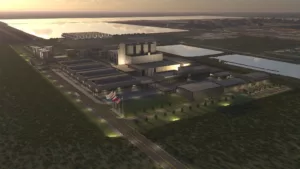
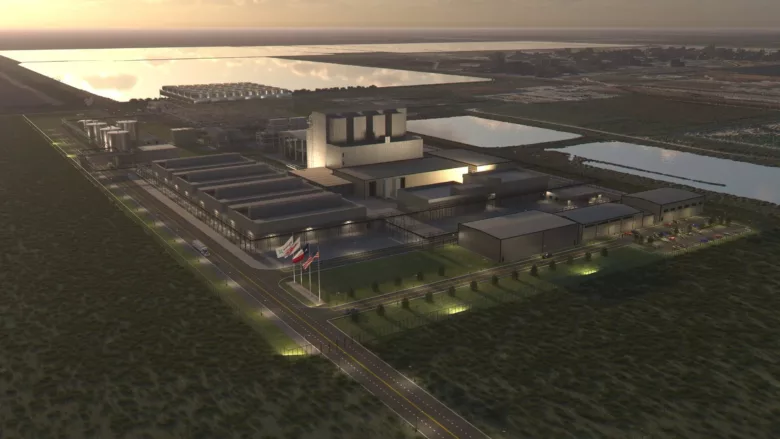
The U.S. Nuclear Regulatory Commission (NRC) has just issued a construction permit for the Long Mott Generating Station. The plant is planned for Dow’s Seadrift site on the Texas Gulf Coast and consists of four Xe-100 small modular reactors (SMRs) designed by U.S. company X-energy. Each reactor produces 80 megawatts of electricity, 320 megawatts in total. In addition to power, the plant is meant to supply high-temperature steam for chemical production and replace aging fossil-fueled energy and steam assets at the site. The applicant is Long Mott Energy, a Dow subsidiary, while X-energy leads technology and licensing.
A Series of Firsts
The NRC completed its review within 18 months, slightly ahead of its own schedule. According to X-energy, it is the first construction permit for a high-temperature gas-cooled reactor in the U.S. in nearly 60 years, the first for a pebble-bed reactor and the first for an advanced nuclear plant at an industrial site. The Xe-100 is cooled with helium and runs on so-called TRISO fuel, in which uranium is packed into tiny particles with multiple protective coatings. The plant’s emergency planning zone extends only 400 meters, compared with about 10 miles (16 kilometers) for conventional light-water reactors in the U.S.
“This is an important day,” said X-energy CEO J. Clay Sell. NRC Chairman Ho Nieh called the decision proof that the agency can carry out “rigorous safety reviews on predictable timelines.”
Costs: Billions, but No Number
Dow and X-energy have not disclosed what the plant will cost. The only firm figure is federal support: the project is one of two full-scale demonstrations in the Department of Energy’s Advanced Reactor Demonstration Program (ARDP), which shares costs with the companies. X-energy is set to receive a total of about $2.15 billion (around €1.93 billion) for the plant and its own fuel fabrication facility in Tennessee. Canary Media describes it as a multibillion-dollar project.
How expensive SMRs are in practice is shown by the most advanced project in the West so far: Canadian utility Ontario Power Generation is building four 300-megawatt BWRX-300 reactors at its Darlington site and expects to spend 20.9 billion Canadian dollars (around €13.2 billion). The first reactor alone, including shared infrastructure, costs 7.7 billion Canadian dollars (around €4.9 billion).
Power in 2033 at the Earliest
It will take a while before Seadrift produces electricity. The construction permit sets July 1, 2033, as the earliest completion date, while X-energy itself speaks of “the early 2030s.” First, Dow has to invest: the company plans to consider a preliminary investment decision in 2027, and full construction will only begin after a final decision. Even a finished plant cannot start up right away, as it needs a separate NRC operating license, which takes about 18 months to review under the standard schedule. Once running, the four reactors are expected to operate for 60 years.
The Other SMRs With Construction Permits
Long Mott is already the third NRC construction permit for a commercial SMR project this year, as the U.S. regulator works much faster than before following reforms passed by Congress.
- TerraPower Natrium: The company co-founded by Bill Gates received the first permit in March and is building a 345-megawatt sodium-cooled reactor in Kemmerer, Wyoming, which can briefly deliver 500 megawatts thanks to molten salt storage. It is due for completion in 2030. Natrium is also an ARDP project, and TerraPower raised $650 million in a funding round.
- TVA Clinch River: At the end of September, the federally owned Tennessee Valley Authority received a permit for a 300-megawatt BWRX-300 from GE Vernova Hitachi in Tennessee, as Trending Topics reported. TVA has not yet announced a construction start or costs.
- Kairos Power: The company holds permits for three smaller, salt-cooled demonstration reactors in Tennessee that serve as a stepping stone toward commercial plants.
Only Canada is further along: the first BWRX-300 at Darlington is already under construction and is scheduled to go online in 2030.
Why Dow Is Still Hesitating
For X-energy, the permit is an important milestone, as the company has yet to build a single reactor. A lot rides on the Xe-100: besides a project in Washington state, Amazon is funding a plant with twelve Xe-100 reactors in Indiana, and X-energy is planning up to 6 gigawatts of reactors with British utility Centrica. Investors have nonetheless grown cautious: X-energy went public on Nasdaq in April at $23 per share, and the stock now trades at around $11.
Dow is also holding back. Before any construction decision, the company will weigh competitiveness, execution readiness and “capital affordability,” said Dow executive Edward Stones. Then there is the technology’s track record: according to the International Atomic Energy Agency, earlier high-temperature gas-cooled reactors were shut down early because of funding and technical problems, including the THTR-300 pebble-bed reactor in Hamm-Uentrop, Germany, which was taken offline in 1989 after only a few years of operation. X-energy counters that today’s designs cannot be compared with the old ones.